Monday Quick Hits: Berry and Breslin, Exxon, the NCAAs, and More

Image result for chuck berry

Some quick hits and good reads to get us into a shining new American week…

-When I got the alert yesterday that Jimmy Breslin had died, hard on the heels of Chuck Berry, I had a vague notion of writing a piece about how the two men both created an American langauge. They took old traditions, grabbing along the way snatches of different and older languages, different sounds jumbled through the tumult of our history, bouncing around in the vastness of the land, from concrete wisdom to country passions, and in their own way, forged new and more democratic modes of expression. But then I thought: hm, I don’t know if I am really capable of exploring that, and anyway, it seems like something Charlie Pierce will do 10000 times better. He does not disappoint.

Did anyone do more to change American pop culture than Chuck Berry? This isn’t incidental; pop culture is culture. It’s an expression of our desires. Coming up with other names yields a short list, with maybe James Brown at the top of it. The list of musicians who were more awesome than Chuck Berry might be even shorter.

-So there was this commercial, in which a Jessica Chastain look-alike tells us that Exxon Mobil is really nothing more than a big ol’ jobs creator, and all the people they show are model attractive, that ran approximately 360000 times during the games this weekend. It wasn’t advertising anything, per se, other than the idea that Exxon is basically your neighborhood store, giving kids their first job so that Johhny can take Mary Sue to the movies this weekend. It’s basically a way for them to make us vaguely remember that “oil = good”. It’s essentially political, which is very smart.

Anyway, the repetition of that commercial is maybe why I had a dream this morning in which the real Jessica Chastain was giving a lecture where she said “There is maybe no more clear example of the importance of elections than fracking. Think about it: it’s an issue dominated by hydrologists, geologists, engineers, and increasingly, seismologists, yet is determined almost entirely by the people we elect. That makes it up to us. Do we elect the thoughtful, or the cheerfully venal?”

Seriously, those are my dreams with Jessica Chastain. Thanks, brain!

-Speaking of Exxon, that commercial was considerably more accessible than Exxon’s former CEO, who is settling into a quiet job outside the public eye, Secretary of State. On a weekend in which he moved us closer, rhetorically, to conflict with North Korea (a state to which North Korea themselves are also rushing), he also give some limited statements about why he’s not accessible to the press (and why he didn’t bring them along for his Asian trip, save for one friendly reporter).

“I’m not a big media press access person. I personally don’t need it. … When we’re ready to talk about what we’re trying to do, I will be available to talk to people. But doing daily availability, I don’t have this appetite or hunger to be that.”

He added: “When I have something important and useful to say, I know where everybody is and I know how to go out there and say it.”

He added that there’s plenty of media in the cities where he’s heading, lowering the need for a traveling press. And he disregarded the tradition of the secretary of State spending time with reporters on flights, saying “that’s not the way I tend to work.”

Well…shucks, Rex. It is admirable that you’re not one of those big media persons, always needing to be on the twitter for the kids, like one of those Kardashians or Kissingers. Here’s the thing, though: you’re not a CEO anymore. You don’t get to work in the shadows. You’re on the public dime, and you’re talking about issues of literal life and death, all the time. You don’t actually get to decide when we know what’s going on and when we don’t.

It’s fine that you don’t want to be a celeb SecState, and just want to do your job. But saying “I’ll only talk to the press when I feel like it” isn’t admirably modest or a burst of down-home sensibility. It is, at best, incredibly patronizing and undemocratic, and at worst, sinister. If you don’t want people to think that you’re colluding with foreign powers to help the energy industry, maybe don’t be so secretive.

-Speaking of the NCAAs, while I didn’t watch every game, I had at least most of them on at one point or the other. Yesterday was clearly the best day, though Nigel Hayes’s winner against Nova was bucket of the tournament, for sure. Witchita/Kentucky, which should clearly have not been a Round of 32 game, had that breathtaking sequence at the end, which might have been the most exciting part of the weekend. UCLA showing off their powerhouse offense in a 5-minute blitz against Cincinnati demonstrated everything that’s fun about hoops. And Duke losing in the first weekend makes every tournament worth it.

But, to me anyway, the most impressive game of the tournament was Kansas vs. Michigan State. It was a close one throughout, with a feisty Michigan St trading blows with the Jayhawks, until with about eight minutes left, Kansas methodically and brutally pulled away, winning by 20. In a weekend in which a 3-seed lost by about 900 to an 11-seed, in which Gonzaga nearly collapsed against Northwestern, in which UNC struggled against Arkansas, and in which the defending champ and #1 overall seed lost, to see a team remember they’re great, and play like it, was a sight to behold.

(Although, sneakily, and I might be biased, the best overall weekend went to Butler, which took on a very good Winthrop team and an extremely dangerous Middle Tennessee team, and never trailed in either game. Now their half of the bracket is UNC, UCLA/Kentucky, and most likely Kansas. Let’s take on some blue bloods, Butler.)

-Finally, my favorite read of the week was this in the most recent London Review of Books, in which Benjamin Kunkel talks about the “captialocene.” It’s a take on the Anthropocene, the idea that human activity has so changed the planet, in ways that were before only the result of gradual climatic and geologic shifts or sudden space-borne disasters, that it’s a whole new Epoch. This isn’t just a catchphrase, either: by the end of this year, the Anthropocene might be officially established alongside the Pleistocene, Holocene, Miocene, and others.

But the idea of the “captialocene” is slightly different. It argues that the great changes weren’t really the results of all humans, but came about as a result of capitalism, in which the land and the people were converted into capital for the benefit of the very few. That is, we as a species didn’t make a choice to do something, but a select group got rich destroying the planet.

There’s a damn good argument there (and nowhere is it I think more true than in North America, in which literally everything was alchemized into money). There is a counterargument that communism wasn’t exactly good for the environment (see, while you can, the remainder of the Aral Sea), but that was a reaction to capitalism, and still in the essential capitalist framework. The nature of the project is to wring profit out of everything, and if that means using up the world the way it uses up workers, so be it.

The other counterargument is that the process started long before capitalism. Hell, the people that came over to North America set out to immediately wipe out all large mammals save for buffalo, changing the ecosystem almost irreversibly. So maybe capitalism is just the ultimate expression of our nature?

The idea is that the capitalocene can actually transform into the Anthropocene, in which humans more broadly have a say in the environment, and our systems are revised to redistribute both economic and environmental justice. That is: the decisions about the earth aren’t just made by the few, for the few, but finally, for once, by the species as a whole. That does seem to be the only way to solve this mess. All it takes is a complete reordering of all our priorities. I’m guessing another asteroid will hit first.

Yemen’s “Areas of Active Hostilities”: A Tautology for the 21st Century

86875470_yemen_sanaa_rubble_g

Remember that things can somehow always get worse. Image from BBC

WASHINGTON — The Trump administration is exploring how to dismantle or bypass Obama-era constraints intended to prevent civilian deaths from drone attacks, commando raids and other counterterrorism missions outside conventional war zones like Afghanistan and Iraq, according to officials familiar with internal deliberations.

Already, President Trump has granted a Pentagon request to declare parts of three provinces of Yemen to be an “area of active hostilities” where looser battlefield rules apply. That opened the door to a Special Operations raid in late January in which several civilians were killed, as well as to the largest-ever series of American airstrikes targeting Yemen-based Qaeda militants, starting nearly two weeks ago, the officials said.

“Areas of active hostilities” is an interesting phrase, one that is both clinical and carries within it a depth of soon-to-be-explored horrors. It’s a holdover from the Obama administration (whose worst legacy will be handing over a set of dangerous tools to a madman), and one that looks to be exploited by Donald Trump and his band.

Essentially, declaring an area to be one of active hostility means that there doesn’t need to be a Presidential-level approval for missions, and that the rules of engagement regarding civilians are loosened. The Times described it as “open(ing) the throttle” on counterterrorism activities.

The main problem with this, aside from the increased casualties in civilians and military personnel, is that it essentially becomes a self-fulfilling prophecy, a tautology. If you declare an area to be actively hostile, and treat it as such, and say, lose a Navy Seal while killing a dozen children, then it becomes more hostile, and the question of whether or not there is conflict becomes self-answering (if the area wasn’t hostile, we wouldn’t have lost a Seal, right?)

In Yemen, this sort of policy will almost certainly be a disaster. Let’s look at the confluence of forces. Many of these came under the Obama administration, and have been exacerbated by Trump.

  • The support for Saudi Arabia’s scorched earth campaign against the Huthis. Expect this support to increase, even vocally, as the administration tries to work a grand bargain of anti-Iran Arab nations (part of its Israel/Palestine plan, led by noted regional expert Jared Kushner).
  • The relentless viewing of Yemen through a strict counterterrorism lens, which leads to more militancy, and a strengthening of AQAP and, to an extent, ISIS (though I think AQAP will prove to be stronger in Yemen).
  • The confluence of Yemen with Iran, never entirely true, and now wildly and dangerously exaggerated.
  • An increase in boots-oriented and civilian-dismissing CT activities, designed so that a know-nothing President can appear tough. I don’t expect US military commanders and personnel to go Kilgore in Yemen, but the loosening of the rules will lead to more conflict, with its higher chances of casualties and civilian deaths. The fact that it is common knowledge that the Administration approves of this only makes America and American intentions look worse.
  • And speaking of American intentions, the hateful illogic of the travel ban solidifies the AQ/ISIS narrative that the West has declared war on Islam, and Islam has to protect itself. That the huffing and bloated face of Islamaphobia is now the face of the nation is an incredible gift to our enemies, and all his actions so far have proven their point.
  • One of his other actions is to gut foreign aid and the State Department. Due to the war, continued drought, and decades of mismanaged resources, Yemen is on the brink of a catastrophic famine. ISIS can’t feed everyone; nor can AQAP. This is an area where the US, and the West, can actually make a difference. But instead, we are going to cut aid, which barely makes a dent on our budget, to appeal to xenophobes.

It’s hard to overstate how crazy that is (not to mention bleakly immoral). Donald Trump and the Republicans are the only people in the world who think there is a purely military solution to radical Islamic terrorism. The idea that on the brink of a hideous humanitarian catastrophe the right course of action is to 1) reduce aid and 2) increase military activity is madness. It’s the best way to ensure that you are seen as the enemy for generations to come.

Don’t get me wrong: I don’t think sending grain is going to “solve” Yemen. This is a long-term internal issue that partly has to answer the question of what Yemen really is, and whether a unified Yemen is possible or desirable. But the US and the West have a role to play, and the only way to do that is build trust with political and tribal leaders on all sides.

Backing war criminals, demonizing Muslims at home, turning your back on suffering Muslims around the world, ignoring famine, and treating a country entirely as a problem for bombs and guns will is the exact opposite of what we want to do. It guarantees Yemen stays a war zone. The massive human suffering will radiate around the peninsula and across the sea. It’s the best way to make every area actively hostile.

Nationalist Bulgarian Paramilitary Border Forces Are Weird and Foreign, Right?


Image result for Bulgarian National Movement Shipka

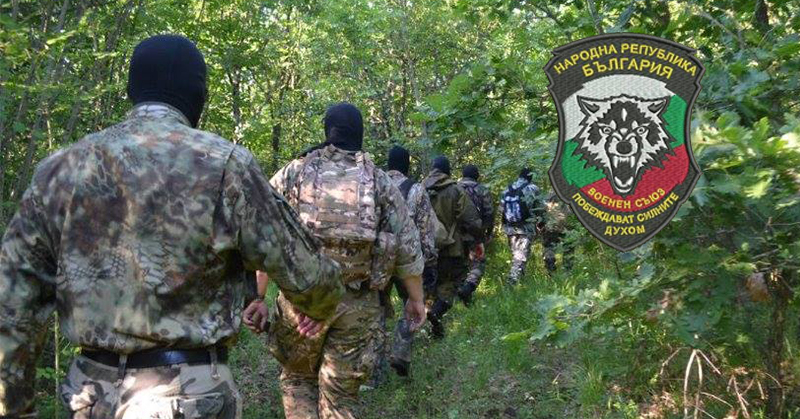
Trees are the only thing that differentiate Bulgarian border militias from American ones.


The historical roots of the refugee crisis in Europe follow the same lines as the immigration debate here, and have had the same atavistic reaction.

Continue reading

The Spiteful Illogic of the New Travel Ban

1961-11-01a

When the first “Travel Ban” executive order was announced a week into the Trump administration some 4600 years ago, some of the key pillars of a free society made their impact felt in a way that shocked even the most optimistic observer. The legal system had a two-pronged effort. Organizations like the ACLU protected the victims of the order’s cruelty and brought their cases to an independent judiciary, which treated the order as what it was: a legal measure subject to review; not the blessed fiat of a New Dawn.

The other pillar, of course, was public protest, which stunned anyone who expected obsequiousness after the snowflakes of the women’s march melted. It is doubtful that legislators, and possibly even the courts, would have reacted with the swiftness they did were in not for spontaneous acts of disobedience, compassion, and righteous fury. Protests were shown again to not be movements of self-expression or sideshows to politics; they are a vital part of civil society.

So, the reaction to the travel ban, and its being held up by the courts, led to the rollout of a newly revised order yesterday. This was supposed to be rolled out last week, but it was delayed so that news of it wouldn’t step on the reception to Trump’s Congressional address last week.

Now, it is a good demonstration of how deeply dumb the President and his people are that they genuinely thought the rest of the week–month?–should revolve around him garnering praise for clearing the lowest possible bar. Trump was reportedly livid that the news of Sessions misleading Russian testimony and subsequent recusal took away from what I promise you he believes is regarded as the finest speech in American history. That’s partly what led to this weekend’s insanity.

But more importantly, as everyone pointed out, the delay for some good ol’ self-gratification contradicted the fierce urgency with which the initial rollout happened, and made Trump’s truly dangerous tweets about how judges were making our country less safe even more reckless. But that hypocrisy is just one of the many contradictions that shows how pointlessly self-defeating (not to mention cruel and un-American) these travel bans really are.

Continue reading

A Reminder about Obama and Russia

Image result for putin

This week’s must-read story is The New Yorker’s exhaustive piece on Russian propaganda machine and how it influences elections around the world. The article, a joint production by Evan Osnos, David Remnick, and Joshua Yaffa, filters the rise of Putinism through the first post-Soviet decade the Putin’s personal need to avenge slights against Russia. They demonstrate how Russia has been trying to reshape the world, in an asymmetric way, for most of last decade, culminating in working to elect Donald Trump (something they didn’t think would actually work).

It’s a great read on its own, but one thing that is highlights is what the Obama Administration knew, and why they didn’t act on it.

Remarkably, the Obama Administration learned of the hacking operation only in early summer—nine months after the F.B.I. first contacted the D.N.C. about the intrusion—and then was reluctant to act too strongly, for fear of being seen as partisan. Leaders of the Pentagon, the State Department, and the intelligence agencies met during the summer, but their focus was on how to safeguard state election commissions and electoral systems against a hack on Election Day.

That caution has embittered Clinton’s inner circle. “We understand the bind they were in,” one of Clinton’s senior advisers said. “But what if Barack Obama had gone to the Oval Office, or the East Room of the White House, and said, ‘I’m speaking to you tonight to inform you that the United States is under attack. The Russian government at the highest levels is trying to influence our most precious asset, our democracy, and I’m not going to let it happen.’ A large majority of Americans would have sat up and taken notice. My attitude is that we don’t have the right to lay blame for the results of this election at anybody’s feet, but, to me, it is bewildering—it is baffling—it is hard to make sense of why this was not a five-alarm fire in the White House.”

The Obama circle, which criticizes Clinton’s team for failing to lock down seemingly solid states like Wisconsin, Michigan, and Pennsylvania, insists that the White House acted appropriately. “What could we have done?” Benjamin Rhodes said. “We said they were doing it, so everybody had the basis to know that all the WikiLeaks material and the fake news were tied to Russia. There was no action we could have taken to stop the e-mails or the fake news from being propagated. . . . All we could do was expose it.”

Remember this when right-wing friends talk about how Obama “illegally wiretapped Trump!” When presented with unassailable (and not even covered up!) Russian interference in the election, they played it as close to the vest as possible. You have to believe that they would do this, in order not to be seen as partisan, but at the same time personally engineer a massive criminal scheme, and at the same time not do anything afterwards. It’s insane.

(It’s also a reminder that Putin hated Obama because he thought Obama interfered too much in Russian greatness, which might be accurate. And if anything, he hated Hillary more. Remember that when people say Obama and Hillary were weak on Russia.)

The Art of the Deal: Bilateralism and US Foreign Policy


091019-dinosaur-crater-hmed-grid-6x2

I sort of feel like this dude. “Welp, this gonna suck.”


As I mentioned yesterday, one of this blog’s main ways of analyzing policy under Trump is to understand the ways the man’s own pathologies and self-image feed perfectly into the goals of those around him, who have actual goals and long-held beliefs. Steve Bannon wants to “deconstruct the administrative state” (i.e. stop having a functioning government)? Who better to do that through than a man who think that he, his kids, and that guy who married his daughter are the only ones with brains?

(By the way, “deconstructing the administrative state” has gotten a lot of press, but it’s just a scary-sounding Bannonism for what Republicans have been trying to do for decades, ever since they merged with the far right. It means destroying the idea of a self-governing nation. It’s an old game tricked out by his cheapjack revolutionary shtick. This isn’t new; it’s just now very powerful.)

This plays out in foreign policy in an interesting way as well. As we know, in terms of policy, Trump has very few beliefs. The only ones that are consistent are that “we’re getting screwed” in our deals, both economic and security, and that everyone is taking advantage of us. Part of that belief lies in some of his other unshakeable ideas: that he’s the world’s greatest deal-maker, and that the US was stupid not to have him negotiate everything. His sense of self and his limitless sense of victimization and injury have led him to believe that every deal is bad because the idiots in Washington didn’t let him do it.

And, happily, the far-right and the “alt-right” (which really aren’t different, and are essentially mainstream Republicanism), also hate all those “deals”. They hate multilateralism, as we talked about yesterday. It isn’t because of Agenda 21 or anything, though that’s good to frighten the rubes (and a frightening amount of those scared-rabbit rubes are in Congress).

It’s mostly because multi-lateral institutions were founded after WWII as a way to constrain the power of any individual nation, especially Germany. And while it is easy to say that this didn’t really work, since the US and the USSR forced every nation in the world to pick a side, they were still constrained.

Look at the terrible actions done by both sides. Chile, Iran, Guatemala, Vietnam on the US side. Hungary, Czechoslovakia, Afghanistan, Poland on the USSR. This just scratches the surface of foreign interventions, but even in those, there is a pattern. Only in Vietnam and Afghanistan (and Korea, but that was also part of WWII) was there active warfare, and even then both nations were “invited in” by governments to help fight/save Communism. The quotation marks in the last sentence obviously imply arm-twisting, but still: there was at least a hypocritical tribute to the idea of national sovereignty.

None of this was good, per se, but it observed the idea that you couldn’t just go in and plant your flag into someone else’s dirt through the skulls of the natives. I mean, the US and USSR did so, but pretended they weren’t, and weirdly, that pretending means something. It slowly shifted ideas. It isn’t absurd to think that, I don’t know, Botswana should have a say in international politics and the fate of their nation. It helped create the still-foaling idea that the “Global south” isn’t just the playground of empires, but people who have a say.

Needless to say, the right-wing hates that. One of the reason the Iraq War was supported so much on the right wasn’t any particular issue, but the idea that the US was going to do something, by god, without the UN or NATO or anyone who didn’t fall in goddamn line. That we acted without these multilaterals was not just a feature, for many, it was the whole point.

Multilateral obligations mean that you can’t just do whatever you want. Even George W. Bush recognized that the US had some obligations. But not Trump.

Remember, Trump’s entire sense of worth is wrapped up in the idea that he has the right to do whatever he wants. Businesses going bad? Declare bankruptcy and screw over his creditors. Don’t feel like paying contractors? Force them to accept pennies on the dollar or else be tied up in court for years. Woman not putting out? Move on her like a bitch. (Remember: that’s an actual quote from our President.)

This is perfect for the far right. Trump believes we’re getting screwed by these “deals” (he considers joining a global multilateral institution a “deal”, remember) and that he can get us much better ones, working country by country. And the heart of this is that, like contractors and creditors, he’s perfectly willing to screw over any country, to go back on deals, and to do whatever he needs to “win”.

And that’s perfect. That’s the US unconstrained. In theory, making numerous bilateral deals is really difficult, since you have to take into account shifting alliances, sides playing against each other, local concerns, and more. Look at how complicated Azerbijan is, and how important it is to Russia, Iran, and Turkey, and how complex their relationship is.

So, to play this right would take great diplomatic skill, or the belief that you don’t need diplomacy at all. Or, in a way, both. It takes some knowledge to negotiate, but it also takes the belief that if you don’t like what’s happening, or you have a better chance at succeeding by breaking a deal, you break the deal. You screw them over. And the willingness to do so, to break any rule for personal gain, has been the one consistent part of Donald Trump’s life.

This will make the world a far more dangerous place. As much as his ties with Russia and white supremacy, the abdication of the United States from multilateralism is how the liberal world order can collapse. Trump wants that to happen so that he can negotiate with important people who have to kiss his ass. The right wants that to happen so that the US can act unconstrained. They have found their vessel in a truly empty man, who has nothing but a skin of vanity.

It’s a perfect mix. And over the next couple of weeks, we’ll look at how this plays out in the world, starting with (of course) Yemen.

You Want it Darker? Trump’s Illiberal World Order


Image result for cartoon american imperialism

The plus side is maybe we’ll get more cartoons like this


Trying to figure out Trumpism, as it relates to foreign policy, is in many ways a mug’s game. After all, it seems, he doesn’t really think deeply about the world, or even much at all. Just as a place to screw people over or where America gets screwed. To imagine Trump with a unified theory is to imagine him really considering an issue, and that’s laughable.

But that doesn’t mean he doesn’t have opinions, and half-baked self-centered beliefs. And one of this blog’s long-standing principles is that Trump’s personal pathologies perfectly fit the goals of the far and alt-right, which makes him the perfect vehicle. His empty faith that he is the world’s best negotiator allow for the breaking up of the multilateral order, and his own roiling racism dovetails perfectly for their anti-Muslim and white supranationalism fervor.

And, through that, we’re beginning to get an idea of what the foreign policy will look like. The Soufan Group watched his Fate of the Nation speech, and weren’t thrilled with what they saw.

Since the end of World War II, the U.S. has viewed and positioned itself as the leader of the free world….Despite the variations, (ed: in how this has played out) the core of U.S. foreign policy over the last seven decades has been that the U.S. would play a leading role in the global order. 

The Trump administration appears in both rhetoric and deed to be pivoting from this long-held stance in a noticeable fashion. During his campaign and his first month in office, President Trump has consistently stressed that he believes the U.S. has ‘been taken advantage of’ in terms of trade policies and defense obligations, and has promised that would no longer be the case. Trump’s February 28 joint address to Congress confirmed again that the shift to a transactional balance sheet approach to many international concerns will be a cornerstone of his administration. 

President Trump’s preference of viewing foreign affairs in a bilateral fashion—and to approach pacts as ‘deals’—was evident in both what was and was not said in the one-hour long speech. During his speech, the President never mentioned the word ‘democracy’ in any context—foreign or domestic. He mentioned the word ‘freedom’ three times, though none of the three mentions were in the context of foreign affairs or global stability. The only specific use of the word came in the context of health insurance. The term ‘free world’—whatever its merit—was also not mentioned, again consistent with the President’s preference to review and perhaps discard long-standing policies and treaties. He stated that the U.S. “will respect historic institutions, but we will respect the foreign rights of all nations. And they have to respect our rights as a nation, also.” He added: “America is willing to find new friends, and to forge new partnerships, where shared interests align.”

In theory, there might be something refreshing about a US President who doesn’t give grandiloquent speeches about how we’re a shiny beacon on the hill and how our endless struggle and god-given mission is to let freedom bloom around the globe. After all, in doing so, the United States have fomented or had its hands in a dozen bloody and grubby coups, started of perpetuated civilian-slaughtering wars in places as distant as Vietnam and Guatemala, and has generally run unchecked while acting like self-righteous.

But that’s not what Trump is doing. He isn’t wrestling with a tortured history in an attempt to be more decent. He’s saying that America’s problem was that it viewed itself as the guarantor of the international order, and that it hasn’t been aggressive enough.

The essential policy is that we deal from strength, running over those who are weaker, and forming alliances with those that are strong. There will be ideological alliances, of course, but only if they are suitable. If Le Pen wins, then France is a friend; if not: Paris isn’t Paris. To say that this is distasteful, and the opposite of what the post-war world has been like is to say that water is wet.

One doesn’t even have to bring in the Russian angle on this, though Putin’s Russia is the model, the inspiration, and maybe the daddy of it all. This has been the project of the right for a long time. The distaste in multilateral institutions isn’t that they take away American freedom–they really, really don’t–but that they constrain America from acting like a classic imperial power. From “cutting deals” to exploit weaker countries, from forcing our economic interests at the barrel of a gun (well, not really, but in theory), and from carving up the world in a great game.

Where do Mattis and McMasters fit in? Who knows? They probably see it as their duty to check this. The question is if they’ll be able.

As they say, hypocrisy is the tribute that vice plays to virtue. It’s fair to say that has been the essence of US foreign policy while upholding the world order that has gone a long way toward preventing catastrophic war after the fires of last century. Trump, though, isn’t even decent enough to be a hypocrite. For him, and for the team that channels his sicknesses toward their own ends, vice is the virtue unto itself.

Trump on Paris: Equal Parts Racism, Terrible Government, And Maddening Idiocy


arc-de-triomphe-de-face-630x405-c-thinkstock

More like the “Arch De Jim Doesn’t Want To Go To Paris Anymore!”


I feel that for everyone, there is one Trump habit or event that sticks in your craw more than others, something that seems minor (in the grand scheme of Trump horrors), but that, to you, just wraps everything up in a disgusting, pulsating meat-bow. For me, it’s France. Or, more specifically, what he has to say about Paris, which comes up every time he’s talking about “terror”. He did so in his CPAC speech.

Take a look at what happened in Sweden. I love Sweden. Great country, great people, I love Sweden. They understand I’m right. The people there understand I’m right. Take a look at what’s happening in Sweden. Take a look at what’s happened in Germany. Take a look at what’s happened in France. Take a look at Nice and Paris.

I have a friend, he’s a very, very substantial guy, he loves the city of lights. He loves Paris. For years, every year during the summer he would go to Paris. It was automatic. With his wife and his family. Hadn’t seen him in a while. And I said, Jim, let me ask you a question, how’s Paris doing? Paris? I don’t go there anymore. Paris is no longer Paris. That was four years, four, five years, hasn’t gone there. He wouldn’t miss it for anything. Now he doesn’t even think in terms of going there.

Now. There’s actually a lot going on here. For one thing, it is weird and terrible to try to paint an ally (as France most certainly is) as a dystopian hellhole, and one that it isn’t safe to go to. That’s just being really bad at government. It’s considerably worse than criticizing a particular policy. Saying “Paris is no longer Paris” is attacking an ally on a fundamental, even existential level. French President Hollande is rightfully upset. Part of running the government, and being the face of the country, is getting along with allies and not going out of your way to needlessly insult. Trump is very bad at this job!

But let’s go a little deeper. The whole “Paris is no longer Paris” thing isn’t just about terrorism. Indeed, it’s more straight-up racism. The example here is from “Four, five years ago”, before Hebdo, before Nice, before the Bataclan. There’s a chance that Trump is just riffing and fudging the years, but he’s told this story many times. It isn’t that it is violent. It’s that there are immigrants there. Non-French.

And it is true that while before the wave of jihad violence France, and Paris, were trying to deal with poor immigrants who were not able to assimilate into society. It’s very complex, partly because France, unlike America (traditionally), had very strict requirements about what it meant to be “French”, and there wasn’t much of an attempt to change that, or to help newcomers from different cultures. They were immediately given up on and marginalized. One of the reasons the immigrant experience in America has worked so well, despite its flaws, is that the culture is flexible enough that it changes with new arrivals, and doesn’t try to change them (much).

So when Trump talks about his friend Jim not wanting to go to Paris because it is no longer Paris, he’s just updating and incorporating an older story into a narrative of terrorism. But the story is that Paris is no longer purely white, and that the non-whites would like some rights, and the right to be visible. The heart of it is pure racism; the conflation of religious bigotry with fears about terrorism are at the heart of the white supra-nationalist campaign. It would be subtly very smart, if I thought it was intentional.

I’m not sure it is, though, because of what bothers me the most: that the President of the United States of America, when discussing transnational terrorism, seems to base most of his thinking off a vague anecdote about a buddy of his named Jim.

This is enraging. It makes me so mad I can barely sit still. It’s not even the policy-basing part. It’s that he thinks this means something. He thinks it is interesting and important that a guy named Jim–a substantial guy–doesn’t like to go to Paris, and he always used to. Something’s going on!

Think about it. Imagine you got into a conversation in a bar and someone said, well, let me tell you about terrorism: here’s an incredibly boring story about a guy’s vacation history. You’d nod, and think, well, ok, that doesn’t mean anything. This guy just has a few vague, mostly racist assumptions, a second-person anecdote, and not much else. It would be a bad conversation in a bar, the faintly-lunatic ramblings of a know-nothing blowhard who seems like he’s more interested in impressing you by being friends with a substantial guy who can go to Paris whenever he wants than on actually talking about the issue.

Now imagine a Presidential candidate uses that anecdote as something meaningful. Now imagine the President keeps using it. What the hell? You have access to every bit of intelligence the country produces, and you want to talk about Jim?

I mean, maybe this is why he is “relatable”, because he talks like a normal guy. That’s backward in and of itself; his “normal guy” talk is so sweaty in its desperate lust for your admiration and filled with brags about the powerful people he knows that it should render itself as more out of touch than Romney, but we’re in the upside down, so who knows?

And maybe this is smart. Maybe it is a not-too-subtle dogwhistle about the mongrol hordes in Europe, and how they are coming over here if we don’t do anything. Maybe he knows exactly what he is doing, if just instinctively.

But let us not forget that the President is a man so deeply incurious about the world, and so vastly unlearned, that he bases his ideas on cable news crawls and other people’s idiot stories. That’s where we are.