Brief Notes on Publishing and The Evil Spying British

Image result for sean connery james bond

Wait, who might be Preshident?

Sorry for the lack of posts this week. Been sick as a dog and barely able to keep a thought in my head. Which, sure, wouldn’t make the blog that much more different than usual. In my feverdreaming state, I honestly thought I read somewhere that the Trump budget cuts Meals with Wheels, but then, no one–and certainly no political party–could have that level of baseline meanness, right?

Next week we’ll be back with budget stuff, Great Lakes book reviews and budget cuts, an in-depth analysis of Butler’s run to the Sweet 16 (I hope) and more. But right now I just want to quickly mention the ridiculousness of the Trump administration publically accusing the British government of spying on Trump, based on Sean Spicer reading out loud something an idiot said on Fox.

The White House has assured No 10 that allegations British intelligence spied on Donald Trump will not be repeated, Theresa May’s spokesman has said.

The claim that GCHQ helped former president Barack Obama wiretap Trump during the 2016 election drew a rare denial by British intelligence officials after the White House press secretary, Sean Spicer, repeated it on Thursday.

Spicer quoted a claim by the Fox News analyst Andrew Napolitano that three intelligence sources confirmed to him that the Obama administration used GCHQ to spy on Trump so there would be “no American fingerprints on this”.

In its surprise public rebuttal, GCHQ described the allegation as “utterly ridiculous” and on Friday, the prime minister’s spokesman said the White House had told the British ambassador and the UK’s national security adviser that Spicer had been instructed not to repeat them.

A couple of things: one, we’re still basing policy and public declaration on what idiots say on Fox. Administrations tend to run from the top down, no matter how much we like to ascribe to the people President’s have around them. When the dude at the top is a paranoid TV-obsessed idiot, so is everyone else.

Two, this is just another example of how their TV-obsession and the grudge-fueled need to never be wrong on anything leads to chaos and disaster. Because they have to back up Trump’s insane claims, arguing at one point that his quotation marks were a sign of ignored subtlety, they will flail wildly to the point where they are accusing allies of crimes. That’s an insanely dangerous way to run things, but it is the heart of Trumpism. The boss’s petty pride is the top priority.

And that gets to the main point: I hope the GCHQ was spying on Trump. That is, I hope the Fox reports were right. It’s the job of intelligence agencies to monitor potential threats. A dangerous madman becoming the President of the United States is a major threat. They should be monitoring him.

But even if they are right about this, it’s a given. We monitor allies. We monitor threats. Trump being both, ostensibly, makes it an imperative to be monitored. But you don’t come out and say it. You don’t levy criminal accusations against your most important allies. You accept it as a price of doing business in a fallen world.

So Spicer saying this, and the reasons why he did so, really proved GCHQ correct. The Brits were right to do so. This is the world we are in.

Now, it’s St. Patrick’s Day, and my health is revived, so I am out in the world, and this was the last nice thing I’ll say about the British all day.

Yemen’s “Areas of Active Hostilities”: A Tautology for the 21st Century

86875470_yemen_sanaa_rubble_g

Remember that things can somehow always get worse. Image from BBC

WASHINGTON — The Trump administration is exploring how to dismantle or bypass Obama-era constraints intended to prevent civilian deaths from drone attacks, commando raids and other counterterrorism missions outside conventional war zones like Afghanistan and Iraq, according to officials familiar with internal deliberations.

Already, President Trump has granted a Pentagon request to declare parts of three provinces of Yemen to be an “area of active hostilities” where looser battlefield rules apply. That opened the door to a Special Operations raid in late January in which several civilians were killed, as well as to the largest-ever series of American airstrikes targeting Yemen-based Qaeda militants, starting nearly two weeks ago, the officials said.

“Areas of active hostilities” is an interesting phrase, one that is both clinical and carries within it a depth of soon-to-be-explored horrors. It’s a holdover from the Obama administration (whose worst legacy will be handing over a set of dangerous tools to a madman), and one that looks to be exploited by Donald Trump and his band.

Essentially, declaring an area to be one of active hostility means that there doesn’t need to be a Presidential-level approval for missions, and that the rules of engagement regarding civilians are loosened. The Times described it as “open(ing) the throttle” on counterterrorism activities.

The main problem with this, aside from the increased casualties in civilians and military personnel, is that it essentially becomes a self-fulfilling prophecy, a tautology. If you declare an area to be actively hostile, and treat it as such, and say, lose a Navy Seal while killing a dozen children, then it becomes more hostile, and the question of whether or not there is conflict becomes self-answering (if the area wasn’t hostile, we wouldn’t have lost a Seal, right?)

In Yemen, this sort of policy will almost certainly be a disaster. Let’s look at the confluence of forces. Many of these came under the Obama administration, and have been exacerbated by Trump.

  • The support for Saudi Arabia’s scorched earth campaign against the Huthis. Expect this support to increase, even vocally, as the administration tries to work a grand bargain of anti-Iran Arab nations (part of its Israel/Palestine plan, led by noted regional expert Jared Kushner).
  • The relentless viewing of Yemen through a strict counterterrorism lens, which leads to more militancy, and a strengthening of AQAP and, to an extent, ISIS (though I think AQAP will prove to be stronger in Yemen).
  • The confluence of Yemen with Iran, never entirely true, and now wildly and dangerously exaggerated.
  • An increase in boots-oriented and civilian-dismissing CT activities, designed so that a know-nothing President can appear tough. I don’t expect US military commanders and personnel to go Kilgore in Yemen, but the loosening of the rules will lead to more conflict, with its higher chances of casualties and civilian deaths. The fact that it is common knowledge that the Administration approves of this only makes America and American intentions look worse.
  • And speaking of American intentions, the hateful illogic of the travel ban solidifies the AQ/ISIS narrative that the West has declared war on Islam, and Islam has to protect itself. That the huffing and bloated face of Islamaphobia is now the face of the nation is an incredible gift to our enemies, and all his actions so far have proven their point.
  • One of his other actions is to gut foreign aid and the State Department. Due to the war, continued drought, and decades of mismanaged resources, Yemen is on the brink of a catastrophic famine. ISIS can’t feed everyone; nor can AQAP. This is an area where the US, and the West, can actually make a difference. But instead, we are going to cut aid, which barely makes a dent on our budget, to appeal to xenophobes.

It’s hard to overstate how crazy that is (not to mention bleakly immoral). Donald Trump and the Republicans are the only people in the world who think there is a purely military solution to radical Islamic terrorism. The idea that on the brink of a hideous humanitarian catastrophe the right course of action is to 1) reduce aid and 2) increase military activity is madness. It’s the best way to ensure that you are seen as the enemy for generations to come.

Don’t get me wrong: I don’t think sending grain is going to “solve” Yemen. This is a long-term internal issue that partly has to answer the question of what Yemen really is, and whether a unified Yemen is possible or desirable. But the US and the West have a role to play, and the only way to do that is build trust with political and tribal leaders on all sides.

Backing war criminals, demonizing Muslims at home, turning your back on suffering Muslims around the world, ignoring famine, and treating a country entirely as a problem for bombs and guns will is the exact opposite of what we want to do. It guarantees Yemen stays a war zone. The massive human suffering will radiate around the peninsula and across the sea. It’s the best way to make every area actively hostile.

My Favorite Spam

Image result for spam

Before we get into this week’s horror, probably beginning with Steve King, I want to share with you my favorite spam ever, received this weekend.

Attn Dear fund owner!!!

I am Mr.Rex Tillerson,United States Secretary of State by profession. This is to inform you officially that after our investigations with the Federal Bureau of Investigation (FBI), Central Intelligence Agency (CIA) and other Security Agencies in the Country for this year 2017, we discovered that you have not received your fund.

I have your file here in my office and it says that you are yet to receive your fund valued at US$10,500,000.00 (Ten Million Five Hundred Thousand
Dollars) These Funds will now be delivered to your designated address or your preferred payment option.

We have perfected all modules on how to bring this fund to your house without any problem, but be aware that United Nations and the United States Government
has only authorized my office to release the Sum of US$10,500,000.00 to you as true beneficiary of the Fund.

Note that if you still wish to receive your funds do get back to us immediately so that we will remove your funds transfer from the list of
those transactions to be seized by the United States Government.

I want you to answer me back now and if possible try and give me a call or Text me now +1{202}7695955

Yours Sincerely,
Mr. Rex Tillerson,
United States Secretary of State.

I appreciate that Rex put both the CIA and FBI on the case of whether or not I received my fund. It’s nice to see the IC working together instead of being rent by bureaucratic infighting.

It’s also good to know what Rex has been up to.

“The Jurassic Park Rule of Internet Security”


Image result for jurassic park clever girl

Clever girl.


Over at Just Security, our good friend Brett Max Kaufman breaks down why the idea that “government and judges, not technology, should decide when the government can get to your private information” is absurd even if you grant the best intentions to security services.

For example, despite reportedly rigorous testing before deployment, the Stuxnet worm used by the United States and Israel to attack an Iranian nuclear facility unexpectedly spread to non-target computers. And when the government sits on a zero-day exploit to be able to exploit it later, there is always the chance that an adversary is doing the same thing. These risks are, for the most part, inherently unknowable beforehand.

I don’t want to spoil what the Jurassic Park Rule is, but you should read the piece. It’s a perfect look of how, as he says, “when it comes to encryption, doors are doors”, and when you or James Comey or anyone else create one, anybody can come in.

America’s Infrastructure Report Card Another Sign of Being Ungovernable

I know this is going to sound weird in light of Wednesday’s post on how the entirety of the American experiment has been about transforming land into capital, but the 2017 Infrastructure Report, in which the fruits of that experiment are shown again to be falling apart, is just as depressing. If you’re going to transform a continent with epochal repercussions, at least do it right.

The report, in which we got an overall D+, is filled with depressing little nuggets of sadutainment. Dams, obviously, got a D. Drinking water got a D. Levees got a D, which means no place to stay. Rails, bless them, received a B.

Most striking, maybe, or at least in its own way most telling, is that Inland Waterways also got a D. As the report says:

The United States’ 25,000 miles of inland waterways and 239 locks form the freight network’s “water highway.” This intricate system, operated and maintained by the U.S. Army Corps of Engineers, supports more than half a million jobs and delivers more than 600 million tons of cargo each year, about 14% of all domestic freight. Most locks and dams on the system are well beyond their 50-year design life, and nearly half of vessels experience delays. Investment in the waterways system has increased in recent years, but upgrades on the system still take decades to complete.

It’s not an exaggeration to say that inland waterways built this country, or, at least, this country was built around inland waterways. As Peter Bernstein detailed in Wedding of the Waters, Washington knew that the fledgling nation needed a way to connect the eastern ports and cities with the settlers beyond the Cumberland Gap. This was when the country was still unformed, and the British and French held land on the continent, and there was no real reason for settlers to identify with America.

Washington wanted a canal that ran through Virginia, near Mt. Vernon (which was known back then as “our own old-timey Mar-A-Lago”), but the difficulties were insurmountable. Through the indefatigable workings of DeWitt Clinton, many-times governor of New York, the Erie Canal was built, linking the Great Lakes to the oceans via the Hudson, and unifying the nation.

It was a hell of a project, requiring monumental dams and incredible feats of engineering. The later Welland Canal surpassed even the Erie, and of course the St. Lawrence Seaway outdid them all. They weren’t the only canals, though, of course. Inland ports dotted the lakes and rivers of the new west, none more prominent than the ones in Chicago, that connected the small Chicago River to the slightly bigger Des Plaines, and thence to the Illinois, and the Mississippi. More canals were dug in the region, reversing the flow of the Chicago, and helping to open up the Lakes to the Gulf.

(There have been some very negative consequences of opening up the Lakes to the ocean, as Dan Egan details in his new book The Death and Life of the Great Lakes. We’ll have a review coming next week.)

But the canals are too narrow, and the locks are rusty and old, and the inland waterway infrastructure is decaying. Infrastructure has long been a huge problem. Democrats can’t get Republicans to spend any money on it, because that is wasteful. Republicans promise to do so, but then, as Trump is doing, “punt” it in favor of tax cuts. It’s an argument, but it is more than that.

This isn’t just politics. This is fundamental. We let our roads and bridges crumble like some kind of metaphor, because we are, ultimately, ungovernable. We’re too big, and too unruly, and too atomized, to be governed correctly. We muddle through, but for all the hegemony of CVS and Applebees in every corner, for every same-seeming strip mall of auto part joints and check cashing places in every concrete roadway of the nation, there is no real unifier. Maybe there can’t be: maybe the anonymity of modernity and the retreat of the digital age combined in a swirl of late-stage capitalism that only guarantees isolation and addiction. Maybe, really, we’re just too big, and the idea of a huge continental nation is absurd.

That would be a pretty bitter irony, there. We carved out this continent, transformed nature, and exterminated nations wholesale in order to fulfill a manifest destiny. And, barely 100 years after reaching that shore and taming the natives, the very scope of the conquest is also our undoing. We size the perils of giganticism and empire in Russia, which is falling apart, eroding its eastern possessions to China while being unable to maintain internal coherence beyond Putinism. Is it a surprise that it is happening here, too?

Nationalist Bulgarian Paramilitary Border Forces Are Weird and Foreign, Right?


Image result for Bulgarian National Movement Shipka

Trees are the only thing that differentiate Bulgarian border militias from American ones.


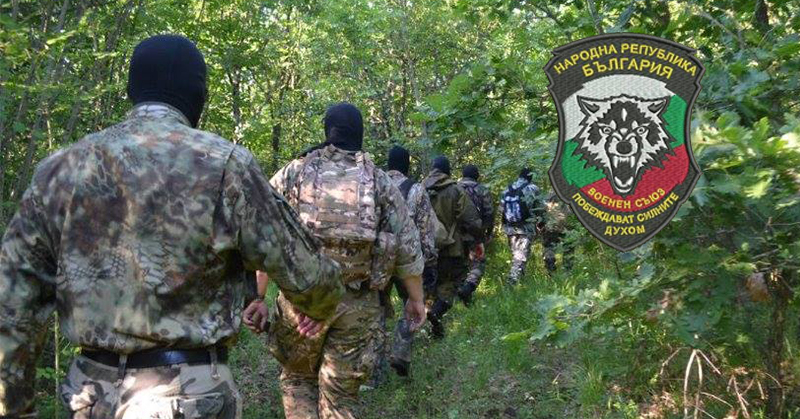
The historical roots of the refugee crisis in Europe follow the same lines as the immigration debate here, and have had the same atavistic reaction.

Continue reading

Could the Wiretap Accusations Be Grounds for Section 4 Removal?

This is very not normal, and it shouldn’t be forgotten. 

Trumps baseless accusations of unprecedented high crimes, and the way the government was forced to contort themselves to his rage-filled lunacy, is a clear demonstration of being unable to discharge his duties. 

Continue reading

The Spiteful Illogic of the New Travel Ban

1961-11-01a

When the first “Travel Ban” executive order was announced a week into the Trump administration some 4600 years ago, some of the key pillars of a free society made their impact felt in a way that shocked even the most optimistic observer. The legal system had a two-pronged effort. Organizations like the ACLU protected the victims of the order’s cruelty and brought their cases to an independent judiciary, which treated the order as what it was: a legal measure subject to review; not the blessed fiat of a New Dawn.

The other pillar, of course, was public protest, which stunned anyone who expected obsequiousness after the snowflakes of the women’s march melted. It is doubtful that legislators, and possibly even the courts, would have reacted with the swiftness they did were in not for spontaneous acts of disobedience, compassion, and righteous fury. Protests were shown again to not be movements of self-expression or sideshows to politics; they are a vital part of civil society.

So, the reaction to the travel ban, and its being held up by the courts, led to the rollout of a newly revised order yesterday. This was supposed to be rolled out last week, but it was delayed so that news of it wouldn’t step on the reception to Trump’s Congressional address last week.

Now, it is a good demonstration of how deeply dumb the President and his people are that they genuinely thought the rest of the week–month?–should revolve around him garnering praise for clearing the lowest possible bar. Trump was reportedly livid that the news of Sessions misleading Russian testimony and subsequent recusal took away from what I promise you he believes is regarded as the finest speech in American history. That’s partly what led to this weekend’s insanity.

But more importantly, as everyone pointed out, the delay for some good ol’ self-gratification contradicted the fierce urgency with which the initial rollout happened, and made Trump’s truly dangerous tweets about how judges were making our country less safe even more reckless. But that hypocrisy is just one of the many contradictions that shows how pointlessly self-defeating (not to mention cruel and un-American) these travel bans really are.

Continue reading

A Reminder about Obama and Russia

Image result for putin

This week’s must-read story is The New Yorker’s exhaustive piece on Russian propaganda machine and how it influences elections around the world. The article, a joint production by Evan Osnos, David Remnick, and Joshua Yaffa, filters the rise of Putinism through the first post-Soviet decade the Putin’s personal need to avenge slights against Russia. They demonstrate how Russia has been trying to reshape the world, in an asymmetric way, for most of last decade, culminating in working to elect Donald Trump (something they didn’t think would actually work).

It’s a great read on its own, but one thing that is highlights is what the Obama Administration knew, and why they didn’t act on it.

Remarkably, the Obama Administration learned of the hacking operation only in early summer—nine months after the F.B.I. first contacted the D.N.C. about the intrusion—and then was reluctant to act too strongly, for fear of being seen as partisan. Leaders of the Pentagon, the State Department, and the intelligence agencies met during the summer, but their focus was on how to safeguard state election commissions and electoral systems against a hack on Election Day.

That caution has embittered Clinton’s inner circle. “We understand the bind they were in,” one of Clinton’s senior advisers said. “But what if Barack Obama had gone to the Oval Office, or the East Room of the White House, and said, ‘I’m speaking to you tonight to inform you that the United States is under attack. The Russian government at the highest levels is trying to influence our most precious asset, our democracy, and I’m not going to let it happen.’ A large majority of Americans would have sat up and taken notice. My attitude is that we don’t have the right to lay blame for the results of this election at anybody’s feet, but, to me, it is bewildering—it is baffling—it is hard to make sense of why this was not a five-alarm fire in the White House.”

The Obama circle, which criticizes Clinton’s team for failing to lock down seemingly solid states like Wisconsin, Michigan, and Pennsylvania, insists that the White House acted appropriately. “What could we have done?” Benjamin Rhodes said. “We said they were doing it, so everybody had the basis to know that all the WikiLeaks material and the fake news were tied to Russia. There was no action we could have taken to stop the e-mails or the fake news from being propagated. . . . All we could do was expose it.”

Remember this when right-wing friends talk about how Obama “illegally wiretapped Trump!” When presented with unassailable (and not even covered up!) Russian interference in the election, they played it as close to the vest as possible. You have to believe that they would do this, in order not to be seen as partisan, but at the same time personally engineer a massive criminal scheme, and at the same time not do anything afterwards. It’s insane.

(It’s also a reminder that Putin hated Obama because he thought Obama interfered too much in Russian greatness, which might be accurate. And if anything, he hated Hillary more. Remember that when people say Obama and Hillary were weak on Russia.)