An Amplifier for Madness: Trump’s Wiretapping Accusations


faerie-tale-1293845_960_720

What happens when we have a vain lunatic in charge?


There is limitless insanity in the President of the United States accusing his predecessor of illegal wiretaps.  Former FBI man and counterterrorism expert Clint Watts (who seems to be having himself a well-deserved moment) broke some of them down over the weekend. These include:

  • That the POTUS has no idea how wiretaps work
  • That the POTUS isn’t aware of what the FBI does
  • That he probably shouldn’t draw attention to a FISA-approved wiretap, since that’s pretty bad
  • That if the President did receive intelligence on an ongoing investigation of a foreign power, he immediately compromised the operation. The IC was already leery of giving the President information. Now why would anyone tell him anything? That’s no way to run a country.

But, to me, what this shows as much as anything is how Trump serves as a force amplifier for the democracy-eroding paranoia of the far-right/alt-right (which differ only in messaging), the movement that has now entirely consumed the Republican Party.

Their hatred of Barack Obama was bottomless, an endlessly replenished well of racism and always-waxing lunacy. And the way it would operate is that a story, equal parts reprehensible and laughable, would be invented in someone’s twitter feed or gibbered on Alex Jones or published in Breitbart or even a personal blog. It would then filter its way up to Beck or Rush.

This would start to get amplified in the echo chamber, building up steam, until a producer for Fox or a blogger at NRO or one of the most “respectable” voices of the right-wing media started bringing up this thing that “people are talking about.” That, of course, legitimized the whole affair, and at this point, liberal blogs and liberal twitter would start to refute and make fun of it, and, if all went well, it got picked up by the real news, who had to “report the controversy.” This made whatever the story was unquestioned in the minds of those predisposed to believe it. More importantly, it was a virus for borderline voters, low-information types, who heard something about the President being a Muslim, so it might be true.

Don’t get me wrong. These kinds of things getting mainstreamed was a low-percentage affair. But that was ok. As long as you had a constant stream of vitriol for the initiates, and the occasional breakthrough, it was worth it. The strategy is a constant stream of hatred to keep the faithful worked up, and an attempt to sew confusion for everyone else.

But the far-right has received the greatest gift anyone could ever give them, in Donald Trump. As the Times deconstructed, the illegal wiretapping accusations went from 1) talk radio to 2) Breitbart to 3) the leader of the free world, who promptly said them out loud.

The impact of this was clear. Once the President said it, it was all anyone could talk about. And because he said it, the machinery of government has to throw itself behind him, with mouthpieces like Sean Spicer and Sarah Huckabee Sanders and Hope Hicks promising investigations, and Republicans being unable to completely refute it.

This is perfect, if you’re a Steve Bannon, who seems to believe very strongly in the “firehose of falsehood” Russian propaganda model. You put distractions in your friendly media, and almost immediately, they will be known everywhere, because the President has an endless persecution complex, an unquenchable desire for vindication, limitless credulity when it comes to hearing things that make him feel better about himself, and no impulse control.

I don’t think that Trump did this as a distraction, at least not deliberately. As everyone has pointed out, this isn’t a dodge from the Russian stuff; this is the Russian stuff. If it turns out that there was sufficient reason for a federal judge to approve a wiretap, that’s damning.

But they might not have found anything, which would be a “victory” for Trump. It wouldn’t explain all the other Russian connections, but it could be used to tarnish everything else as fake news. And more importantly, by Thursday 35-40% of the country is going to believe that Barack Obama personally installed a bug in Trump Towers. That will be part of the story. There will continue to be conflicting realities, and an inability to agree on even basic facts.

A democracy can’t work that way. That’s long been the goal of rightist propagandists, to erode the foundations of self-government. That they have a family-based authoritarian, and one who will immediately mainstream their wildest falsehoods, is a possible death-knell for our democracy.

The Art of the Deal: Bilateralism and US Foreign Policy


091019-dinosaur-crater-hmed-grid-6x2

I sort of feel like this dude. “Welp, this gonna suck.”


As I mentioned yesterday, one of this blog’s main ways of analyzing policy under Trump is to understand the ways the man’s own pathologies and self-image feed perfectly into the goals of those around him, who have actual goals and long-held beliefs. Steve Bannon wants to “deconstruct the administrative state” (i.e. stop having a functioning government)? Who better to do that through than a man who think that he, his kids, and that guy who married his daughter are the only ones with brains?

(By the way, “deconstructing the administrative state” has gotten a lot of press, but it’s just a scary-sounding Bannonism for what Republicans have been trying to do for decades, ever since they merged with the far right. It means destroying the idea of a self-governing nation. It’s an old game tricked out by his cheapjack revolutionary shtick. This isn’t new; it’s just now very powerful.)

This plays out in foreign policy in an interesting way as well. As we know, in terms of policy, Trump has very few beliefs. The only ones that are consistent are that “we’re getting screwed” in our deals, both economic and security, and that everyone is taking advantage of us. Part of that belief lies in some of his other unshakeable ideas: that he’s the world’s greatest deal-maker, and that the US was stupid not to have him negotiate everything. His sense of self and his limitless sense of victimization and injury have led him to believe that every deal is bad because the idiots in Washington didn’t let him do it.

And, happily, the far-right and the “alt-right” (which really aren’t different, and are essentially mainstream Republicanism), also hate all those “deals”. They hate multilateralism, as we talked about yesterday. It isn’t because of Agenda 21 or anything, though that’s good to frighten the rubes (and a frightening amount of those scared-rabbit rubes are in Congress).

It’s mostly because multi-lateral institutions were founded after WWII as a way to constrain the power of any individual nation, especially Germany. And while it is easy to say that this didn’t really work, since the US and the USSR forced every nation in the world to pick a side, they were still constrained.

Look at the terrible actions done by both sides. Chile, Iran, Guatemala, Vietnam on the US side. Hungary, Czechoslovakia, Afghanistan, Poland on the USSR. This just scratches the surface of foreign interventions, but even in those, there is a pattern. Only in Vietnam and Afghanistan (and Korea, but that was also part of WWII) was there active warfare, and even then both nations were “invited in” by governments to help fight/save Communism. The quotation marks in the last sentence obviously imply arm-twisting, but still: there was at least a hypocritical tribute to the idea of national sovereignty.

None of this was good, per se, but it observed the idea that you couldn’t just go in and plant your flag into someone else’s dirt through the skulls of the natives. I mean, the US and USSR did so, but pretended they weren’t, and weirdly, that pretending means something. It slowly shifted ideas. It isn’t absurd to think that, I don’t know, Botswana should have a say in international politics and the fate of their nation. It helped create the still-foaling idea that the “Global south” isn’t just the playground of empires, but people who have a say.

Needless to say, the right-wing hates that. One of the reason the Iraq War was supported so much on the right wasn’t any particular issue, but the idea that the US was going to do something, by god, without the UN or NATO or anyone who didn’t fall in goddamn line. That we acted without these multilaterals was not just a feature, for many, it was the whole point.

Multilateral obligations mean that you can’t just do whatever you want. Even George W. Bush recognized that the US had some obligations. But not Trump.

Remember, Trump’s entire sense of worth is wrapped up in the idea that he has the right to do whatever he wants. Businesses going bad? Declare bankruptcy and screw over his creditors. Don’t feel like paying contractors? Force them to accept pennies on the dollar or else be tied up in court for years. Woman not putting out? Move on her like a bitch. (Remember: that’s an actual quote from our President.)

This is perfect for the far right. Trump believes we’re getting screwed by these “deals” (he considers joining a global multilateral institution a “deal”, remember) and that he can get us much better ones, working country by country. And the heart of this is that, like contractors and creditors, he’s perfectly willing to screw over any country, to go back on deals, and to do whatever he needs to “win”.

And that’s perfect. That’s the US unconstrained. In theory, making numerous bilateral deals is really difficult, since you have to take into account shifting alliances, sides playing against each other, local concerns, and more. Look at how complicated Azerbijan is, and how important it is to Russia, Iran, and Turkey, and how complex their relationship is.

So, to play this right would take great diplomatic skill, or the belief that you don’t need diplomacy at all. Or, in a way, both. It takes some knowledge to negotiate, but it also takes the belief that if you don’t like what’s happening, or you have a better chance at succeeding by breaking a deal, you break the deal. You screw them over. And the willingness to do so, to break any rule for personal gain, has been the one consistent part of Donald Trump’s life.

This will make the world a far more dangerous place. As much as his ties with Russia and white supremacy, the abdication of the United States from multilateralism is how the liberal world order can collapse. Trump wants that to happen so that he can negotiate with important people who have to kiss his ass. The right wants that to happen so that the US can act unconstrained. They have found their vessel in a truly empty man, who has nothing but a skin of vanity.

It’s a perfect mix. And over the next couple of weeks, we’ll look at how this plays out in the world, starting with (of course) Yemen.

You Want it Darker? Trump’s Illiberal World Order


Image result for cartoon american imperialism

The plus side is maybe we’ll get more cartoons like this


Trying to figure out Trumpism, as it relates to foreign policy, is in many ways a mug’s game. After all, it seems, he doesn’t really think deeply about the world, or even much at all. Just as a place to screw people over or where America gets screwed. To imagine Trump with a unified theory is to imagine him really considering an issue, and that’s laughable.

But that doesn’t mean he doesn’t have opinions, and half-baked self-centered beliefs. And one of this blog’s long-standing principles is that Trump’s personal pathologies perfectly fit the goals of the far and alt-right, which makes him the perfect vehicle. His empty faith that he is the world’s best negotiator allow for the breaking up of the multilateral order, and his own roiling racism dovetails perfectly for their anti-Muslim and white supranationalism fervor.

And, through that, we’re beginning to get an idea of what the foreign policy will look like. The Soufan Group watched his Fate of the Nation speech, and weren’t thrilled with what they saw.

Since the end of World War II, the U.S. has viewed and positioned itself as the leader of the free world….Despite the variations, (ed: in how this has played out) the core of U.S. foreign policy over the last seven decades has been that the U.S. would play a leading role in the global order. 

The Trump administration appears in both rhetoric and deed to be pivoting from this long-held stance in a noticeable fashion. During his campaign and his first month in office, President Trump has consistently stressed that he believes the U.S. has ‘been taken advantage of’ in terms of trade policies and defense obligations, and has promised that would no longer be the case. Trump’s February 28 joint address to Congress confirmed again that the shift to a transactional balance sheet approach to many international concerns will be a cornerstone of his administration. 

President Trump’s preference of viewing foreign affairs in a bilateral fashion—and to approach pacts as ‘deals’—was evident in both what was and was not said in the one-hour long speech. During his speech, the President never mentioned the word ‘democracy’ in any context—foreign or domestic. He mentioned the word ‘freedom’ three times, though none of the three mentions were in the context of foreign affairs or global stability. The only specific use of the word came in the context of health insurance. The term ‘free world’—whatever its merit—was also not mentioned, again consistent with the President’s preference to review and perhaps discard long-standing policies and treaties. He stated that the U.S. “will respect historic institutions, but we will respect the foreign rights of all nations. And they have to respect our rights as a nation, also.” He added: “America is willing to find new friends, and to forge new partnerships, where shared interests align.”

In theory, there might be something refreshing about a US President who doesn’t give grandiloquent speeches about how we’re a shiny beacon on the hill and how our endless struggle and god-given mission is to let freedom bloom around the globe. After all, in doing so, the United States have fomented or had its hands in a dozen bloody and grubby coups, started of perpetuated civilian-slaughtering wars in places as distant as Vietnam and Guatemala, and has generally run unchecked while acting like self-righteous.

But that’s not what Trump is doing. He isn’t wrestling with a tortured history in an attempt to be more decent. He’s saying that America’s problem was that it viewed itself as the guarantor of the international order, and that it hasn’t been aggressive enough.

The essential policy is that we deal from strength, running over those who are weaker, and forming alliances with those that are strong. There will be ideological alliances, of course, but only if they are suitable. If Le Pen wins, then France is a friend; if not: Paris isn’t Paris. To say that this is distasteful, and the opposite of what the post-war world has been like is to say that water is wet.

One doesn’t even have to bring in the Russian angle on this, though Putin’s Russia is the model, the inspiration, and maybe the daddy of it all. This has been the project of the right for a long time. The distaste in multilateral institutions isn’t that they take away American freedom–they really, really don’t–but that they constrain America from acting like a classic imperial power. From “cutting deals” to exploit weaker countries, from forcing our economic interests at the barrel of a gun (well, not really, but in theory), and from carving up the world in a great game.

Where do Mattis and McMasters fit in? Who knows? They probably see it as their duty to check this. The question is if they’ll be able.

As they say, hypocrisy is the tribute that vice plays to virtue. It’s fair to say that has been the essence of US foreign policy while upholding the world order that has gone a long way toward preventing catastrophic war after the fires of last century. Trump, though, isn’t even decent enough to be a hypocrite. For him, and for the team that channels his sicknesses toward their own ends, vice is the virtue unto itself.

Water Wednesday: Wisconsin’s Walker Woes and Things That Don’t Begin With W. Like Lake Erie


1351278762-picture_2025

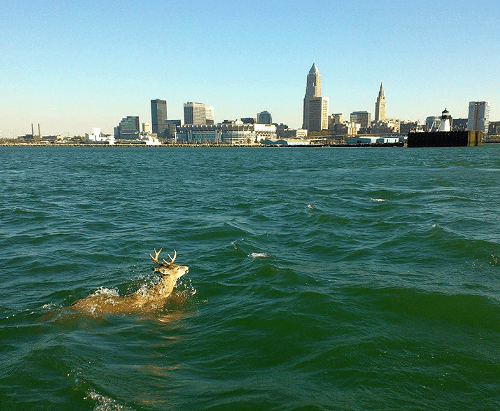
I’m sure there’s a metaphor here somewhere, but my first thought is: whoa! A deer in Lake Erie? What the hell? Image (and explanation) from Cleveland Scene

A quick rundown of some top water stories, which remind us that while we can impact nature, we’re really not in charge. 

I realize that there is a weird-seeming contradiction in saying that we can bring great change to nature, but that we’re still at its mercy. But when we say “great change”, we don’t mean permanent. The earth will eventually repair itself, and time will smooth over our cataclysms. We just won’t be here. But you want the real image? Imagine a 7-yr-old jamming a hatpin into his mother’s ankle. He can do that, and cause great damage, but really, the storm will redound upon him.

So let’s start this week’s “hey, who cares about clean water?” news with Wisconsin.

Continue reading

Border Patrol Loosening Standard for Hiring While Granting More Power


Image result for gestapo papers please

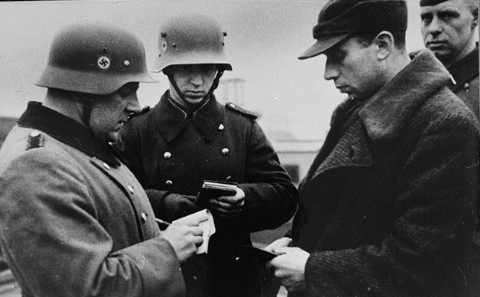
Papers!

The other day we talked about a newly-empowered Customs and Order Protection, taking full advantage of the outskirts of their legal rights, and how they were seemingly taking on the role of vanguard of the Trump administration’s more insidious plans. Today the Times expands on that, talking about how the CBP, and ICE, have more “freedom” to do what they want.

Our speculation is that, as these agencies looked to expand to carry out the brutal immigration policies of the Trump/Bannon/Sessions axis, they would naturally lend themselves to people even more ready to gang up on Mexers and camel jockeys. Both CPB and ICE already have a reputation for attracting more lawless, vigilante types (though that is certainly far from a complete picture of the agents; many of whom are as serious as their serious jobs demand). The fear is that with the license to really bust some heads, these agencies will attract recruits who are frustrated by the lack of head-bashing opportunities their daily lives or other law enforcement jobs provide.

Those fears are not misplaced. Foreign Policy exclusive today looks at how it seems like the DHS will be lowering standards and easing restrictions when it comes to hiring for the CPB.

Molly O’Toole’s article talks about how the DHS wants to reduce the use of certain background checks, including polygraphs, arguing that they are too burdensome, and recruits coming from other law enforcement agencies shouldn’t have to do redundant tests. (You could also say that polygraphs are stupids.) But there is a reason that CPB has such strict background tests: they are super easy to corrupt.

Or, if not easy, really great targets for smugglers, gangs, and human traffickers to bribe or blackmail. They are targeted with sex and money, so that they look the other way. The nature of their jobs requires more probity, the theory goes.

Yet those tough standards, including a mandatory polygraph, were put into place by Congress in 2010, after Customs and Border Protection suffered acute growing pains during the Bush administration, when CBP doubled in size. Some Border Patrol agents didn’t complete background checks before they deployed to the frontlines, officials reported, and the agency saw an increase in cases of internal corruption, and questions over its use-of-force training following a spate of deadly incidents.

I have no idea if the background checks are really too burdensome. It seems like a good idea, given how quickly the department expanded under President Bush, and how much of a problem that caused (as the FP article details). But maybe, in normal circumstances, it would be ok to make it a little easier to get in.

These aren’t normal circumstances. And while the article doesn’t go into the possibility that underqualified Gestapo-wannabes will flood the ranks of CBP and ICE, I think that’s a major fear. A rapid expansion of the ranks for people looking for exercise racialized and expanded powers with lower background standards seems like it will be, at best, a disaster. At worst, it is exactly what Trump and Bannon and Sessions want. Their own extremely loyal white nationalist force.


Trump on Paris: Equal Parts Racism, Terrible Government, And Maddening Idiocy


arc-de-triomphe-de-face-630x405-c-thinkstock

More like the “Arch De Jim Doesn’t Want To Go To Paris Anymore!”


I feel that for everyone, there is one Trump habit or event that sticks in your craw more than others, something that seems minor (in the grand scheme of Trump horrors), but that, to you, just wraps everything up in a disgusting, pulsating meat-bow. For me, it’s France. Or, more specifically, what he has to say about Paris, which comes up every time he’s talking about “terror”. He did so in his CPAC speech.

Take a look at what happened in Sweden. I love Sweden. Great country, great people, I love Sweden. They understand I’m right. The people there understand I’m right. Take a look at what’s happening in Sweden. Take a look at what’s happened in Germany. Take a look at what’s happened in France. Take a look at Nice and Paris.

I have a friend, he’s a very, very substantial guy, he loves the city of lights. He loves Paris. For years, every year during the summer he would go to Paris. It was automatic. With his wife and his family. Hadn’t seen him in a while. And I said, Jim, let me ask you a question, how’s Paris doing? Paris? I don’t go there anymore. Paris is no longer Paris. That was four years, four, five years, hasn’t gone there. He wouldn’t miss it for anything. Now he doesn’t even think in terms of going there.

Now. There’s actually a lot going on here. For one thing, it is weird and terrible to try to paint an ally (as France most certainly is) as a dystopian hellhole, and one that it isn’t safe to go to. That’s just being really bad at government. It’s considerably worse than criticizing a particular policy. Saying “Paris is no longer Paris” is attacking an ally on a fundamental, even existential level. French President Hollande is rightfully upset. Part of running the government, and being the face of the country, is getting along with allies and not going out of your way to needlessly insult. Trump is very bad at this job!

But let’s go a little deeper. The whole “Paris is no longer Paris” thing isn’t just about terrorism. Indeed, it’s more straight-up racism. The example here is from “Four, five years ago”, before Hebdo, before Nice, before the Bataclan. There’s a chance that Trump is just riffing and fudging the years, but he’s told this story many times. It isn’t that it is violent. It’s that there are immigrants there. Non-French.

And it is true that while before the wave of jihad violence France, and Paris, were trying to deal with poor immigrants who were not able to assimilate into society. It’s very complex, partly because France, unlike America (traditionally), had very strict requirements about what it meant to be “French”, and there wasn’t much of an attempt to change that, or to help newcomers from different cultures. They were immediately given up on and marginalized. One of the reasons the immigrant experience in America has worked so well, despite its flaws, is that the culture is flexible enough that it changes with new arrivals, and doesn’t try to change them (much).

So when Trump talks about his friend Jim not wanting to go to Paris because it is no longer Paris, he’s just updating and incorporating an older story into a narrative of terrorism. But the story is that Paris is no longer purely white, and that the non-whites would like some rights, and the right to be visible. The heart of it is pure racism; the conflation of religious bigotry with fears about terrorism are at the heart of the white supra-nationalist campaign. It would be subtly very smart, if I thought it was intentional.

I’m not sure it is, though, because of what bothers me the most: that the President of the United States of America, when discussing transnational terrorism, seems to base most of his thinking off a vague anecdote about a buddy of his named Jim.

This is enraging. It makes me so mad I can barely sit still. It’s not even the policy-basing part. It’s that he thinks this means something. He thinks it is interesting and important that a guy named Jim–a substantial guy–doesn’t like to go to Paris, and he always used to. Something’s going on!

Think about it. Imagine you got into a conversation in a bar and someone said, well, let me tell you about terrorism: here’s an incredibly boring story about a guy’s vacation history. You’d nod, and think, well, ok, that doesn’t mean anything. This guy just has a few vague, mostly racist assumptions, a second-person anecdote, and not much else. It would be a bad conversation in a bar, the faintly-lunatic ramblings of a know-nothing blowhard who seems like he’s more interested in impressing you by being friends with a substantial guy who can go to Paris whenever he wants than on actually talking about the issue.

Now imagine a Presidential candidate uses that anecdote as something meaningful. Now imagine the President keeps using it. What the hell? You have access to every bit of intelligence the country produces, and you want to talk about Jim?

I mean, maybe this is why he is “relatable”, because he talks like a normal guy. That’s backward in and of itself; his “normal guy” talk is so sweaty in its desperate lust for your admiration and filled with brags about the powerful people he knows that it should render itself as more out of touch than Romney, but we’re in the upside down, so who knows?

And maybe this is smart. Maybe it is a not-too-subtle dogwhistle about the mongrol hordes in Europe, and how they are coming over here if we don’t do anything. Maybe he knows exactly what he is doing, if just instinctively.

But let us not forget that the President is a man so deeply incurious about the world, and so vastly unlearned, that he bases his ideas on cable news crawls and other people’s idiot stories. That’s where we are.

Sad DHS Memos Don’t Reflect Full Faith in the Alternate Facts

800px-franc3a7ois_chifflart_jeanne_d27arc

Pictured: unfavorable facts

In the last post, we linked to an article about the how the Trump administration approved DAPL and Keystone: essentially, throwing out every agreement they didn’t like. There’s a quote in the article that I think is a perfect summation.

Two days before the Trump administration approved an easement for the Dakota Access pipeline to cross a reservoir near the Standing Rock Sioux Tribe reservation, the U.S. Department of the Interior withdrew a legal opinion that concluded there was “ample legal justification” to deny it.

The withdrawal of the opinion was revealed in court documents filed this week by U.S. Army Corps of Engineers, the same agency that requested the review late last year.

“A pattern is emerging with [the Trump] administration,” said Jan Hasselman, an attorney representing the Standing Rock Sioux Tribe. “They take good, thoughtful work and then just throw it in the trash and do whatever they want to do.”

Which is pretty much perfect. But it doesn’t just pertain to pipelines, of course. From Lawfare. 

CNN also reports that the White House is pushing officials in the Department of Homeland Security and the Justice Department to provide information in support of the supposed security rationale behind the executive order banning entry into the U.S. for citizens of seven majority-Muslim countries. The administration rejected an earlier DHS report contradicting the White House’s assertions on the security benefits of the travel ban and now is asking for a revised report, leading to concern within DHS and DOJ over the potential politicization of intelligence.

This is what happens when you have a faith-based organization. Everything has to fit that belief, and that which doesn’t is fake. It’s faith in the bigoted mantras of the Bannon-Gorka-Sessions axis, and faith in whatever idiot things Trump improvised on the campaign. It’s an odd miracle of this peculiar catechism that these are happily aligned.

Trump’s Pipeline Policies: As Bad As Everything Else They Do

APTOPIX Michigan River Oil Spill

The aftermath of the Enbridge oil spill in Michigan. Image from salmonguy.org

How many pipeline spills do you think there were last year? Three? Ten? 85? Maybe you remember reading about a few, and think, well, things were pretty hectic last year, what with the dying-fish floparound of liberal democracy, so maybe I missed one here or there.

There were, at least, 220 “significant” leaks220 “significant” leaks, when you count oil (in all its manifest and increasingly sludgy forms), natural gas, and refined gasoline. Because that’s what pipelines do. They burst. Whether they are lurking under the Great Lakes or right at the edge of your town, coursing under the fields where you ran as a child, they are a time bomb, ready to go off.

Of course, we need pipelines. Our economy is still based on dead dinosaurs (which, though not strictly accurate, sort of is, and is actually sort of cool, when you think about it), and that matter needs to be transported. It’s a devil’s deal, maybe, but it’s the one we have. Which is why you think it would be super really important to make sure that those pipelines, which are aging, increasingly prone to busting, and more susceptible to extreme weather (which we’re having more of), are monitored, protected, and upgraded.

Now, the upgrading might be part of the administration’s infrastructure plan, though it seems like they are already planning to “punt” that to 2018, partly because they have other priorities (taking away health care from millions, tax cuts for the wealthy), and mostly because Republicans really don’t want to spend any money on infrastructure, as Yglesias reminds us. So let’s not put our eggs in the upgrade basket.

And, of course, the “monitor and regulate our aging pipelines so as to not poison our air, water, and land” is DOA as well. They are looking to “ease” regulations that the Obama administration imposed that call for strict monitoring.

Regulators in the waning hours of the Obama era wrote rules aimed at changing that, and the industry is looking forward to the new administration rolling them back. The Pipeline and Hazardous Materials Safety Administration “has gone overboard,” said Brigham McCown, a former head of the PHMSA who served on President Donald Trump’s infrastructure transition team. “They built a Cadillac instead of the Chevrolet that Congress told them to build.”

While Obama was president, the PHMSA (Pipeline and Hazardous Materials Safety Administration)budget grew by 61 percent. Then, seven days before Trump’s inauguration, the agency finalized a rule toughening up inspection and repair demands, mandating, for example, that companies have leak-detection systems in populated areas and requiring they examine lines within 72 hours of flooding or another so-called extreme weather event. The American Petroleum Institute, the oil and gas industry’s main trade group, characterized it all as overreaching and unnecessary.

Unsurprisingly (though inconclusively, as it was a small sample size) the total number of spills and leaks actually dropped last year, from 462 in 2015 to 417 (the 220 number above was “significant” leaks, obviously a few hundred are no biggie). So yeah, the new energy team thinks that having the Cadillac of pipelines protection is way worse than having the Chevy.

So let’s sum up.

  • No money for upgrades
  • Fewer regulations
  • Less monitoring
  • No admittance that old pipelines are in more danger due to climate change, because what’s that?
  • More reliance on the materials that lead to climate change
  • More pipelines (even if you have to ignore reasonable arguments against)

It’s a maddening and lunatic philosophy. It’s one thing to want to rely entirely on fossil fuels; it is another altogether to deliberately oppose making the usage of them even slightly safer. I don’t even know if you can call that a philosophy. It’s just insanity, and it is the insanity that is running our country.

Anyway, this was another reminder that Donald Trump is a right-wing Republican who governs like a right-wing Republican.