Michigan Water Bill Sums Up War Against the Common Good in Great Lakes

Remember last week, when we had all those lovely pictures of the Great Lakes? And were happy? Well, that’s done with. There’s no more time for lazy beer-drinking bocce along a sun-kissed Lake Michigan shoreline*. The war against the lakes and against the common good as a whole continues apace.


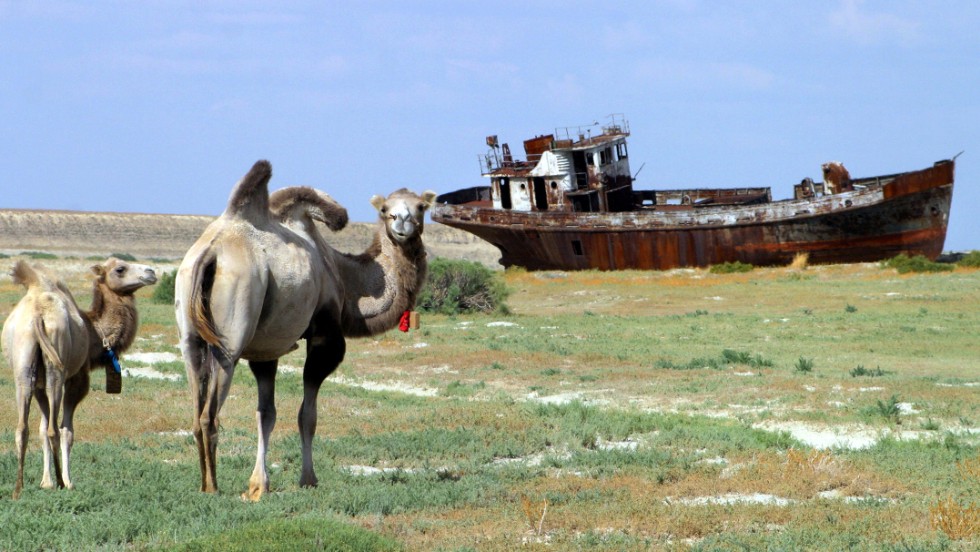
Image result for dried aral sea

A sort-of-adorable reminder that enormous lakes can disappear.


(*There’s always time for that. Holy moly, I can’t wait for the summer.)

A bill has been working its way through the Michigan legislature the last couple of weeks, and is pending a vote. This is the sort of bill that pundits call “business friendly”, but the rest of us might call “an abdication of our natural rights to corporate overlords.” Let’s let the Petoeksy News explain:

House Bill 5638, introduced by state Rep. Aaron Miller, R-Sturgis, would eliminate current Department of Environmental Quality requirements for some large water withdrawals proposed by businesses and farms to be screened through an online assessment tool at the agency’s website. This tool is intended to be used prior to large-quantity withdrawals — those of 100,000 gallons or more per day — to determine the impact on local water resources.

Rather than using the current review process, the legislation would allow some applicants instead to seek approval based on hydrological analyses they submit, completed by a hydrologist of their choosing.

 Now, reader, I confess I don’t know exactly how onerous the Michigan DEQ is when approving withdrawals. It might be very costly and time-consuming, and may have an overall negative economic impact that (somehow) outweighs the good it does.
It’s a pretty simple public interface in which the farmer plugs in their needs, and an algorithm determines if it is approved or there needs to be more investigation.  Apparently, some farmers can wait months for an approval.  It was meant to be unbiased, but can obviusly be slow and unwieldly. Maybe it needs reform and streamlining.
This isn’t it.

Continue reading

On Great Lakes Day, Some Pictures

I have a whole post planned about a terrible new law making its way through Michigan that will reduce oversight on lake withdrawals, as well as the gigantic diversion giveaways Scott Walker wants to give to Foxconn, but since it is Great Lakes Day, I thought maybe some pictures.

Let’s look at the stunning beauty of the Lakes, and think about what an enormous gift, what a continent-defining feature, what life-affirming and life-sustaining bodies these are, how they’ve molded our history and have given birth to millions of paused thoughts. And let’s remember to protect them.

(prior posts on Great Lakes are below)


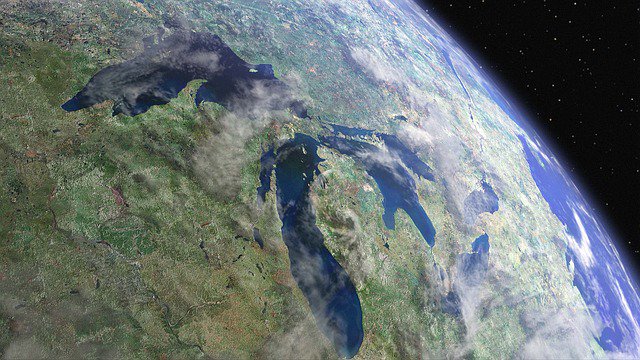
nasa

Courtesy of NASA

Look at how even the enormity of Chicago is just a blurry fuzz at Lake Michigan’s southern end. What I love about pictures like this is that you can see the meaningless and the human intrusion of borders.


Image result for great lakes from space

Public domain image taken from International Space Station


Small as we may be, our impact is enormous. From here, the lakes look almost unnatural, like the human lights (a gross and small-minded echo of the northern lights above) are the natural feature, and there is a vast darkness interposing itself. And in a way, that’s true: the lakes can swallow whole our individual aspirations, lap at our shores unconcerned and erosive. For years, I was terrified by Lake Michigan at night, but could never place it: the vastness and the lack of concern for human existence gave me an unnamable dread. As I got older, I figured it out, but it is no less quieting for that.


I saw this on twitter, but there’s no mention of origin, so I’ll just say it is beautiful.


Image result for great lakes from space

This was taken by the Canadian Space Agency. I like it for the different perspective than our usual “north is up” one, which makes little sense on a round planet. But also: Canadian Space Agency!

Allison1Allison2

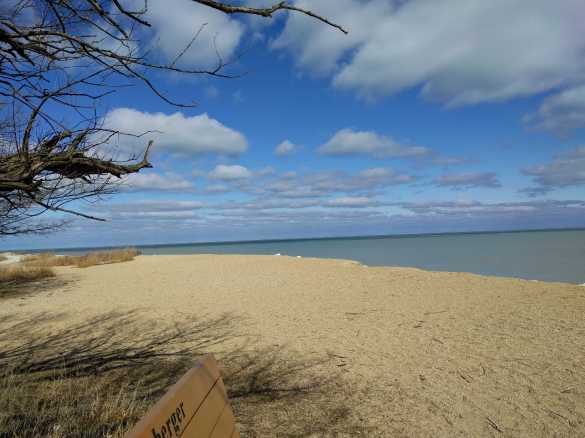
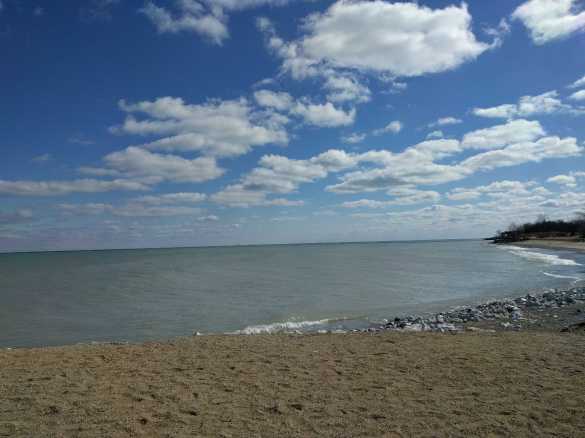
These two beautiful shots were taken by Allison, just this afternoon, at Illinois State Beach Park. If you look closely at the bottom one, pointing south, you can see the dim outlines of the Chicago skyline, some 40 miles away. It’s so far, and so vast, and you’re really just still at the bottom part of the lake. Geologically, you’re right next door to Chicago.

This slideshow requires JavaScript.

These were taken by me at various times in the last year. All about the same spot, and all, to me, show the great gift of the Lakes, with their never-same moods contrasting with their omnipresence. They are stabilizing, and we look to them in the morning to reassure of us some continuity, even as the world breaks apart, and even as their changing faces gives us a glimpse of our own impermanence.

Here are a few Great Lakes posts, if you’re inclined to do more reading.


McMaster Out, Kushner in Deep, Hope Hicks Whatever: Another Week in Chaos America

18s8qh8utjx9qgif

Even though I’ve known and hated Donald Trump for literally as far back as I can remember, in some 80s hazy grade school mist, there was a time I didn’t think about him every day. Sure, I’d mediate on his grotesque pointlessness if I saw a commercial for his dingdong show for idiots, or whenever Fox would air his disjointed ramblings, but I bet I could go weeks at a time without thinking of him.

It’s deeply painful to know that now I’ll probably think of him every day for like the rest of my life, no matter how this plays out. Some memory will pop into my head. That’s sort of what I mean by totalitarianism: this giant balloon in your brain that crowds out everything besides autonomic functions.

Sigh. Maybe I’ll just turn this blog into nothing but reviews of books published at least 50 years ago. But until then, another roundup…

Continue reading

To Arms, Teachers! Trumpism as Totalitarianism

I just finished Masha Gessen’s truly great The Future is History, her story of “how totalitarianism reclaimed Russia”. It was hard to read, not just because of the grey bleakness that choked out all Russian political space throughout the book, but because of the vast parallels between Russia and the United States…especially, of course, between the rise of Trump and the Reign of Putin.

I don’t mean, right now at least, in the strictly legal or political sense. The book doesn’t at all touch on potential collusion, or cooperation between the parties. Trump is really only mentioned a couple of times at the end, once where Gessen is talking about the growing global influence of Alexander Dugin, the philosopher of Putinism and Russia’s aggressive revanchism, with its white nationalism, hatred of modernity, anti-gay hysteria, political oppression, and swaggering love of upsetting norms.

In the epilogue, she writes of his growing international fame: “With the election of Donald Trump in the United States, the neo-Nazi movement known as the ‘alt-right’ gained public prominence, as did its leader Richard Spencer, an American married to Nina Kouprianova, a Russian woman who served as Dugin’s English translator and American promoter.”

This, I think, is part of the key. The philosophy behind Putinism, especially once his second terms started, has been aggressive and deeply conservative, almost atavistic. And that movement, which I’ve lumped as “white suprenationalism“, has been the driving moral force behind Trump.

This isn’t a full review of the book, nor is it trying to tease out the enormity of the Russian connection, in a spiritual, legal, and economic sense (indeed, every time I try to, I get lost in the vastness of the details, which might be the point). I hope to do a full review this week, and hope to bring out more connections as we go along.

But there was one passage that struck me, and that clarified a lot of what I have been thinking about when we talk about arming teachers.

Continue reading

Bibi as Trump; Trump As Bibi: How Netanyahu Is The Most Republican Politican In the World

Image result for trump netanyahu

In 2015, facing yet another tough re-election campaign, Benjamin Netanyahu posted a short video on his Facebook page, warning his voters about a unique threat to their political system, their way of life, and indeed, the fate of their country: different voters.

“The right-wing government is in danger. Arab voters are heading to the polling stations in droves. Left-wing NGOs are bringing them in buses.”

This was in March of 2015, a few short months before Trump brought racism back into the mainstream of American politics, but it wasn’t like this sort of rhetoric was unfamiliar. Republicans in the United States have been using the same sort of rhetoric for years.

They’d been warning us of hordes of illegal immigrants voting, and massive conspiracies to have the wrong voters vote illegally. One of their conjuring words was “ACORN”, a voter registration service which they shut down after taking part in wild, absurdist conspiracies.

But to Republican supporters, alt-right loons, and out-and-out racists, it was an unmitigated Good Thing. After all, what ACORN was doing was registering the wrong people to vote. That’s echoed in Bibi’s message. It smacks of conspiracy, international meddling, some kind of nefarious scheme to overturn the rightful heir to the Israeli throne, when really it was just voter mobilization against a candidate who had made lives on the margin even more precarious.

This shouldn’t have been a surprise. Bibi Netanyahu has for years been not just celebrated by the Republican Party, but has essentially been a Republican. They use the same tactics, the same tone, and have shared beliefs.

Trump, though not a Netanyahu-like figure, is still the apotheosis of this. Through their rank insecurity, their demagogic bigotry, and most of all, their massive corruption, it is pretty clear that Trump and Bibi are cut from the same cloth.

Continue reading

A Crisis of Faith: Parkland, Climate Change, and How American Paranoia Can Shatter the World

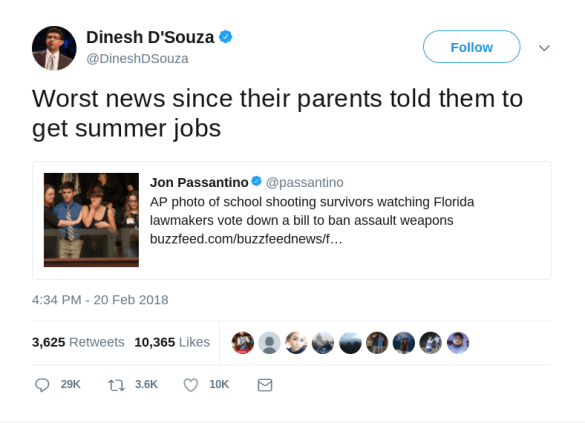
It seemed almost inevitable, as the students of Marjory Stoneman Douglas High found their voice through pain and grief, as they responded with anger and frustration to the ritualistic banalities that follow like vultures after American bloodshed, and as they began to name names, that there would be a backlash.

It was impossible, in our day, to think that survivors of a massacre would have some breathing space without facing fierce retribution. It was impossible to think that activism in the face of tragedy would go unpunished. We all knew, as the horrible week turned into the weekend, and as they mobilized and gathered momentum, that they would soon be in the cross-hairs of the right.

We know why: they do have moral authority, they aren’t afraid, they don’t want to mouth the numbing “come together” catchphrase, and they are damn good at organizing. They are calling the NRA and its enablers on their murderous bullshit, and that’s terrifying to wingers.

So the backlash was coming, but I wasn’t quite sure which form it would take. It was clear that some assholes would continue to be assholes…


dinesh

Or, I don’t know, the news that their friends were being gunned down in the hallways next to them was probably pretty bad too…


…but for the most part, even wingers didn’t want to openly mock these kids. So they settled on some kind of rough consensus, based around two points. One of these was cruel, if understandable and plausible, and the other, well…

  1. These kids were young and stupid and don’t actually know anything about life or policy, and they are just being emotional right now
  2. They are being manipulated during their time of trauma by the organized Left, especially George Soros.

This is, sadly, not a joke.

Continue reading

“Blue Apron” Food Stamps. Refugees. School Shootings. For the GOP, Meanness is The Goal

On Valentine’s Day, which will forever be known to the students at Marjory Stoneman Douglas High School in Parkland as the day their young lives became forever associated with trauma, Allison and I decided to watch something old, and romantic, so we could not talk about the daily horrors for a few hours. We had that luxury, of course.

We quickly picked Casablanca, which neither of us had seen for years.  What struck me watching it again, beside how great it still is, is that beside the main three (or four) characters, you are meant to deeply sympathize with the young couple trying to get out of the city.

Real people (2/3rds)

We’re primed to sympathize with them, to feel their plight, to feel the agony of their neverland time in Casablanca. This isn’t just because they are young and attractive, but because the opening narration perfectly lays out their situation.

With the coming of the Second World  War, many eyes in imprisoned Europe turned hopefully, or desperately,  toward the freedom of the Americas. Lisbon became the great embarkation point. But not everybody could get to Lisbon directly, and so, a tortuous, roundabout refugee trail sprang up. Paris to Marseilles, across the Mediterranean to Oran, then by train, or auto, or foot, across the rim of Africa to Casablanca in French Morocco.

Here, the fortunate ones, through money, or influence, or luck, might obtain exit visas and scurry to Lisbon, and from Lisbon to the New World. But the others wait in Casablanca — and  wait — and wait — and wait .

You can feel their desperate pain. These are people whose lives have been upturned by the horrors of war, by the mad headlong rush of violence into their lives. They are broken and shattered and scared and lost, half-dead, barely clinging onto hope. We feel for them, because they are human, and we can see ourselves in them.

We have the same situation in Syria, today. Millions of people have had their lives turned inside out, blown apart by a savagely cruel war. They spent their lives under the cadaverous pallor of the Asad regime, and when some rose up, peacefully, they were slaughtered. Over the next 7 years, their country has been turned into a charnel house, ripped apart by warring factions inside the country (especially the regime), transnational groups like ISIS, and international actors like Russia, Iran, the United States, Saudi Arabia, now Turkey, maybe Israel.

They fled across the self-same Mediterannean. They fled to Europe, many with eyes toward America. But we didn’t see them as people. We saw them as others, verminous danger, and closed our doors.

Not real people

That’s clear in the latest budget, and it is clear in, say, the dozens of refugee resettlement centers that are being closed under Trump and Paul Ryan.

But that’s the GOP. That’s who they are as a party, and it is clear in issue after issue: cruelty is the point, and empathy is a weakness. It is not a coincidence, nor a distortion, that their President is a man entirely incapable of empathy, and whose primary instinct (other than self-aggrandizement) is to be cruel to those he thinks are weaker than him.

It’s how he became President after all, and in every move he makes and every reaction he has, and in every piece of policy crafted in the head of Paul Ryan, making the lives of actual humans even worse is the primary goal. Punching down, and pulling the last shreds of a decent life from those who have so little.

Continue reading

Clean Water is a Common Good. That’s Why Its Access is Being Limited.

Pictured: Not Tang.

“Brackish” is a wonderfully descriptive word; it is nearly onomatopoetic in its immediate salinity. It has a scaly tangibility to it, and contains within it an instant shudder. “Brack” is the sound you make when you taste something undrinkable, something wrong, something poisonous.

But for too many Americans, that is the reality of their water. It is choking, dirty, and dangerous. It is the opposite of what water should be. It has been degraded by capitalism and left to fester by the people elected to remember the forgotten.

This is laid out in stark detail by Sarah Jones and Emily Atkin at the resurgent The New Republic, in an article titled, with no pulled punches, Rural America’s Drinking Water Crisis.

Continue reading

Frayed Alliance: Turkey, Russia, and Iran Circle Back to Familiar Patterns


Image result for caucasus middle east

he This map helpfully has every area I want to talk about

During WWI, the Ottoman Empire’s main concern wasn’t the British or French, and certainly not the Americans, but the Russians. The Russian Empire had fought the Ottomans time and time again throughout the centuries, with at least 11 distinct wars over territory.

Most of these wars revolved around the Balkans and the Ukraine, territory both empires thought was rightfully theirs. Russia, when the wars began in the 1600s, was an upstart, unfurling its frozen limbs from St. Petersberg after a slow recovery from Mongol depredations.

But conflict wasn’t entirely in Slavic lands. The reason why the Turks were so worried about the Russians, of course, was that the Russians had pushed their empire into the Caucasus Mountains, on the Ottoman’s eastern flank. That region, flanked by the Black and Caspian seas, was of vital importance to the local players, which is why a fur-hat dominated European hereditary dynasty fought bloody and indecisive wars to tame it.

This should clear everything up

Some of these wars that Russia fought for the Caucasus were against the region’s other historic power, the Persians. As Russia moved into that area, they fought a series of wars against the Persians, being rebuffed in the first war in 1651, but slowly gaining ground as the empires traded strength. By 1828, Russia was in firm control of what had been Persian territory.

As_Between_Friends_(Punch_magazine,_13_December_1911,_detail)

See?

So during the Great War, the Turks got awfully worried about the Armenians, Orthodox Christians who had spent nearly 100 years as part of the Russian Empire, serving as a buffer or a fifth column inside Ottoman territory. And it was pretty clear with whom the Armenians sided.

So, in order to prevent the Russians from consolidating territory, they had gained from the Persians and using it as a launching ground for an eastern front, the Young Turks tried to eliminate the Armenians, whose crime was being in the middle of three great empires.

This is sort of a long way of saying: that’s where we are again today.

Post-West, A Region Falls Into Historical Patterns

I was thinking about this when I read an article on Eurasia Review, originally from the Tasnim News Agency. It is about the Iranian president criticizing Turkey for their incursions in Syria.

Iranian President Hassan Rouhani urged that Turkey’s military assault on Afrin region in northwest Syria should come to an end, stressing that the presence of an armed force in another country needs the consent of that country’s government and people.

Now, you might be skeptical of Iranian concern for this, given that they have been operating in Syria for the duration of the war, being, along with Russia, the main supporters of Asad. Rouhani could probably scoff at charges of hypocrisy though, since his statement was couched by saying “needs the consent of…government and people.”

And he has the consent of the government, if you believe Syria really exists anymore, which I sort of don’t. The people? That’s a bit trickier. But the main point is that none of the major players are actually concerned with the wishes of a sovereign Syrian people. Instead, this is a regional battleground. For Iran, it is partly (largely) against the Sauds, but more and more, it is becoming the testing ground for old enmities against Russia and Turkey.

Last year I talked about these powers, and how they were maneuvering with and against each other. There was sort of an alliance between the three, but that, to me, was one of quick convenience, a way to fully and finally push out the US and the rest of the West. And that’s what happened: while we can still bomb Syria and supply Saudi Arabia to destroy Yemen, there isn’t much in the way of US influence.

Trump is so emotionally conflicted by this image


It is tempting to say that’s a void into these other powers are filling, but that’s not really accurate. Rather, the presence of the West is a recent imposition which has been removed. Your mileage may vary about Russia being the West or not, but there is no doubt it has been active in the region for nearly 500 years. While Russia has always cared about its east, and pushing into Europe, it is its south, with warm water, open ports, and route into the Indian Ocean, that has driven it.

Russia would love for Asad to win, and to be able to take advantage of a friendly country to establish warm water ports in the Mediterranean. Along with its Crimea grab, that would give it a foothold in the both that sea and the Black. And it needs those, because it is being outmaneuvered by both Iran and Turkey in the Caspian (which we talked about last year, my favorite to write and least-read article.)

But it isn’t like Turkey and Iran are buddies, either, as Rouhani’s criticism of Turkey shows. This is more Iran wanting Turkey to stay out of what it considers its zone, but Turkey wants to rid itself of meddlesome Kurds, and so is creating, in Afrin, a “buffer”.

If it happens to claim a chunk of Syria, well, what is Syria anyway?

That isn’t their only front either. They are also waging a war of influence in the Caucuses, with Azerbaijan beginning to turn toward Ankara, even though the historic Azeri heartland is split between that country and northern Iran.

And so that’s where we are. Once again, the Eurasian heartland is slowly being dominated by its historic powers, with Saudi upstartedness as essentially a rearguard action by the West. I have no idea who this will play out. But it is time to stop looking at the brief flicker of the 20th-century as a regional paradigm. For better or worse (but most likely neither, or both), it has been snuffed.

The new old reality is back.


Trump’s Military Parade Not Un-American, But A Different America

Recently, Allison and I have been rewatching Parks and Rec. It’s not a proper binge, as we just put it on here and there. There wasn’t really a reason for starting it, other than that I think one day I just wanted to watch something enjoyable, and the theme song is basically my happy place.

We didn’t have a strictly political reason to watch, even though nearly all decisions made now have a political patina to them, and that the specter of our idiot leader looms over everything. But as we watched it, there has been happiness at being in that world, where good people work together to do good things, and to be at a time when we weren’t in an open kakistocracy.

It’s more than the show being about nice people, of course (although their fundamental decency is a huge part of the appeal). It’s what the show is actually about: it is a celebration of the common good, and the idea that the government is a collection of who we are, and not an alien enemy.  That it can be frustrating and maddening and prone to charlatans manipulating it and dummies hijacking it, but at the end, it is us.

We happened to watch the Debate episode, where Leslie Knope is running for city council. This is her closing statement, after he opponent, a rich scion (who is actually just an amiable dope) said that his daddy would pull the one big factory out of town if he lost. (I can’t seem to find a video)

I’m very angry. Angry Bobby Newport would hold this town hostage & threaten to leave if you don’t give him what he wants. Its despicable. Corporations are not allowed to dictate what a city needs. That power belongs to the people. Bobby Newport and his daddy would like you to think it belongs to them. I love this town. And when you love something, you don’t punish it. You fight for it. You take care of it. You put it first. As your City Councilman, I will make sure that no one takes advantage of Pawnee. If i seem too passionate, it’s because i care. If I come on too strong, its because I feel strongly. And if I push too hard, it’s because things aren’t moving fast enough. This is my home, you are my family, and I promise you, I’m not going anywhere.”

You put it first. That’s the ethos: that we come together, despite everything, and fight for something other than our own short-term glory.

Needless to say, we aren’t living in that world.

Continue reading