Jared Kushner Is The Whole Absurdity


Pictured: Take Your Boss’s Daughter’s Husband to a War Zone Day.


It’s sometimes hard to really put your finger on what is the most absurd and nonsensical part of the Trump Administration, but then you hear about how Jared Kushner flew to Iraq, and you realize: this is it. The flgarant third-world absurdity, the little petty crime family nonsense, the reliance on pseudo-toughguy “loyalty” over even the most basic competence: it’s everything that’s cheap and flim-flammy about Trumpism in a skinny well-married package.

(Note: this isn’t about what’s cruel and evil in the Administration; that’s virtually everything else. The two are intertwined, but we’re just focusing on absurdity right now.)

This isn’t to say that Kushner isn’t, like, smart. He’s not the dopey son who is suddenly made Lord High General of the People’s Glorious Armed Forces. But, relative to the insane position he’s been given, it isn’t too far off. Kushner, as Daniel Drezner points out, is in charge of:

  • Relations with Mexico, which are a diplomatic minefield, considering his boss/father-in-law based his entire campaign around demonizing Mexico and saying he’d make them pay for his idiot wall.
  • Relations with Canada, which, ok.
  • Peace in the Middle East. This means Israel/Palestine, Syria, Iraq, and the whole Sunni v Shia thing. It’s pretty complex!
  • Solving the opioid crisis, because I’m sure he really gets the white working class. He’s relatable.
  • Fixing the VA. I don’t know, maybe a good businessman can do something good. I doubt that he has the chops for it, but I’ll cut him some slack.
  • Improving the way the government works, which means turning it into a business, which: stupid, and not innovative. People have been saying that for centuries.

This whole thing is madness. Even if he is smart, there’s no way one person could do any of this, much less all of it. Especially because he hasn’t been able to build a staff, mostly because Trump doesn’t want too many people involved. It’s a family business.

And that’s the heart of how malignantly stupid this administration is. The thinking here literally boiled down to “Hey, that kid who married my daughter is bright, and he’s stuck by me. He can probably fix the world by himself.”

Politico on Saturday ran a long piece about how resentful senior White House staff are of Kushner, equal parts annoyance and jealousy. He’s prone to popping into every meeting, acting as Trump’s eyes and ear and hatchet man, and running things like…well, like Trump would. But one wants to ask these staffers: what did you expect? It’s a White House run by Donald Trump, reality show idiot.

But not all is well, as these amazing parts demonstrate.

Kushner’s boosters see him as “a visionary” who is bringing to government a disruptive Silicon Valley mindset that helped him succeed in the technology and real estate industries, as well as on Trump’s unconventional presidential campaign.

It’s always important to remember that “disruptive Silicon Valley mindset” is what dumb people say when they don’t know what they’re talking about.

Others are more concerned about what Kushner hasn’t done. One pro-Israel operative who works with the administration said “there were high hopes” that Kushner — an Orthodox Jew and the grandson of Holocaust survivors, whose only picture in his office is of his grandparents — “was a guy who really understood our community” when Trump tapped him as a point person on the Middle East.

What? Why would you think that? Because he’s Jewish? Maybe he “understands your community”, but so do tens of thousands of people, very few of whom have any capability at running a government or, you know, bringing peace to the Middle East.

But, the operative said, those hopes mostly have been supplanted by “deep concern that Jared is not the person we thought he was — that this guy who is supposed to be good at everything is totally out of his depth.”

Why was he supposed to be good at everything? Because he was born rich and got richer? Who are these people?

But if you really want the straight hit on how gross and stupid these people are, get a load of these two paragraphs.

Influential Jewish Republicans including the mega-donor casino billionaire Sheldon Adelson lobbied Kushner to convince Trump to appoint prominent neoconservative foreign policy hand Elliott Abrams as the No. 2 official in Foggy Bottom and to remove Michael Ratney, a State Department official who previously served as U.S. consul in Jerusalem under Obama, from his role handling Middle East affairs.

Kushner was non-committal about Ratney, according to two sources familiar with the lobbying. But Kushner did go to bat for Abrams, only to have Trump veto the appointment because Abrams had criticized Trump during the campaign and was opposed by Bannon. Nonetheless, Adelson, who has spoken repeatedly by phone with Kushner, was disappointed with Kushner’s inability or unwillingness to deliver on the personnel recommendations, as well as the stasis on the embassy, said three Jewish Republicans active in Israel causes.

This is amazing and beautiful and perfect. A terrible, terrible person tried to get Kushner to install a horrible war criminal in State, but was stopped by a bitter white supranationalist on the grounds that the war criminal wasn’t loyal enough. Does anything demonstrate the twisted web of America’s worst people any better?

Well, maybe: Diamond Mark Perrone tipped me off to a long piece on Jeff Zucker, which included this perfect morsel.

Zucker had breakfast with Kushner a few weeks later in Manhattan. Kushner wanted to know why CNN still hadn’t fired anti-Trump commentators like (Van) Jones and Ana Navarro, who said on CNN in October that every Republican would have to answer the question of what they did the day they saw a tape of “this man boasting about grabbing a woman’s pussy.”… Zucker tried to explain that even though Trump won, the network still needed what he described as “a diversity of opinion.”

So enough of the “Kushner is the moderate” or “Kushner is the voice of reason”. He’s a very small cosseted rich dude who married into an even richer family and rode a tide of white nationalism into power. He uses that to try to silence “enemies”, because he thinks that some wealthy simulacrum of omerta is proof of character. They are playacting as a competent administration, playacting as tough guys, and playacting at solving problems.

Kushner is no different. His portfolio is the biggest joke of all. He’s as bad as his odious father-in-law, thinking that being born rich means you can do anything. It’s the idea that if you just leave it to us, it’ll be solved. That’s our government right now. Whatever isn’t truly evil and cruel about is absurd. That the absurdity has real consequences for people who aren’t them only sharpens the cruelty.

 

Clint Watts Sums Up What Trump’s Collusion With Russia Really Means


molotov-ribbentrop_pact

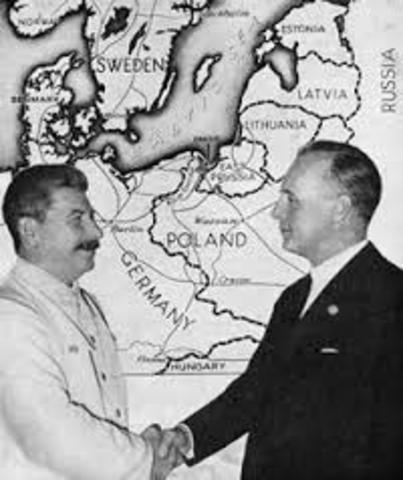
Pictured: Me engaging in Godwin’s Law times, like, a million.


One of the most irritating parts about living in this madhouse political time is that the very worst people are suddenly influential. I literally couldn’t believe that, as of late, we were having a Sebastian Gorka moment, with his “ideas” being discussed on serious television programs, not to mention that he had actual influence in the White House. If you paid attention at all to CT, he was always this fringe idiot who was inexplicably taken seriously by a few people, but thankfully very few. He was more a persistent irritant. That he suddenly was everywhere was as boggled and distorted as the fact that some reality show idiot was being saluted by Marines.

But, on the other hand, people who you respect, who should have always been listened to more than bigoted fascists like Gorka, suddenly have their own moments, to help us explain how the reality TV dummy is President. For the last few months, that’s been Clint Watts. His testimony in the Senate Intelligence Committee yesterday clarified what we should be talking about when looking for collusion between the Trump campaign and Russian provocateurs.

Clint’s appeared on this blog a handful of times (which I’m sure is a thrill), first about foreign fighters, and then more Trump-y stuff, and over at the old joint we had a neat little roundelay about drones. So when the Senate called for his expertise, I knew we were in for something good. What I didn’t expect was him to draw the parallels between Trump and Russia so clearly.

“I think this answer is very simple and is what no one is really saying in this room. The reason active measures have worked in this US election is because the commander-in-chief has used Russian active measures at times against his opponents.”

That’s the money quote right there. What we see, clearly, is that there doesn’t even need to be active collusion to say that the Trump campaign worked with the Russians in order to influence the elections. They purposely amplified Russian propaganda, giving it even greater attention, which, as he pointed out, is the whole goddamn point of propaganda.

And, furthermore, he was saying that because the Russians wanted to demonstrate that they could influence the election, because you don’t want to be subtle in doing so, the Trump amplification was, in addition to helping his horrorshow campaign, aiding and abetting Russia’s position as a power capable of doing such things.

And that’s part of Russian’s entire 21st-century purpose. They are a weakened superpower practicing asymmetrical warfare in the zone of influence. They want to intimidate and bully their Eurasian neighbors, as they jostle with China and form tenuous, loose-handshake alliances with Turkey, and Iran (and to an extent India) for continental dominance. They are playing the Eurasian game on multiple overlapping fronts, and being able to show their power is more important to them than using it, given their diminished resources.

And Trump, through his vanity and lack of self control, helped them do so.

I don’t know if any of this is actually actionable. The way I drew it here, I don’t think it is impeachable, though maybe there is an obscure law about helping Russia become more powerful.

But this is also just the beginning. That Michael Flynn is asking for immunity is…odd, since no one has accused him of any crimes (sure, the Logan Act, but I haven’t heard anyone seriously say he might be prosecuted for that). He’s either acting under a superabundance of caution or knows he’s got some problems coming his way. Either way, as soon as the investigation moved away from Nunes’s doltish coverups to an actual Senate hearing, dude got spooked. He knows it is serious now.

And that’s the point. It clearly goes much further. That literally everyone in the administration is compromised, in some form or the other, by Russia, and that they are being the opposite of forthcoming is too much smoke. As Charlie Pierce said, to assume that it stops with mere amplification is “to believe to the point of fanaticism the power of coincidence.”

If you live long enough, you see Donald Trump become President. But maybe if you live just a bit longer, you’ll see him become a disgraced ex-President.

Yemen, Mosul, and a Strategy of Civilizational War

WASHINGTON — The senior United States commander in Iraq said on Tuesday that an American airstrike most likely led to the collapse of a building in Mosul that killed scores of civilians this month…

“My initial assessment is that we probably had a role in these casualties,” said General Townsend, who commands the American-led task force that is fighting the Islamic State in Iraq and Syria. But he asserted that “the munition that we used should not have collapsed an entire building.”

On the one hand, the tragedy of Mosul was “one of those things” that happen in a war, and clearly not intentional, and obviously pales in comparison to the flagrant bloodlust of ISIS. It doesn’t pale to the hundreds killed, of course, and that’s exactly the other hand. It’s hard to say if this one specific incident was an outcome of the Trump administration loosening the rules on engagement, giving fewer restrictions about civilian casualties, or if it could have happened regardless, but we need to be prepared for more of these stories.

Because, while letting on-the-ground commanders have more freedom, and more coordination with local officers fighting ISIS, is theoretically a sound strategy in a vacuum (and there have been reports that Iraqi commanders are happy), we aren’t in a vacuum. We’re in the Trump administration, which has been openly hostile to the Muslim world. Mass civilian casualties won’t be seen as an outcome of war. They won’t be seen as terrible accidents by genuinely committed and largely decent military people who want to destroy ISIS and liberate the people of Iraq and Syria from medieval teenage monsters. It will be seen as an outcome of Trumpism.

And the problem might be that this is exactly what Trump and his people want.

Steve Bannon might be a slight outlier when it comes to dreaming of religious holy wars, but he isn’t that far off. For years, the GOP has been saying that the fight against ISIS is a war of civilizations, and of civilization, and that it is essentially an existential struggle in which the US might be destroyed. This is wrapped up, and exacerbated by, general hostility to Muslims. It also “confirms” and strengthens that hostility.

Part of that is the rhetorical tomb Republicans walled themselves in. Because Obama (correctly) didn’t consider ISIS more than just a very dangerous terrorist group, they had to imagine them as Nazi hordes landing on Floridian shores. And because Obama actually did act aggressively to fight ISIS, they had to ramp up the rhetoric to pretend that MORE had to be done, because Obama, of course, was a wimp and really probably wanted ISIS to win. Senator ISIS, he surely thought, had a great ring to it. So they’ve convinced themselves for years that a massive blitz was needed.

It goes deeper than that. It’s partly because the GOP is, by and large, a bunch of non-military types who pump themselves up with reflected glory, and that means elevating every threat to an existential level. But it is also because the GOP is, by and large, made up of religious bigots and hysterics who despise Islam and want the US to fight a Christianized battle against it. They’ll say against terrorism, but the two have a 1:1 conflation in the GOP mind.

So that’s where the new rules come in. It’s a way to push that battle forward, and that sounds good to Donald Trump, who 1) is a bigot; 2) thinks he’s tough, and 3) is too lazy to come up with a plan other than “kill”. So again, his personal pathologies perfectly line up with mainstream Republican goals, “mainstream” here meaning “lunatic”.

We see this in Yemen, probably more than in Iraq and Syria, largely because Yemen is off the map, for the most part, and seen as an ideological playground and a place in which one can experiment. It’s where the Special Forces-Drone strategy was tested by Obama, and it’s where Trump will test his “anything goes”s strategy.

The administration is expanding its role in Yemen, as the Soufan Group reports. It wants to expand help to the Saudi-led war against the Houthis, the large majority of which is a war crime. It is doing this because it believes that the Sauds are our friends, and that they can help broker Jared Kushner’s regional peace deal. They are doing this because they believe that the Houthis are essentially Iran, and that this is a war against Iran. They don’t believe Yemen actually exists, save as a battleground for their experiments.

But mostly, they are doing this because they can. They want this war, which is why they are expanding Yemen’s “area of active hostilities“.  This is a war of civilizations, against the Muslim tide. That they are doing this in conjunction with shutting down our borders from refugees, and specifically targeting Muslims, is not a coincidence. It’s a plan. Or, if this is a mistake, and they actually think that they are doing something positive for world peace, as opposed to Western domination, then they are doing an excellent incidental job of persuading people otherwise.

Yemen is facing a terrible, devastating famine, which will further destabilize the region. Can you imagine the Trump administration, which is gutting foreign aid, even pretending to care? The war in Yemen is not inherently regional; it’s a local battle steeped in Yemeni history and geography, and can only be resolved by taking that into account. Can you imagine Bannon or Trump or Kushner knowing any of that history, or even pretending to take it into account? Of course not.

And none of that is chance. They might be all bluster, but this isn’t a blunder. It’s a global tragedy, but it is intentional. They want a civilizational battle, and that’s essentially in lockstep with the majority of the Republican Party. The moral outrage of their actions is terrible enough. But knowing that any fleeting victory is ledgered against an ever-expanding and irresolvable conflict makes what happened in November a world-historic disaster.

Trey Gowdy’s Comey Strategy: All Tomorrow’s Conspiracies


“Did reverse vampires have access to redacted names?” 


Trey Gowdy first came to the national spotlight when he began his relentless investigation into Benghazi, which, to hear the GOP tell it, was the first time something bad had happened to Americans in the Middle East, which is the only reason they spent years and millions of dollars investigating. Gowdy was determined to find out exactly what happened, because that was his solemn duty as an American, and there were no alternative motives.

It was probably just a happy coincidence that, although the main takeaways were 1) sometimes tragic things happen in unstable countries and a nation determined to have a global military and diplomatic presence will bear the brunt of that; and 2) maybe the GOP shouldn’t have cut embassy and consulate security spending, the investigations also helped to hurt Hillary Clinton.

Really, obviously, that was the entire point. The GOP knows the way to work the modern media climate. Keep putting things in the news. Keep hyping up scandals even if they can be disproven easily. People will hear words and phrases bandied about and assume something bad has to be going on. The media will duly report on it, and the initiates in the media and the right-wing noise machine will amplify it. Facts don’t matter; what matters are certain words that enter the ether, sulfurous and redolent of crime. That’s why there were innumerable hearings on Benghazi. It kept the name alive.

And that was their strategy yesterday during the Comey hearing as well. The entire plan, revolving largely around the boss’s unhinged ego-preservation strategy, is that the real crime issue here is leaks. One might point out that Gowdy’s own Benghazi panels leaked like a reefstruck dinghy, in a way that just so happened to consistently hurt Hillary Clinton. One might even argue that was the entire point of the hearings. But no matter: right now, the Republicans are united in fury at the very thought of leaks! This is the most serious issue our country is facing.

As we talked about yesterday, this is part distraction, and part fervent belief that the Obama “Deep State” is hurting Trump. They are unable to believe otherwise. And Gowdy, who pretends to be a serious prosecutor but is really just a skilled manipulator of the media, both normal and alternative, knew his job.

During his interlude with Comey, he commiserated about the seriousness of the crime of leaking (which is a crime in many cases). He then put forth a laundry list of names of people who could, in theory, have access to redacted names that made it to the press. (Times summary, then WaPo transcript)

In an outraged tone, Mr. Gowdy noted Washington Post and New York Times articles citing anonymous sources to report that in conversations intercepted by American intelligence, Mr. Flynn had discussed sanctions against Russia with Moscow’s ambassador to the United States, Sergey I. Kislyak. Such interceptions are highly classified intelligence, Mr. Comey confirmed.

“I thought it was against the law to disseminate classified information. Is it?” Mr. Gowdy asked.

“Yes, sir,” Mr. Comey replied. “It’s a serious crime.”

GOWDY: Do you know whether Director Clapper knew the name of the U.S. citizen that appeared in the New York Times and Washington Post?

COMEY: I can’t say in this forum because again, I don’t wanna confirm that there was classified information in the newspaper.

GOWDY: Would he have access to an unmasked name?

COMEY: In — in some circumstances, sure, he was the director of national intelligence. But I’m not talking about the particular.

GOWDY: Would Director Brennan have access to an unmasked U.S. citizen’s name?

COMEY: In some circumstances, yes.

GOWDY: Would National Security Adviser Susan Rice have access to an unmasked U.S. citizen’s name?

COMEY: I think any — yes, in general, and any other national security adviser would, I think, as a matter of their ordinary course of their business.

GOWDY: Would former White House Advisor Ben Rhodes have access to an unmasked U.S. citizen’s name?

COMEY: I don’t know the answer to that.

GOWDY: Would former Attorney General Loretta Lynch have access to an unmasked U.S. citizen’s name? COMEY: In general, yes, as would any attorney general.

GOWDY: So that would also include Acting AG Sally Yates?

COMEY: Same answer.

GOWDY: Did you brief President Obama on — well, I’ll just ask you. Did you brief President Obama on any calls involving Michael Flynn?

COMEY: I’m not gonna get into either that particular case that matter, or any conversations I had with the president. So I can’t answer that.

This is perfect. He’s just throwing names out there, just in theory, just trying to see who may have had the ability to disseminate this information. Just because the names he threw out there happen to be a rogue’s gallery for the right wing doesn’t mean anything. He’s just doing his damn job.

What he’s doing is giving red meat to the base while trying to force the actual media to look at the “theoretical possibility” that many people in the previous Administration, up to and including President Obama, had access to these names, and could have leaked them. The right wing Twitter armies and talk radio goons will go nuts poring over every name, and tying that to their broad conspiracy that the reason Trump is failing is because a perfidious and traitorous elite, aided by a Bolshy bureaucracy, is undermining him (undermining America).

Dragooning Sally Yates into this is key. She, of course, said that she couldn’t defend the travel ban, and was duly (and rightfully) fired. That was the beginning of the “Obama is still ruling Washington!” campaign, a distraction from the gross illegality and immorality of the ban. And now, Gowdy is continuining to push that, hoping that it’ll work once again.

My guess is no, it won’t. I mean, it’ll be great for Breitbart and Alex Jones and their satellites, and someone will uncover evidence that Ben Rhodes was offered a discount on a Washington Post subscription when he signed up for Amazon Prime, so there is your goddamn quid pro quo, but they are beginning to realize things are different when it is your party in power. You can’t point to the bogeyman. It’s you.

The Republican’s Comey Strategy: The Bubble and the Damage Done

Nope

The story, to any rational person, is that FBI Director and de facto Trump Campaign Chaperone James Comey confirmed that the FBI “is investigating Russia’s meddling in the presidential election, including possible links between the Trump campaign and Moscow.” He also shot down, in no uncertain terms, Trump’s insane wiretap claims, British involvement and quotation marks and all.

As a lot of people are saying, this might be just the beginning. Comey made it clear that all he will say is that there is an ongoing investigation, and he can’t comment on that. While that might seem like hypocrisy, it fits his very narrow definition that he established with Hillary Clinton.

There is something here, and while it is true that Russia didn’t literally hack the election, there is clearly enough to warrant an investigation. So the GOP strategy, led by Trump? Ask just who is doing the leaking that top security advisors are having secret meetings with Russians while also getting paid by Turkey.

Republicans on the committee focused their questions on getting to the bottom of who leaked to the news media the fact that former National Security Adviser Michael Flynn had pre-inauguration conversations with Russia’s ambassador.

Sure, part of this is distraction. They don’t want to talk about the real issue here, and are hoping that people will be more offended by the leak. But that’s because, I think, a lot of them actually sort of believe that. Once all this started, the idea of “leaks” being part of the Obama shadow campaign has become axiomatic on the Right. It’s an article of faith. It’s how they explain the disaster everything has been.

This is part Trump, part the broader GOP, and entirely at the intersection between the two (and there is very little difference, really). The GOP has no idea how to govern, and no desire to. They’ve based their entire identity on being not-liberals, and more to the point, not-Obama. So being faced with the reality of government, of course they turn to what it comfortable.

For many, it isn’t much of a turn. These are talk radio kids and internet idiots. They live in the bubble, and what they hear is that people are worried about the shadow government. I think they actually believe it, and that they actually also think it is good politics.

That’s also the world, of course, in which Trump lives. He honestly thinks the only important thing here is the leaks, because that’s the “deep state”, and it’s the only reason he isn’t already being placed on Mt. Rushmore (or a bigger, better mountain, somewhere in Manhattan). His own personal pathologies and vanities make it impossible for him to understand that he’s a know-nothing idiot with no idea how to be President. So of course, the only thing that matters is the leaks.

By temperament, in paranoia and accusatory frenzy, in believing that what 10,000 idiots on Twitter are convinced of, Trump and the GOP are perfect for each other. And so they believe it’s not what we know that matters, but that we know it at all.

And that it’s the black guy’s fault. I mean, that goes without saying, right?

Monday Quick Hits: Berry and Breslin, Exxon, the NCAAs, and More

Image result for chuck berry

Some quick hits and good reads to get us into a shining new American week…

-When I got the alert yesterday that Jimmy Breslin had died, hard on the heels of Chuck Berry, I had a vague notion of writing a piece about how the two men both created an American langauge. They took old traditions, grabbing along the way snatches of different and older languages, different sounds jumbled through the tumult of our history, bouncing around in the vastness of the land, from concrete wisdom to country passions, and in their own way, forged new and more democratic modes of expression. But then I thought: hm, I don’t know if I am really capable of exploring that, and anyway, it seems like something Charlie Pierce will do 10000 times better. He does not disappoint.

Did anyone do more to change American pop culture than Chuck Berry? This isn’t incidental; pop culture is culture. It’s an expression of our desires. Coming up with other names yields a short list, with maybe James Brown at the top of it. The list of musicians who were more awesome than Chuck Berry might be even shorter.

-So there was this commercial, in which a Jessica Chastain look-alike tells us that Exxon Mobil is really nothing more than a big ol’ jobs creator, and all the people they show are model attractive, that ran approximately 360000 times during the games this weekend. It wasn’t advertising anything, per se, other than the idea that Exxon is basically your neighborhood store, giving kids their first job so that Johhny can take Mary Sue to the movies this weekend. It’s basically a way for them to make us vaguely remember that “oil = good”. It’s essentially political, which is very smart.

Anyway, the repetition of that commercial is maybe why I had a dream this morning in which the real Jessica Chastain was giving a lecture where she said “There is maybe no more clear example of the importance of elections than fracking. Think about it: it’s an issue dominated by hydrologists, geologists, engineers, and increasingly, seismologists, yet is determined almost entirely by the people we elect. That makes it up to us. Do we elect the thoughtful, or the cheerfully venal?”

Seriously, those are my dreams with Jessica Chastain. Thanks, brain!

-Speaking of Exxon, that commercial was considerably more accessible than Exxon’s former CEO, who is settling into a quiet job outside the public eye, Secretary of State. On a weekend in which he moved us closer, rhetorically, to conflict with North Korea (a state to which North Korea themselves are also rushing), he also give some limited statements about why he’s not accessible to the press (and why he didn’t bring them along for his Asian trip, save for one friendly reporter).

“I’m not a big media press access person. I personally don’t need it. … When we’re ready to talk about what we’re trying to do, I will be available to talk to people. But doing daily availability, I don’t have this appetite or hunger to be that.”

He added: “When I have something important and useful to say, I know where everybody is and I know how to go out there and say it.”

He added that there’s plenty of media in the cities where he’s heading, lowering the need for a traveling press. And he disregarded the tradition of the secretary of State spending time with reporters on flights, saying “that’s not the way I tend to work.”

Well…shucks, Rex. It is admirable that you’re not one of those big media persons, always needing to be on the twitter for the kids, like one of those Kardashians or Kissingers. Here’s the thing, though: you’re not a CEO anymore. You don’t get to work in the shadows. You’re on the public dime, and you’re talking about issues of literal life and death, all the time. You don’t actually get to decide when we know what’s going on and when we don’t.

It’s fine that you don’t want to be a celeb SecState, and just want to do your job. But saying “I’ll only talk to the press when I feel like it” isn’t admirably modest or a burst of down-home sensibility. It is, at best, incredibly patronizing and undemocratic, and at worst, sinister. If you don’t want people to think that you’re colluding with foreign powers to help the energy industry, maybe don’t be so secretive.

-Speaking of the NCAAs, while I didn’t watch every game, I had at least most of them on at one point or the other. Yesterday was clearly the best day, though Nigel Hayes’s winner against Nova was bucket of the tournament, for sure. Witchita/Kentucky, which should clearly have not been a Round of 32 game, had that breathtaking sequence at the end, which might have been the most exciting part of the weekend. UCLA showing off their powerhouse offense in a 5-minute blitz against Cincinnati demonstrated everything that’s fun about hoops. And Duke losing in the first weekend makes every tournament worth it.

But, to me anyway, the most impressive game of the tournament was Kansas vs. Michigan State. It was a close one throughout, with a feisty Michigan St trading blows with the Jayhawks, until with about eight minutes left, Kansas methodically and brutally pulled away, winning by 20. In a weekend in which a 3-seed lost by about 900 to an 11-seed, in which Gonzaga nearly collapsed against Northwestern, in which UNC struggled against Arkansas, and in which the defending champ and #1 overall seed lost, to see a team remember they’re great, and play like it, was a sight to behold.

(Although, sneakily, and I might be biased, the best overall weekend went to Butler, which took on a very good Winthrop team and an extremely dangerous Middle Tennessee team, and never trailed in either game. Now their half of the bracket is UNC, UCLA/Kentucky, and most likely Kansas. Let’s take on some blue bloods, Butler.)

-Finally, my favorite read of the week was this in the most recent London Review of Books, in which Benjamin Kunkel talks about the “captialocene.” It’s a take on the Anthropocene, the idea that human activity has so changed the planet, in ways that were before only the result of gradual climatic and geologic shifts or sudden space-borne disasters, that it’s a whole new Epoch. This isn’t just a catchphrase, either: by the end of this year, the Anthropocene might be officially established alongside the Pleistocene, Holocene, Miocene, and others.

But the idea of the “captialocene” is slightly different. It argues that the great changes weren’t really the results of all humans, but came about as a result of capitalism, in which the land and the people were converted into capital for the benefit of the very few. That is, we as a species didn’t make a choice to do something, but a select group got rich destroying the planet.

There’s a damn good argument there (and nowhere is it I think more true than in North America, in which literally everything was alchemized into money). There is a counterargument that communism wasn’t exactly good for the environment (see, while you can, the remainder of the Aral Sea), but that was a reaction to capitalism, and still in the essential capitalist framework. The nature of the project is to wring profit out of everything, and if that means using up the world the way it uses up workers, so be it.

The other counterargument is that the process started long before capitalism. Hell, the people that came over to North America set out to immediately wipe out all large mammals save for buffalo, changing the ecosystem almost irreversibly. So maybe capitalism is just the ultimate expression of our nature?

The idea is that the capitalocene can actually transform into the Anthropocene, in which humans more broadly have a say in the environment, and our systems are revised to redistribute both economic and environmental justice. That is: the decisions about the earth aren’t just made by the few, for the few, but finally, for once, by the species as a whole. That does seem to be the only way to solve this mess. All it takes is a complete reordering of all our priorities. I’m guessing another asteroid will hit first.

Yemen’s “Areas of Active Hostilities”: A Tautology for the 21st Century

86875470_yemen_sanaa_rubble_g

Remember that things can somehow always get worse. Image from BBC

WASHINGTON — The Trump administration is exploring how to dismantle or bypass Obama-era constraints intended to prevent civilian deaths from drone attacks, commando raids and other counterterrorism missions outside conventional war zones like Afghanistan and Iraq, according to officials familiar with internal deliberations.

Already, President Trump has granted a Pentagon request to declare parts of three provinces of Yemen to be an “area of active hostilities” where looser battlefield rules apply. That opened the door to a Special Operations raid in late January in which several civilians were killed, as well as to the largest-ever series of American airstrikes targeting Yemen-based Qaeda militants, starting nearly two weeks ago, the officials said.

“Areas of active hostilities” is an interesting phrase, one that is both clinical and carries within it a depth of soon-to-be-explored horrors. It’s a holdover from the Obama administration (whose worst legacy will be handing over a set of dangerous tools to a madman), and one that looks to be exploited by Donald Trump and his band.

Essentially, declaring an area to be one of active hostility means that there doesn’t need to be a Presidential-level approval for missions, and that the rules of engagement regarding civilians are loosened. The Times described it as “open(ing) the throttle” on counterterrorism activities.

The main problem with this, aside from the increased casualties in civilians and military personnel, is that it essentially becomes a self-fulfilling prophecy, a tautology. If you declare an area to be actively hostile, and treat it as such, and say, lose a Navy Seal while killing a dozen children, then it becomes more hostile, and the question of whether or not there is conflict becomes self-answering (if the area wasn’t hostile, we wouldn’t have lost a Seal, right?)

In Yemen, this sort of policy will almost certainly be a disaster. Let’s look at the confluence of forces. Many of these came under the Obama administration, and have been exacerbated by Trump.

  • The support for Saudi Arabia’s scorched earth campaign against the Huthis. Expect this support to increase, even vocally, as the administration tries to work a grand bargain of anti-Iran Arab nations (part of its Israel/Palestine plan, led by noted regional expert Jared Kushner).
  • The relentless viewing of Yemen through a strict counterterrorism lens, which leads to more militancy, and a strengthening of AQAP and, to an extent, ISIS (though I think AQAP will prove to be stronger in Yemen).
  • The confluence of Yemen with Iran, never entirely true, and now wildly and dangerously exaggerated.
  • An increase in boots-oriented and civilian-dismissing CT activities, designed so that a know-nothing President can appear tough. I don’t expect US military commanders and personnel to go Kilgore in Yemen, but the loosening of the rules will lead to more conflict, with its higher chances of casualties and civilian deaths. The fact that it is common knowledge that the Administration approves of this only makes America and American intentions look worse.
  • And speaking of American intentions, the hateful illogic of the travel ban solidifies the AQ/ISIS narrative that the West has declared war on Islam, and Islam has to protect itself. That the huffing and bloated face of Islamaphobia is now the face of the nation is an incredible gift to our enemies, and all his actions so far have proven their point.
  • One of his other actions is to gut foreign aid and the State Department. Due to the war, continued drought, and decades of mismanaged resources, Yemen is on the brink of a catastrophic famine. ISIS can’t feed everyone; nor can AQAP. This is an area where the US, and the West, can actually make a difference. But instead, we are going to cut aid, which barely makes a dent on our budget, to appeal to xenophobes.

It’s hard to overstate how crazy that is (not to mention bleakly immoral). Donald Trump and the Republicans are the only people in the world who think there is a purely military solution to radical Islamic terrorism. The idea that on the brink of a hideous humanitarian catastrophe the right course of action is to 1) reduce aid and 2) increase military activity is madness. It’s the best way to ensure that you are seen as the enemy for generations to come.

Don’t get me wrong: I don’t think sending grain is going to “solve” Yemen. This is a long-term internal issue that partly has to answer the question of what Yemen really is, and whether a unified Yemen is possible or desirable. But the US and the West have a role to play, and the only way to do that is build trust with political and tribal leaders on all sides.

Backing war criminals, demonizing Muslims at home, turning your back on suffering Muslims around the world, ignoring famine, and treating a country entirely as a problem for bombs and guns will is the exact opposite of what we want to do. It guarantees Yemen stays a war zone. The massive human suffering will radiate around the peninsula and across the sea. It’s the best way to make every area actively hostile.

“The Jurassic Park Rule of Internet Security”


Image result for jurassic park clever girl

Clever girl.


Over at Just Security, our good friend Brett Max Kaufman breaks down why the idea that “government and judges, not technology, should decide when the government can get to your private information” is absurd even if you grant the best intentions to security services.

For example, despite reportedly rigorous testing before deployment, the Stuxnet worm used by the United States and Israel to attack an Iranian nuclear facility unexpectedly spread to non-target computers. And when the government sits on a zero-day exploit to be able to exploit it later, there is always the chance that an adversary is doing the same thing. These risks are, for the most part, inherently unknowable beforehand.

I don’t want to spoil what the Jurassic Park Rule is, but you should read the piece. It’s a perfect look of how, as he says, “when it comes to encryption, doors are doors”, and when you or James Comey or anyone else create one, anybody can come in.

The Spiteful Illogic of the New Travel Ban

1961-11-01a

When the first “Travel Ban” executive order was announced a week into the Trump administration some 4600 years ago, some of the key pillars of a free society made their impact felt in a way that shocked even the most optimistic observer. The legal system had a two-pronged effort. Organizations like the ACLU protected the victims of the order’s cruelty and brought their cases to an independent judiciary, which treated the order as what it was: a legal measure subject to review; not the blessed fiat of a New Dawn.

The other pillar, of course, was public protest, which stunned anyone who expected obsequiousness after the snowflakes of the women’s march melted. It is doubtful that legislators, and possibly even the courts, would have reacted with the swiftness they did were in not for spontaneous acts of disobedience, compassion, and righteous fury. Protests were shown again to not be movements of self-expression or sideshows to politics; they are a vital part of civil society.

So, the reaction to the travel ban, and its being held up by the courts, led to the rollout of a newly revised order yesterday. This was supposed to be rolled out last week, but it was delayed so that news of it wouldn’t step on the reception to Trump’s Congressional address last week.

Now, it is a good demonstration of how deeply dumb the President and his people are that they genuinely thought the rest of the week–month?–should revolve around him garnering praise for clearing the lowest possible bar. Trump was reportedly livid that the news of Sessions misleading Russian testimony and subsequent recusal took away from what I promise you he believes is regarded as the finest speech in American history. That’s partly what led to this weekend’s insanity.

But more importantly, as everyone pointed out, the delay for some good ol’ self-gratification contradicted the fierce urgency with which the initial rollout happened, and made Trump’s truly dangerous tweets about how judges were making our country less safe even more reckless. But that hypocrisy is just one of the many contradictions that shows how pointlessly self-defeating (not to mention cruel and un-American) these travel bans really are.

Continue reading

The Art of the Deal: Bilateralism and US Foreign Policy


091019-dinosaur-crater-hmed-grid-6x2

I sort of feel like this dude. “Welp, this gonna suck.”


As I mentioned yesterday, one of this blog’s main ways of analyzing policy under Trump is to understand the ways the man’s own pathologies and self-image feed perfectly into the goals of those around him, who have actual goals and long-held beliefs. Steve Bannon wants to “deconstruct the administrative state” (i.e. stop having a functioning government)? Who better to do that through than a man who think that he, his kids, and that guy who married his daughter are the only ones with brains?

(By the way, “deconstructing the administrative state” has gotten a lot of press, but it’s just a scary-sounding Bannonism for what Republicans have been trying to do for decades, ever since they merged with the far right. It means destroying the idea of a self-governing nation. It’s an old game tricked out by his cheapjack revolutionary shtick. This isn’t new; it’s just now very powerful.)

This plays out in foreign policy in an interesting way as well. As we know, in terms of policy, Trump has very few beliefs. The only ones that are consistent are that “we’re getting screwed” in our deals, both economic and security, and that everyone is taking advantage of us. Part of that belief lies in some of his other unshakeable ideas: that he’s the world’s greatest deal-maker, and that the US was stupid not to have him negotiate everything. His sense of self and his limitless sense of victimization and injury have led him to believe that every deal is bad because the idiots in Washington didn’t let him do it.

And, happily, the far-right and the “alt-right” (which really aren’t different, and are essentially mainstream Republicanism), also hate all those “deals”. They hate multilateralism, as we talked about yesterday. It isn’t because of Agenda 21 or anything, though that’s good to frighten the rubes (and a frightening amount of those scared-rabbit rubes are in Congress).

It’s mostly because multi-lateral institutions were founded after WWII as a way to constrain the power of any individual nation, especially Germany. And while it is easy to say that this didn’t really work, since the US and the USSR forced every nation in the world to pick a side, they were still constrained.

Look at the terrible actions done by both sides. Chile, Iran, Guatemala, Vietnam on the US side. Hungary, Czechoslovakia, Afghanistan, Poland on the USSR. This just scratches the surface of foreign interventions, but even in those, there is a pattern. Only in Vietnam and Afghanistan (and Korea, but that was also part of WWII) was there active warfare, and even then both nations were “invited in” by governments to help fight/save Communism. The quotation marks in the last sentence obviously imply arm-twisting, but still: there was at least a hypocritical tribute to the idea of national sovereignty.

None of this was good, per se, but it observed the idea that you couldn’t just go in and plant your flag into someone else’s dirt through the skulls of the natives. I mean, the US and USSR did so, but pretended they weren’t, and weirdly, that pretending means something. It slowly shifted ideas. It isn’t absurd to think that, I don’t know, Botswana should have a say in international politics and the fate of their nation. It helped create the still-foaling idea that the “Global south” isn’t just the playground of empires, but people who have a say.

Needless to say, the right-wing hates that. One of the reason the Iraq War was supported so much on the right wasn’t any particular issue, but the idea that the US was going to do something, by god, without the UN or NATO or anyone who didn’t fall in goddamn line. That we acted without these multilaterals was not just a feature, for many, it was the whole point.

Multilateral obligations mean that you can’t just do whatever you want. Even George W. Bush recognized that the US had some obligations. But not Trump.

Remember, Trump’s entire sense of worth is wrapped up in the idea that he has the right to do whatever he wants. Businesses going bad? Declare bankruptcy and screw over his creditors. Don’t feel like paying contractors? Force them to accept pennies on the dollar or else be tied up in court for years. Woman not putting out? Move on her like a bitch. (Remember: that’s an actual quote from our President.)

This is perfect for the far right. Trump believes we’re getting screwed by these “deals” (he considers joining a global multilateral institution a “deal”, remember) and that he can get us much better ones, working country by country. And the heart of this is that, like contractors and creditors, he’s perfectly willing to screw over any country, to go back on deals, and to do whatever he needs to “win”.

And that’s perfect. That’s the US unconstrained. In theory, making numerous bilateral deals is really difficult, since you have to take into account shifting alliances, sides playing against each other, local concerns, and more. Look at how complicated Azerbijan is, and how important it is to Russia, Iran, and Turkey, and how complex their relationship is.

So, to play this right would take great diplomatic skill, or the belief that you don’t need diplomacy at all. Or, in a way, both. It takes some knowledge to negotiate, but it also takes the belief that if you don’t like what’s happening, or you have a better chance at succeeding by breaking a deal, you break the deal. You screw them over. And the willingness to do so, to break any rule for personal gain, has been the one consistent part of Donald Trump’s life.

This will make the world a far more dangerous place. As much as his ties with Russia and white supremacy, the abdication of the United States from multilateralism is how the liberal world order can collapse. Trump wants that to happen so that he can negotiate with important people who have to kiss his ass. The right wants that to happen so that the US can act unconstrained. They have found their vessel in a truly empty man, who has nothing but a skin of vanity.

It’s a perfect mix. And over the next couple of weeks, we’ll look at how this plays out in the world, starting with (of course) Yemen.