
The electoral college is a goddamned disgrace
I’ve seen the future, brother, it is murder. This week’s disquieting reading.
Hi! I’m the floating head of your job losses!
In which Tom Friedman talks to the public.

Pictured: Trump campaign prep room
I woke up this morning with a dry throat and a pounding headache, symptoms of a hangover but without the happy memories of drinking the night before. I must be coming down with something, and well I don’t believe in the metaphysical, I don’t doubt that weeks of worry have something to do with it. All the worry leading up to today, where Hillary has to be perfect, and even if she is, Donald Trump could still walk away with an inside shot at becoming the President.
It’s impossible to really put into words how insane it is that we are here. That we are entering the debate wondering if Donald Trump can behave for long enough to convince people he should be President. Of America. There has never been a more dangerous candidate in American history, certainly not one that is this close. This long ago ceased being about politics, and is about the country as a whole. I know that from 2000-2008 some people thought the country was irredeemably mad, and since then a lot of people have felt it was “Taken from them”, in which every word of that formulation is ahistorical. But this isn’t hyperbole. This is a genuinely dangerous moment. We’re at that part in the history book where people reading it say “why are they doing this? Can’t it be stopped?” with the sickening realization that it wasn’t. We’re at that hinge.
So tonight isn’t a question of who will “win”? One person will be manifestly more qualified to be President in every conceivable way. That can’t be questioned by any serious person. The other might be declared a winner because we’re in a period of historical insanity, and those forces have proven irresistible. So we’ll see.
We’ll be live-blogging after the jump. In the meantime, read Pierce and despair and read Scocca and rage.
This cold is making booze sound terrible, but whiskey might be the only cure for what ails me. It might be the only cure for all of this.
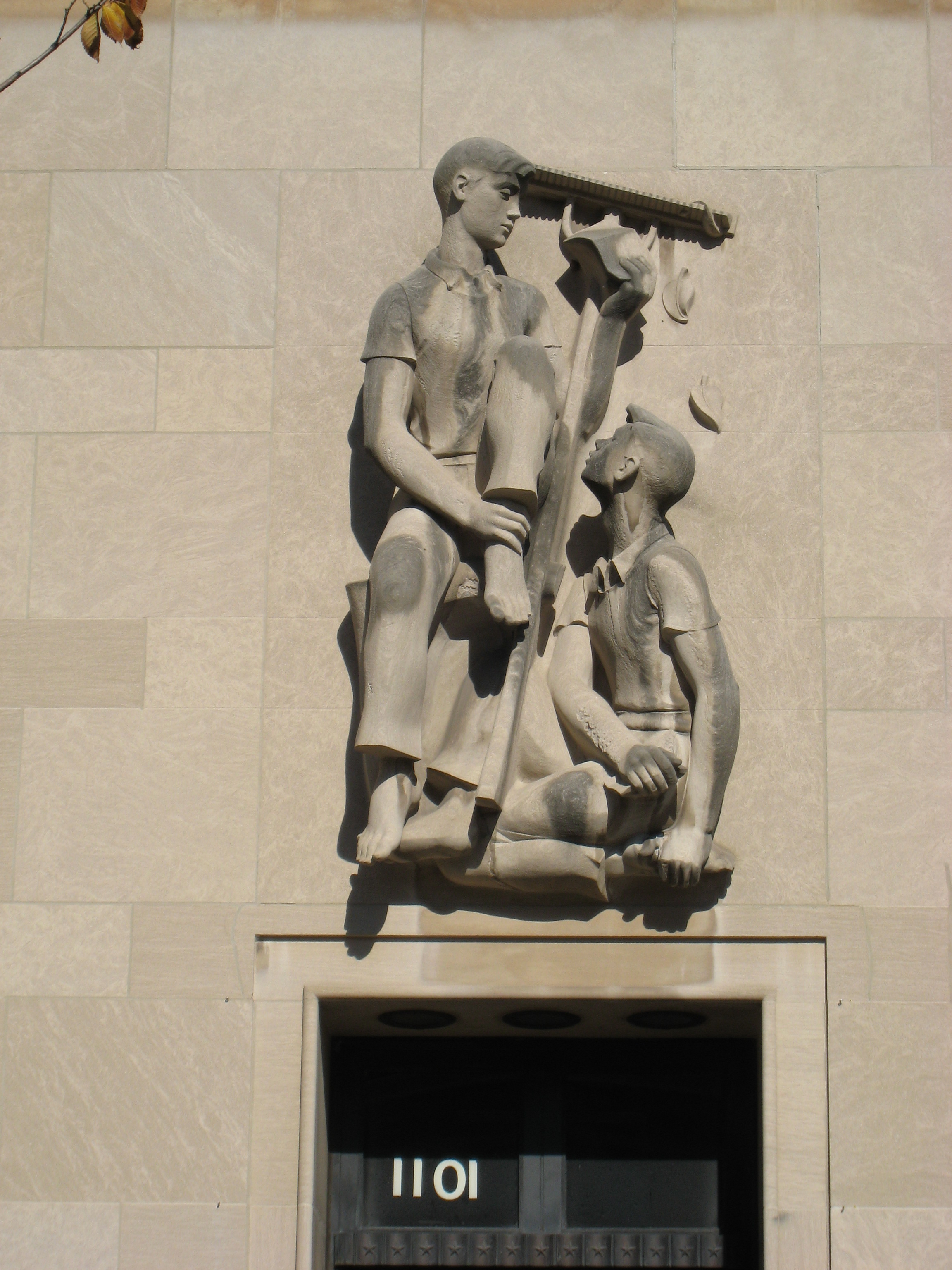
The WPA-built Evanston Post Office is going to be renamed for one of the great liberal icons in recent Chicago history.

More in-depth investigative reporting from The Guardian uncovers papers thought destroyed that tie Walker to a nexus of anti-Democratic, but possibly tragically legal, corporate greed.
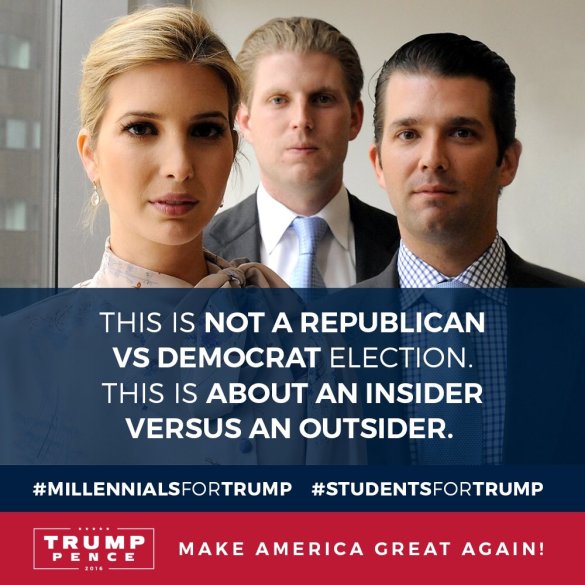
A weird and ill-thought-out tweet provided one of this miserable gut-kick of an election’s biggest unintentional laughs, save every time Jeb Bush spoke, but also highlighted its single-biggest dishonesty.
And who doesn’t?

The Chicago River is very pleasant now. That…that wasn’t always the case.
It’s often remarked that Chicago doesn’t make anything anymore. The city, in addition to being the “hog butcher to the world” and lumber hub between east and west, was throughout its history a major industrial city, drawing workers from around the world to its factories and warehouse, creation dotting the riverfront and radiating into the neighborhoods. Now we’re more known for finance and startups and the normal “transforming city” type businesses. And that’s fine. It’s imperfect, and even cruel, as the city’s new wealth is incredibly uneven. But to say that Chicago is not better off than it was in the 1970s and 1980s, after old man Daley did everything he could to keep Chicago from adjusting to new realities, would be a lie.
That said, there does feel like something has been lost. Into that void comes the Made In Chicago Museum, a new site exploring the things that Chicago used to make. Full disclosure: the site’s creator and collector, Andrew Clayman, is a very good friend of mine, who introduced me to my wife, and who is the best damn shortstop a softball pitcher could hope to have behind him. But I’m promoting this because it is awesome. My friends do a lot of stupid shit that I never write about. It’s a celebration of industry, both high and low, from the most useful to the most ephemeral and whimsical.
Even that stuff, though, stands out because it is long-lasting. Clayman doesn’t just collect and take pictures of old ice skates, clocks, scales, tins, and other gee-gaws and doo-dads. He celebrates a history of manufacturing. On each page there is a history of the company tht made these items, and as much as possible, the people that worked there.
Let’s take this Ice Skater Sharpener, made by FW Planert and Sons in 1910.
Patented in 1910, this metal clamping device was used to keep an ice skate secure while its blade was sharpened. The manufacturer, F.W. Planert & Sons, was one of the “The Big 3” in the Chicago-dominated ice skate industry of the early 20th century. The other two, family rivals Nestor Johnson and Alfred Johnson, were also headquartered on the Northwest side.
Did you know that Chicago used to dominate the ice-skating industry? Or that there was rivalrous Big 3? I certainly didn’t! Throughout the piece, Clayman talks about Planert, his business, and the people that worked there. He’s dug up archival pictures from newspapers, because, throughout the life of a city, nearly everything has been covered.
One of the cooler parts is that for every manufacturing plant, he tells what is there now (in the case of Planert, it is the trendy Cotton Duck, a restaurant in the extremely hip and foodie-oriented Ukranian Village neighborhood.
It’s sort of elegiac. I’m old enough to remember when Ukranian Village felt sort of rough. It wasn’t, but comparable to the neighborhoods we usually hung out in, it had some hard edges that gave you a glimpsed hint of the city before the great transformations of the 90s and 2000s, of the hard city of Algren and Terkel. Even now, the huge gilded churches remind you that the neighborhood has a history, that it isn’t just a name, that it is where an ethnic group found comfort and solace and work in a new and confusing country.
That works has faded, and the neighborhood is entirely disconnected from the idea of being “Ukranian” in any real sense. Most residents probably barely connect it with the Ukraine, the place. It’s just a name. And that’s fine: cities change. The toil that consumed lives fades into blurry pictures and hardly-understood designations. Factories that defined whole existences become transient restaurants waiting for the next food trend to shut them down.
Into that comes Clayman’s project, which reminds us that these neighborhoods, these streets, these cities, and yes, these anachronistic and old-looking products were all created by people, who devoted some or all of their one short and difficult live to make them. It isn’t romantic; these were hard lives. But they were real lives. There is a weight on every page, a lived weight, which in its own way is a cry against the weightless nature of our new disconnected economy.
Thanks to Eric Loomis for sharing this Rainforest Action Network video about the horrors of the modern palm oil industry, which underpins so much of the processed food we eat every day.
Palm oil is one of those things that we rarely think about. It is ubiquitous-seeming, and feels healthier than high-fructose corn syrup, or any of the other corn products for which we as Americans are essentially born to be depositories. But like so much about modern capitalism, it has pernicious global effects which go unseen to the vast majority of its uses.
Centered mostly in Indonesia and Malaysia, the palm oil industry has destroyed millions of acres of jungle, which contributes to climate change, and more immediately to massive, out-of-control fires in Indonesia (which themselves heat up the world by what they blackly project into the atmosphere). It’s gotten so bad that, despite it being relatively lucrative, Indonesia is moving to ban plantations.
I say “relatively” because, basically, the amount of lucre you see depends on who you’re related to. If it is to the President of PepsiCo, then it’s a damn good deal. If you are a Bangladeshi immigrant whose passport has been seized and who has a company-store-type debt to “employment recruiters” that would make an Upton Sinclair villain seem like Eugene Debs, not so much. If you are a local worker who has to recruit your unpaid and now uneducated children to help you meet insane quotas, not so much. If you are anyone working in squalid, slave-like conditions where your health is the cost of the job and where you are disposed of when no longer useful, not so much.
Not for nothing, but Indonesia and Malaysia have long been the hidden periphery of jihad, for some reason being a good place to attract recruits who have differences of opinion with the presently-constituted modernity. It’s not all directly connected, but it isn’t on a different page altogether.
That’s the web of modern capitalism. When I buy something with conflict palm oil, I am directly contributing to the immiseration and slavery of people thousands of miles away, whose only crime was being born in the wrong country. I’m contributing to massive, ruinous deforestation and climate change. Not only that, but these massive plantations take away arable land that will be needed as desertification increases, the world heats up, and the population continues to grow. If the world seems unstable now, wait until hundreds of millions are out of food. These are the choices we make.
Luckily, the knowledge gives us power. There are ways to try to avoid it, shopping consciously. It’s very hard to give it up 100% though, which is where activism has come in. PepsiCo, which imports 750,000 tons a year, is looking to change its standards. Cargill, not exactly a liberal bastion, has put pressure on a company who has a “children make the best workers” policy. Regardless of whether or not these are sustainable, they show the public pressure works.
It works best, by the way, when it turns into political pressure. As we’ve discussed, it isn’t impossible to impose supply chain standards, including labor standards and environmental rules, on American companies (or companies that want to sell in America). If Pepsi wants to use palm oil, they can demand equitable treatment for the people who harvest it. What’s going to happen? Are the people running the plantations going to stop selling? On principle or something?
It’s a politically-winnable issue. The main issue is overcoming the eye-rolling pushback (even on the left) when people bring up “labor rights”, and the weird notion that the people buying goods can’t demand change, whether that’s you buying Lay’s or PepsiCo buying palm oil.
We also have to overcome the fatigue we all feel when we look at the enormous interlocking set of stacked labyrinths that make up modern capitalism and see the effect we have. It’s easier, and always tempting, to throw our hands up and say “that’s just the way it is” and try not to think about it. But it’s a manmade system. It can be changed.
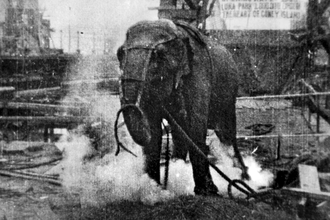
The electrocution of Topsy was called an “actuality” film by Edison, less a documentary than what we would now call a reality show, given that it was staged. Seem about right.
Hey, remember in 2012, when the RNC scrambled to build an entire night out of a ripped-from-context and intentionally dishonest interpretation of “you didn’t build that”? They had signs and decorations and chants, and a whole lineup of speakers assuring the American public that there was no such thing as the communitarian spirit in American history, and every success story was entirely individualistic. I thought it was the most absurd thing I’ve ever seen in politics.
There are plans to emphasize different themes each night of the convention. Mr. Trump wants to touch on a few of his favorite hot-button issues, like the 2012 attack on the American diplomatic compound in Benghazi, former President Clinton’s infidelities and border security.
“Border security” is a thing, of course. I think an overblown thing, and an issue which Trump reduces to vile caricatures and demagogic European-style race-hatred, but at least it’s an issue. Clinton’s infidelities? Does he really think that’s going to help him capture any more voters? I know that the yapping and erect idiots in Cleveland will be salivating at the scandal, a chance to chap up and groove back into their salacious 90s heyday, but everyone else? They know this was a losing bet, right?
Also, is marital infidelity really the card Trump wants to play?
And the less said about Benghazi the better. The Republicans love it, because then the party of the Iraq war can pretend they care about Americans dying in the Middle East.
OK, but: the lineup. Peter Theil! It’ll be exciting hearing him tell the crowd that he, as a rich person, has the right to destroy any media he doesn’t care for. Tim Tebow, who, I guess, is a good guy, really. And it’s in theory good to expand the rostrum away from politicians. And maybe a guy with such a squeaky clean and evangelically-loved image as Tebow might help soften Trump’s image, but I doubt it. It’ll allow the already-convinced to rationalize their vote, and maybe that’s good enough.
THe best might be Day 2, with it’s Focus On The Economy. The first listen speaker is Dana White, the President of the UFC. You might think, well, that’s ridiculous. What does he know about the economy? He’s actually perfect. The UFC is an organization known for hardballing its workers and punishing any employees who stray. It has a slavish devotion to wringing out maximum profits from its soon-to-be-broken fighters, demanding complete and total subservience, and then casting them aside the moment they stop being useful. It’s why the model is breaking, as fighters like Conor McGregor try to leverage their own power. But really, it’s the Republican economic apotheosis. Just as you can say that boxing/MMA is sport at its most basic, the UFC is capitalism at its finest: workers should have no rights, should be bled dry, and then discarded, all in the name of huge profits. Don’t be surprised if Dana White is named Secretary of Labor in a Trump administration.
Also, Night 3 is going to have both Newt (scheduled, so if he’s VP he’ll speak anyway) and Ted Cruz. Do you think that Cleveland can handle such collective self-regard? Such faux-intellectual preening and self-righteous anger on cue. I am glad I have softball on Wednesday nights. I don’t know if I could handle the two back-to-back. Although Cruz’s speech might be a masterpiece of self-regard and self-interest. There’s no doubt he sees his speech as nothing more than a launch for 2020. It’s going to be maddening and fantastic.
Oh! And did you think there wouldn’t be diversity? There is, you idiot. There is. “There are a few African-Americans, like Jamiel Shaw Sr., who became an outspoken advocate for tougher immigration laws after his son was killed in 2008 by an undocumented immigrant…” See? Trump knows he needs minority outreach. So let’s get a black guy who hates Mexicans!
(That isn’t totally fair. This man suffered a hideous tragedy. But still: reducing immigration to a series of bloody handbills is dangerous nonsense, and Trump’s idea of minority outreach is pitting them against each other.)
I’ll give Trump credit. He seems to have backed off on his “loud people that everyone hates” strategy, as Don King and Sarah Palin seem to be off, and there’s no Mike Tyson, either. But still. This is going to swing between surreal lunacy and scratchy, hateful, pseudo-tough chest-thumping anger. They’ll denounce the lies of Hillary and how she, and she alone, is responsible for Americans dying in the Middle East. We’ll hear about how Bill once had sex about a million times. It’ll be a carnival of juvenalia, projected paranoia, fear-mongering, race-baiting, and hate. It’s a nightmare vision of a broken America, beaming from a possible future, coming at you in primetime, four days next week.
Stock up on a good bourbon and a lot of cheap beer, America. It’s gonna be ugly.
 Shooting Irrelevance