The US Is Not At War With Syria: Making Sense of the Strikes And The Trump Foreign Policy

An aerial view of the al-Shayrat Airfield near Homs, Syria, 07 October 2016

The airfield targeted by US missiles. You can already tell the press is on War Footing, which is extremely dangerous.

Despite (or, probably, because of) yesterday’s grim swirl of news, we turned on Colbert last night, partly because I wanted to see if he’d pay tribute to the late, great Don Rickles. He did, but only briefly. I guess they didn’t really know each other. But the interesting thing was that, as the show started, CBS ran a little graphic at the bottom that said the show was taped before the US strikes in Syria started.

At first, I thought, well that makes sense. They don’t want people wondering why he isn’t addressing the elephant in the room. But then I wondered if it was something worse. Colbert spent most of the monologue (if not all of it) pointing out the absurdity and horrors of the Trump administration. So, maybe, they were running it because they wanted to shield themselves from criticism that Colbert was making fun of the Commander in Chief while America was at war.

That, I think, is a good way to illustrate the dangers of what is happening, and the questions around the attack. Are we at war with Syria? Are we just “sending a message?” Are we willing to take ownership over what comes next? What does it even mean to be at war with Syria? What does war mean in the age of Trump, and will this be normalized? And what will happen next?

Continue reading

Trump’s National Security “Policies” As Muddled as he is Ignorant

This might just be the permanent clip for Trump-era foreign policy

So, let’s sum up the last few days. Steve Bannon is out at the NSC, a victory for McMasters, but maybe a meaningless one, since he still hasn’t been able to put in his own people, for the most part.  Still, it’s a start, because as the NYTimes put it, it’s the removal of a “political advisor”.

in Syria, the administration first said that it was “silly” to talk about removing Asad, only to sort of reverse course. “Only days after the White House declared it would be ‘silly’ to persist in trying to oust President Bashar al-Assad of Syria, Mr. Trump said, ‘My attitude toward Syria and Assad has changed very much.'” Nikki Haley is threatening unilateral action, and seems genuinely emotional following the chemical attack on civilians in Idlib (understandably and genuinely, I think).

And, of course, this is against the backdrop of SecDef Mattis being given far more leeway to fight ISIS and AQAP, loosening restrictions on field commanders and broadening what is considered an “area of active hostilities“. While this will increase civilian casualties, it will also almost certainly hurt ISIS more on the battlefield.

So, overall…are these good things? I think, in a vacuum, you could make a case for each one. Certainly, the demotion of the vile Steve Bannon is a good thing, because it might signal that he has displeased the Fake King. Certainly, Trump’s string of failures is eating at him, and when he lashes out, who knows who will take the fall? But it’s also true that Bannon isn’t merely a “political adviser.” He’s Trump’s worldview shaper, and probably the best person at helping trump find enemies to take the blame for his own personal failures. So we’ll see if Bannon is actually on the outs (which is possible) or if this is just a temporary ego-assuaging for Trump.

Syria is interesting, except that it is clear that Trump has no real plans. He goes entirely on however he feels at the moment. Deciding to get more involved against the Asad government means taking certain responsibility for Syria, not to mention tangling with Russia. Does Trump actually mean this? Or was it just a tough-sounding gesture. It’s possible to see a world where the US bombs Syrian airstrips and planes, and maybe munitions dumps, but that would entail a broader national/regional strategy, as well as a coherent Russian one.

And that’s the main problem here: there is no strategy. Even the devolution of power to Mattis and field commanders, something that sounds sensible, is a product of not having any real foreign policy other than “beating our enemies” (and, in the case of Bannon, creating them in order to forge some civilizational conflict). It is all well and good to be, as Mattis is, a warrior. It might be true that the Obama administration micromanaged too much. But that (arguably) overabundance of caution came from the constant asking of “what’s next? What happens after we ‘win’? How does the world look then?”

It’s clear these aren’t questions Trump is asking, and certainly ones he doesn’t have the patience to see. While McMasters and Mattis are strategists, they are so in a narrow sense, as we discussed earlier.  And all of the Trump team’s plans (including creating “safe zones” for refugees to return) all seem geared toward short-term solutions that have zero interest in the long term, and zero interest in how they balance against other strategies. (Like, for instance, if you have “safe zones”, how do you protect them? What happens if they are attacked by Russia? What happens when they want to return to ruined villages?)

This starts from the top. Trump has no real vision, no real foreign policy. He’s the guy who reads the paper and says “we can do better, I know how!” This is literally true: it’s all he says.

So maybe you can have competent people. Maybe you can get some grownups on board. And maybe certain tactics, like letting loose the military on ISIS, can produce results. It almost certainly will. But when you are a flailing, know-nothing impatient ignoramus, the whole of your administration and policy will reflect that. It’s wrong to ask what Trump’s strategy is. It’s clear there is no method at all.


Clint Watts Sums Up What Trump’s Collusion With Russia Really Means


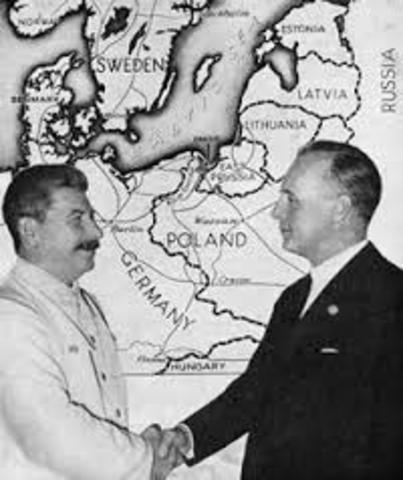
molotov-ribbentrop_pact

Pictured: Me engaging in Godwin’s Law times, like, a million.


One of the most irritating parts about living in this madhouse political time is that the very worst people are suddenly influential. I literally couldn’t believe that, as of late, we were having a Sebastian Gorka moment, with his “ideas” being discussed on serious television programs, not to mention that he had actual influence in the White House. If you paid attention at all to CT, he was always this fringe idiot who was inexplicably taken seriously by a few people, but thankfully very few. He was more a persistent irritant. That he suddenly was everywhere was as boggled and distorted as the fact that some reality show idiot was being saluted by Marines.

But, on the other hand, people who you respect, who should have always been listened to more than bigoted fascists like Gorka, suddenly have their own moments, to help us explain how the reality TV dummy is President. For the last few months, that’s been Clint Watts. His testimony in the Senate Intelligence Committee yesterday clarified what we should be talking about when looking for collusion between the Trump campaign and Russian provocateurs.

Clint’s appeared on this blog a handful of times (which I’m sure is a thrill), first about foreign fighters, and then more Trump-y stuff, and over at the old joint we had a neat little roundelay about drones. So when the Senate called for his expertise, I knew we were in for something good. What I didn’t expect was him to draw the parallels between Trump and Russia so clearly.

“I think this answer is very simple and is what no one is really saying in this room. The reason active measures have worked in this US election is because the commander-in-chief has used Russian active measures at times against his opponents.”

That’s the money quote right there. What we see, clearly, is that there doesn’t even need to be active collusion to say that the Trump campaign worked with the Russians in order to influence the elections. They purposely amplified Russian propaganda, giving it even greater attention, which, as he pointed out, is the whole goddamn point of propaganda.

And, furthermore, he was saying that because the Russians wanted to demonstrate that they could influence the election, because you don’t want to be subtle in doing so, the Trump amplification was, in addition to helping his horrorshow campaign, aiding and abetting Russia’s position as a power capable of doing such things.

And that’s part of Russian’s entire 21st-century purpose. They are a weakened superpower practicing asymmetrical warfare in the zone of influence. They want to intimidate and bully their Eurasian neighbors, as they jostle with China and form tenuous, loose-handshake alliances with Turkey, and Iran (and to an extent India) for continental dominance. They are playing the Eurasian game on multiple overlapping fronts, and being able to show their power is more important to them than using it, given their diminished resources.

And Trump, through his vanity and lack of self control, helped them do so.

I don’t know if any of this is actually actionable. The way I drew it here, I don’t think it is impeachable, though maybe there is an obscure law about helping Russia become more powerful.

But this is also just the beginning. That Michael Flynn is asking for immunity is…odd, since no one has accused him of any crimes (sure, the Logan Act, but I haven’t heard anyone seriously say he might be prosecuted for that). He’s either acting under a superabundance of caution or knows he’s got some problems coming his way. Either way, as soon as the investigation moved away from Nunes’s doltish coverups to an actual Senate hearing, dude got spooked. He knows it is serious now.

And that’s the point. It clearly goes much further. That literally everyone in the administration is compromised, in some form or the other, by Russia, and that they are being the opposite of forthcoming is too much smoke. As Charlie Pierce said, to assume that it stops with mere amplification is “to believe to the point of fanaticism the power of coincidence.”

If you live long enough, you see Donald Trump become President. But maybe if you live just a bit longer, you’ll see him become a disgraced ex-President.

Yemen, Mosul, and a Strategy of Civilizational War

WASHINGTON — The senior United States commander in Iraq said on Tuesday that an American airstrike most likely led to the collapse of a building in Mosul that killed scores of civilians this month…

“My initial assessment is that we probably had a role in these casualties,” said General Townsend, who commands the American-led task force that is fighting the Islamic State in Iraq and Syria. But he asserted that “the munition that we used should not have collapsed an entire building.”

On the one hand, the tragedy of Mosul was “one of those things” that happen in a war, and clearly not intentional, and obviously pales in comparison to the flagrant bloodlust of ISIS. It doesn’t pale to the hundreds killed, of course, and that’s exactly the other hand. It’s hard to say if this one specific incident was an outcome of the Trump administration loosening the rules on engagement, giving fewer restrictions about civilian casualties, or if it could have happened regardless, but we need to be prepared for more of these stories.

Because, while letting on-the-ground commanders have more freedom, and more coordination with local officers fighting ISIS, is theoretically a sound strategy in a vacuum (and there have been reports that Iraqi commanders are happy), we aren’t in a vacuum. We’re in the Trump administration, which has been openly hostile to the Muslim world. Mass civilian casualties won’t be seen as an outcome of war. They won’t be seen as terrible accidents by genuinely committed and largely decent military people who want to destroy ISIS and liberate the people of Iraq and Syria from medieval teenage monsters. It will be seen as an outcome of Trumpism.

And the problem might be that this is exactly what Trump and his people want.

Steve Bannon might be a slight outlier when it comes to dreaming of religious holy wars, but he isn’t that far off. For years, the GOP has been saying that the fight against ISIS is a war of civilizations, and of civilization, and that it is essentially an existential struggle in which the US might be destroyed. This is wrapped up, and exacerbated by, general hostility to Muslims. It also “confirms” and strengthens that hostility.

Part of that is the rhetorical tomb Republicans walled themselves in. Because Obama (correctly) didn’t consider ISIS more than just a very dangerous terrorist group, they had to imagine them as Nazi hordes landing on Floridian shores. And because Obama actually did act aggressively to fight ISIS, they had to ramp up the rhetoric to pretend that MORE had to be done, because Obama, of course, was a wimp and really probably wanted ISIS to win. Senator ISIS, he surely thought, had a great ring to it. So they’ve convinced themselves for years that a massive blitz was needed.

It goes deeper than that. It’s partly because the GOP is, by and large, a bunch of non-military types who pump themselves up with reflected glory, and that means elevating every threat to an existential level. But it is also because the GOP is, by and large, made up of religious bigots and hysterics who despise Islam and want the US to fight a Christianized battle against it. They’ll say against terrorism, but the two have a 1:1 conflation in the GOP mind.

So that’s where the new rules come in. It’s a way to push that battle forward, and that sounds good to Donald Trump, who 1) is a bigot; 2) thinks he’s tough, and 3) is too lazy to come up with a plan other than “kill”. So again, his personal pathologies perfectly line up with mainstream Republican goals, “mainstream” here meaning “lunatic”.

We see this in Yemen, probably more than in Iraq and Syria, largely because Yemen is off the map, for the most part, and seen as an ideological playground and a place in which one can experiment. It’s where the Special Forces-Drone strategy was tested by Obama, and it’s where Trump will test his “anything goes”s strategy.

The administration is expanding its role in Yemen, as the Soufan Group reports. It wants to expand help to the Saudi-led war against the Houthis, the large majority of which is a war crime. It is doing this because it believes that the Sauds are our friends, and that they can help broker Jared Kushner’s regional peace deal. They are doing this because they believe that the Houthis are essentially Iran, and that this is a war against Iran. They don’t believe Yemen actually exists, save as a battleground for their experiments.

But mostly, they are doing this because they can. They want this war, which is why they are expanding Yemen’s “area of active hostilities“.  This is a war of civilizations, against the Muslim tide. That they are doing this in conjunction with shutting down our borders from refugees, and specifically targeting Muslims, is not a coincidence. It’s a plan. Or, if this is a mistake, and they actually think that they are doing something positive for world peace, as opposed to Western domination, then they are doing an excellent incidental job of persuading people otherwise.

Yemen is facing a terrible, devastating famine, which will further destabilize the region. Can you imagine the Trump administration, which is gutting foreign aid, even pretending to care? The war in Yemen is not inherently regional; it’s a local battle steeped in Yemeni history and geography, and can only be resolved by taking that into account. Can you imagine Bannon or Trump or Kushner knowing any of that history, or even pretending to take it into account? Of course not.

And none of that is chance. They might be all bluster, but this isn’t a blunder. It’s a global tragedy, but it is intentional. They want a civilizational battle, and that’s essentially in lockstep with the majority of the Republican Party. The moral outrage of their actions is terrible enough. But knowing that any fleeting victory is ledgered against an ever-expanding and irresolvable conflict makes what happened in November a world-historic disaster.

Monday Quick Hits: Robots, Water, and Keystone


robot-1

“So I says to Mabel, I says…”


Did everyone have a good weekend? I had a great weekend. Lots of family, and lots of toast to Trump’s and Ryan’s failure to devastate the lives of millions of people. But this victory is, I think, just a pause. The battle will be to pressure Republicans, who seem to be a bit nervous about ruining the lives of their constituents, to make positive changes to the ACA, rather than repeal it.

Admittedly, they’re in a bind. The Times reported some anecdotes about people in GOP districts shocked that their reps would even think about such a thing, and might not vote Republican again. But then, there are also lots of GOP voters who, having been told that Obamacare was basically the forward thrust of creeping Bolshevism, are mad that it wasn’t repealed. So they are caught in a dilemma, namely: how do we do the things we’ve been saying we were going to do now that people have learned exactly what it is?

So now the question for Democrats is: how much should they work with Republicans? They are, thankfully, not eager to make some kind of “grand bargain” in order to help out the Republicans. The goal should be to fix Obamacare, working where you can to lower costs and make sure that insurance companies stay in. The talk of the “death spiral”, always exaggerated, is made possible by the threat of repeal. With that out of the way, for now at least, it could be possible to woo nervous Republicans to fix the bill at the margins, essentially working around Paul Ryan. That’s why the continued pressure from the outside is the only way to heighten their fear, and maybe force their hand to do the right and sensible thing and fix Obamacare.

Or, you could be like the President, who seems eager to watch the whole thing spiral out of control.

The “do not worry” is an especially nice touch.  He’s got a plan!

-Re/Code had a little story today about how PwC estimates, offhand, that the US could lose 40% of its jobs over the next 15 years thanks to automation. While there would of course be jobs created by automation (engineer, repair, etc) most of these will be high-skill jobs for people with advanced education. This is more than an unemployment trend; even if PwC’s numbers aren’t strictly accurate, this is economic devastation. This is something that can fundamentally alter society.

Massive unemployment of that sort needs to be ameliorated with something like a Universal Basic Income, or, failing that, an effort to create new work around infrastructure, tourism, or more. But there needs to be a collective effort grouped around the ideas that 1) the common good actually exists; and 2) that self-government is a good thing.

This isn’t something private markets can fix alone; indeed, it is the private market that will be at fault. There needs to be collective action to help the less educated and more vulnerable people in the new economy–the same ones who have been hurt for decades by market forces. That many of these are your stereotypical Trump voters (though they will be joined by millions of white collar types as well) represents an opportunity to convince them that the government is not the enemy, and that, in fact, this kind of intervention is the heart of the American experiment.

Of course, we’re debating whether or not it is ok if people just, you know, die because they don’t have employer-based insurance, so consensus on this seems a long way off.

-But we do have an answer on Keystone! That answer, of course, is “yes”. Trump signed off on Keystone on Friday, saying in a signing ceremony that:

It’s a great day for American jobs and a historic moment for North American and energy independence.  This announcement is part of a new era of American energy policy that will lower costs for American families — and very significantly — reduce our dependence on foreign oil, and create thousands of jobs right here in America.

It’s important to note, in the interest of being strictly accurate, that none of this is true. And it is just weird to talk about reducing “our dependence on foreign oil” right before you introduce the President of TransCanada, above and beyond the fact that this isn’t how the oil markets work. The sludge pumped over the largest underground aquifer isn’t going to be shuttled to your car. It goes into the global markets. I honestly don’t know if Trump understands this. I also wonder how he would reconcile the “lower costs” with the fact that, while Keystone was blocked, gas prices plummeted.

It is also good to note that this isn’t a done deal. As the TransCanada President reminded the United States President, they face resistance and lawsuits in Nebraska, where people don’t want a Canadian pipeline bringing dangerous material across their lands and into their water. That led to this exchange.

Trump: So we put a lot of people to work, a lot of great workers to work, and they did appreciate it.  And they appreciated it, Russ, very much at the polls, as you probably noticed.  And so we’re very happy about it.

So the bottom line — Keystone finished.  They’re going to start construction when?

MR. GIRLING:  Well, we’ve got some work to do in Nebraska to get our permits there —

THE PRESIDENT:  Nebraska.

MR. GIRLING:  — so we’re looking forward to working through that local —

THE PRESIDENT:  I’ll call Nebraska.  (Laughter.)  You know why?  Nebraska has a great governor.  They have a great governor.

MR. GIRLING:  We’ve been working there for some time, and I do believe that we’ll get through that process.  But obviously have to engage with local landowners, communities.  So we’ll be reaching out to those over the coming months to get the other necessary permits that we need, and then we’d look forward to start construction.

THE PRESIDENT:  Okay.  I’m sure Nebraska will be good.  Peter is a fantastic governor who’s done a great job, and I’ll call him today.

Remember that the head of an oil company is talking about working with local communities and landowners, and the President of the US is saying he’ll call the governor to get it done. That’s a true populist man of the people right there.
Trump Healthcare Ultimatum Is Equal Parts Stupid and Cruel; or: The Quintessence of Trumpism


Donald Trump sits in a truck, pretends to be big man.

Tough guy.

I’ve never read The Art of the Deal. With all due respect to his ghostwriter on the project, who turned out to be a real standup dude, there are maybe five books in the entire universe I’d enjoy reading less. The self-aggrandizing money-worship of an overfed huckster in celebration of our gaudiest decade? The vast majority of cereal boxes have more insight on the human condition, and probably more wit.

That said, from having had to pay attention to this man for decades, I know a little about how he operates, and it is from false machismo, the not-tough toughguyness of rich men in suits with lawyers. His main plank is to be willing to walk away, so that the other guy, nervous about sunk cost, gives away the store.

The other plank is that the deal is the thing, no matter how terrible it turns out to be, so long as there is short term gain. Both of these are on display with what the President is offering the Republican Party right now.

WASHINGTON — President Trump issued an ultimatum on Thursday to recalcitrant Republicans to fall in line behind a broad health insurance overhaul or see their opportunity to repeal the Affordable Care Act vanish, demanding a Friday vote on a bill that appeared to lack a majority to pass.

A couple of things. First of all, that shouldn’t, strictly, be true. There is nothing that says “one and done” with health care. It might make it more difficult to pass later on, but in theory, they could try to come up with a better bill. But this is Trump’s dumbbell toughshow on full display. You pass this bill, or else, hoping that will clarify their minds. It shows that he has no idea how government works, and thinks his shtick can pass for actual knowledge or skill (to be fair, it has his entire life, which says a lot about our culture).

And it might work! The Republicans might be terrified of this failure, and hope that they can make a widely despised piece of legislation come to life, or at least have the Senate somehow fix it. So this might come to pass (Politico still says too close to call), and if it does, might ghostwalk through the Senate, though there are a lot of institutional and electoral obstacles to doing so.

But let’s look at what we have. In the last few days, Trump and Ryan have given away the store to the far, far, far right members of the House Freedom Caucus, making their already unfathomably cruel and reckless bill even worse. It’ll cost more, and insure fewer people. The latest horror was stripping away the 10 essentials that health care should cover, on the extremely Republican idea that if you aren’t going to get pregnant, your money shouldn’t cover other people’s pregnancies.

(It could be pointed out that that’s how all insurance works, but at least they are ideologically consistent: no help for anyone, and pull the ladder up after you.)

So, basically, because Trump only wants to make deals, and has his whole phony image based on being great at negotiating and closing, is going to make life worse for nearly everyone, including the people who voted for him, so that he can get this quick little victory and show off how good he is at twisting arms. It’s stupid and cruel, which is really the essence of the man.

Please don’t take this as any sympathy for Paul Ryan or the Republicans. This is their fault, and not just because they acquiesced to Trump. They’ve spent seven years salivating over the idea of kicking people off insurance rolls, gutting Medicare, block-granting Medicaid, and most of all, shoveling money upward. They couldn’t wait! They rushed this through to maximize pain, and were suddenly stunned when it turned out that people didn’t equate dying in poverty with freedom.

So maybe this is their last shot. Maybe they recognize that the whole edifice of Republican governance is crumbling. It’s crumbling because of Trump, of course, his Russian connections, his inability to do anything that isn’t directly tied to his ego, and the fact that the sleaze with which he’s lived his life is an inescapable part of his administration.

But it is also crumbling because a party who thinks that self-government is Communism and that there is no such thing as the common good can’t govern when their plans are brought to light. For eight years, the cruelest and most Randian elements of the right wing had been percolating, able to tear at Obama, but still hidden by his shadow. Their guttersniping worked while they weren’t in charge, but now that their plans have seen the light of day, much of the country is reacting in horror. They can’t govern because they don’t believe in it, and that comes from their one core belief: you’re on your own, sucker.

So yes, they want to push through this bill while they still can. It’s cruel and insane, and it comes from their ideology, and it comes from the man who thinks that any deal is good so long as he isn’t holding the bag. It’s Trumpism, which is really just a flamboyant way of saying it’s the modern GOP.

The Republican’s Comey Strategy: The Bubble and the Damage Done

Nope

The story, to any rational person, is that FBI Director and de facto Trump Campaign Chaperone James Comey confirmed that the FBI “is investigating Russia’s meddling in the presidential election, including possible links between the Trump campaign and Moscow.” He also shot down, in no uncertain terms, Trump’s insane wiretap claims, British involvement and quotation marks and all.

As a lot of people are saying, this might be just the beginning. Comey made it clear that all he will say is that there is an ongoing investigation, and he can’t comment on that. While that might seem like hypocrisy, it fits his very narrow definition that he established with Hillary Clinton.

There is something here, and while it is true that Russia didn’t literally hack the election, there is clearly enough to warrant an investigation. So the GOP strategy, led by Trump? Ask just who is doing the leaking that top security advisors are having secret meetings with Russians while also getting paid by Turkey.

Republicans on the committee focused their questions on getting to the bottom of who leaked to the news media the fact that former National Security Adviser Michael Flynn had pre-inauguration conversations with Russia’s ambassador.

Sure, part of this is distraction. They don’t want to talk about the real issue here, and are hoping that people will be more offended by the leak. But that’s because, I think, a lot of them actually sort of believe that. Once all this started, the idea of “leaks” being part of the Obama shadow campaign has become axiomatic on the Right. It’s an article of faith. It’s how they explain the disaster everything has been.

This is part Trump, part the broader GOP, and entirely at the intersection between the two (and there is very little difference, really). The GOP has no idea how to govern, and no desire to. They’ve based their entire identity on being not-liberals, and more to the point, not-Obama. So being faced with the reality of government, of course they turn to what it comfortable.

For many, it isn’t much of a turn. These are talk radio kids and internet idiots. They live in the bubble, and what they hear is that people are worried about the shadow government. I think they actually believe it, and that they actually also think it is good politics.

That’s also the world, of course, in which Trump lives. He honestly thinks the only important thing here is the leaks, because that’s the “deep state”, and it’s the only reason he isn’t already being placed on Mt. Rushmore (or a bigger, better mountain, somewhere in Manhattan). His own personal pathologies and vanities make it impossible for him to understand that he’s a know-nothing idiot with no idea how to be President. So of course, the only thing that matters is the leaks.

By temperament, in paranoia and accusatory frenzy, in believing that what 10,000 idiots on Twitter are convinced of, Trump and the GOP are perfect for each other. And so they believe it’s not what we know that matters, but that we know it at all.

And that it’s the black guy’s fault. I mean, that goes without saying, right?

Could the Wiretap Accusations Be Grounds for Section 4 Removal?

This is very not normal, and it shouldn’t be forgotten. 

Trumps baseless accusations of unprecedented high crimes, and the way the government was forced to contort themselves to his rage-filled lunacy, is a clear demonstration of being unable to discharge his duties. 

Continue reading

A Reminder about Obama and Russia

Image result for putin

This week’s must-read story is The New Yorker’s exhaustive piece on Russian propaganda machine and how it influences elections around the world. The article, a joint production by Evan Osnos, David Remnick, and Joshua Yaffa, filters the rise of Putinism through the first post-Soviet decade the Putin’s personal need to avenge slights against Russia. They demonstrate how Russia has been trying to reshape the world, in an asymmetric way, for most of last decade, culminating in working to elect Donald Trump (something they didn’t think would actually work).

It’s a great read on its own, but one thing that is highlights is what the Obama Administration knew, and why they didn’t act on it.

Remarkably, the Obama Administration learned of the hacking operation only in early summer—nine months after the F.B.I. first contacted the D.N.C. about the intrusion—and then was reluctant to act too strongly, for fear of being seen as partisan. Leaders of the Pentagon, the State Department, and the intelligence agencies met during the summer, but their focus was on how to safeguard state election commissions and electoral systems against a hack on Election Day.

That caution has embittered Clinton’s inner circle. “We understand the bind they were in,” one of Clinton’s senior advisers said. “But what if Barack Obama had gone to the Oval Office, or the East Room of the White House, and said, ‘I’m speaking to you tonight to inform you that the United States is under attack. The Russian government at the highest levels is trying to influence our most precious asset, our democracy, and I’m not going to let it happen.’ A large majority of Americans would have sat up and taken notice. My attitude is that we don’t have the right to lay blame for the results of this election at anybody’s feet, but, to me, it is bewildering—it is baffling—it is hard to make sense of why this was not a five-alarm fire in the White House.”

The Obama circle, which criticizes Clinton’s team for failing to lock down seemingly solid states like Wisconsin, Michigan, and Pennsylvania, insists that the White House acted appropriately. “What could we have done?” Benjamin Rhodes said. “We said they were doing it, so everybody had the basis to know that all the WikiLeaks material and the fake news were tied to Russia. There was no action we could have taken to stop the e-mails or the fake news from being propagated. . . . All we could do was expose it.”

Remember this when right-wing friends talk about how Obama “illegally wiretapped Trump!” When presented with unassailable (and not even covered up!) Russian interference in the election, they played it as close to the vest as possible. You have to believe that they would do this, in order not to be seen as partisan, but at the same time personally engineer a massive criminal scheme, and at the same time not do anything afterwards. It’s insane.

(It’s also a reminder that Putin hated Obama because he thought Obama interfered too much in Russian greatness, which might be accurate. And if anything, he hated Hillary more. Remember that when people say Obama and Hillary were weak on Russia.)

Water Wednesday: Wisconsin’s Walker Woes and Things That Don’t Begin With W. Like Lake Erie


1351278762-picture_2025

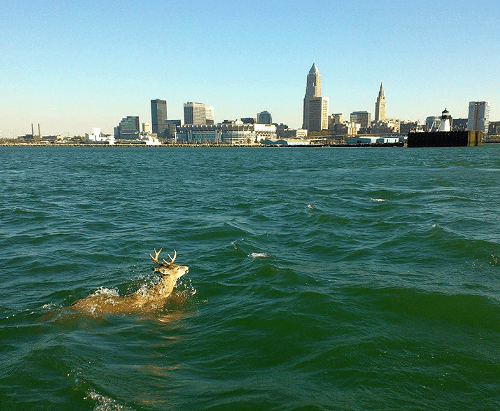
I’m sure there’s a metaphor here somewhere, but my first thought is: whoa! A deer in Lake Erie? What the hell? Image (and explanation) from Cleveland Scene

A quick rundown of some top water stories, which remind us that while we can impact nature, we’re really not in charge. 

I realize that there is a weird-seeming contradiction in saying that we can bring great change to nature, but that we’re still at its mercy. But when we say “great change”, we don’t mean permanent. The earth will eventually repair itself, and time will smooth over our cataclysms. We just won’t be here. But you want the real image? Imagine a 7-yr-old jamming a hatpin into his mother’s ankle. He can do that, and cause great damage, but really, the storm will redound upon him.

So let’s start this week’s “hey, who cares about clean water?” news with Wisconsin.

Continue reading