Waukesha Diversion Week: What Waukesha Wants

Waukesha Diversion Week!

b99727154z-1_20160518204006_000_gp3fmgda-1-0

Image from Milwaukee Journal Sentinel


To the city of Waukesha, that unassuming Milwaukee suburb, the request seemed like a no-brainer, and coming as it did before the Great Lakes Compact was signed, seemed like a sure bet. The aquifer from which it drew its water contained naturally-occurring radium, and the growing community of 70,000 felt that they needed a cleaner and safer source.  Reasonably, they looked not-very-far-east, some 20 miles, to the shores of Lake Michigan, which contains some six quadrillion gallons of water, and provides more than a billion gallons a day for drinking. The initial Waukesha request, at less than 20 million gallons a day, seemed reasonable.

And certainly, it made sense. They were a “collar county”, straddling the Basin, with the eastern part of the county firmly within its natural borders. The Compact provides exceptions for straddling cities and counties, provided that they can meet a strict set of standards.

Wisconsin Counties within Great Lakes Basin

(Images from Waukeshadiversion.org)

Now, if you were the town fathers of Waukesha, you would feel that there is a certain didactic madness to any opposition, a sort of pecksniff tyranny not just of geology, but of pedagogy as well.

Continue reading

The Borges Retrospective: “The Secret Miracle”

The Borges Retrospective: Part I: Intro.  (I know I said we’d begin with “The Aleph”, but how stupid a thought is that? We’ll end at the Aleph. We were always going to end at the Aleph.)


The great genuis


Think first of the carpenter who picks up a plank, and lays it perpendicular on another one. With careful skill and a substantial brutality, he hammers a cross, setting in motion thousands of years of ecstasy and pain. He unwittingly, doing a job, lays the groundwork for Pere Brébeuf ‘s agony at the roasting pole, and Kateri Tekawitha’s sublime conversion. He sets into motion dramas in lands which he could never imagine.

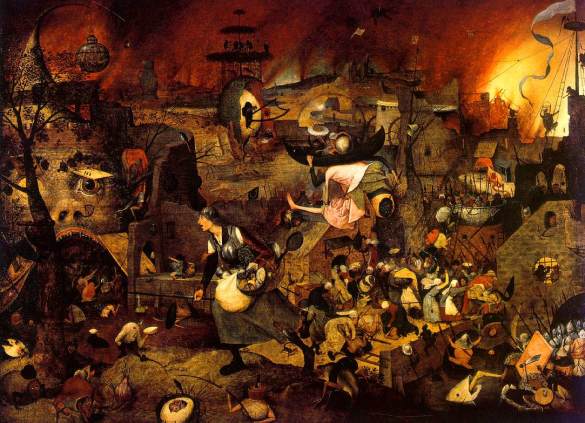
Think then of the builder who attaches a wooden mane on a great horse, which bears in its womb countless Greeks with a berserk desire for murder. These are the creators of our great dreams, and our great dramas. They build the stage on which we tell our tales. But in one of the greatest stories Borges ever tells, he steps back, and tells the tale not of our great builders, or our blood-covered warriors, but of a man who fell victim to Hannibal, to the Druidic gods, to the madness of Hitler. In “The Secret Miracle”, he tells the story of creation, the story of telling our stories, and makes it more sad and more heroic than any of the great tales.

Continue reading

Why Labor Rights As Part Of The Global Supply Chain Can Work

image

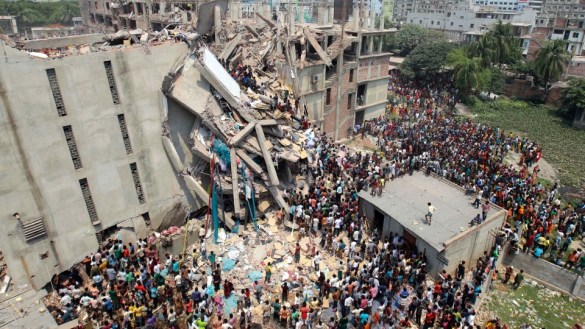
Pictured: not actually needed for the global economy to work. Image from ctv.com

One strange thing about staunch free-market advocates– who in self-image are as clear-headed about the real world as they are stout-hearted– is the mystical attachment to the lack of human agency in a human endeavor. The mystery of the market, and the “invisible hand”, is essentially the Gaia to their cute girl at the co-op. When global labor problems, and the immiseration of the Third World, is brought up, you’ll find shrugged shoulders and mumbling incantations about market forces. It’s strange to think that an economy predicated on container ships nearly a quarter-mile long and capable of carrying tens of thousands of tons, that can be unloaded by robots in massive ports, is somehow beyond the reach of human intervention.

There’s a growing movement to change that. It’s really easy to be upset when a Bangladesh factory collapses, or when you hear about union organizers for a South American sweatshop being killed, or any other of the iniquities of the global economy, but it turns out there is actually something that can be done. The invisible hand, shockingly, in attached to our arms.

Just as we have passed laws in this country that stop child labor, allow for organizing, and create working conditions that, in theory, allow you to live, we can do so for other countries. Obviously not directly, but by enforcing supply chain standards for the American and other Western businesses that use overseas factories. Over at Lawyers, Guns, and Money, Eric Loomis gives an outline of what this might look like (with a promise to delve deeper into it in the future).

1) All workers have the right to a union or workplace organization of their choice, free from harassment by employers or from corporations higher on the supply chain.

2) All workers have the right to a safe workplace.

3) All workers have the right to be free from physical, sexual, and verbal abuse.

4) All workers have the right to a livable wage based on local conditions.

5) All communities near global factories have the right to be protected from pollution

6) Western companies must take legal responsibility for the conditions in their supply chains. Western countries need to pass legislation ensuring this.

7) Western companies must agree to legally binding codes around pollution in their supply chains.

8) Corporations must take legal responsibility to eliminate all child labor, prison labor, and coerced labor in their supply chains.

9) Workers in supply chains must have legal recourse to violations of the basic principles listed above. If that cannot happen in the courts of their home nations, it must happen within the home courts of the western companies. That legal recourse should include access to corporate information and include the possibility for financial compensation for suffering.

10) These laws and regulations must travel with companies, so that they cannot escape national law in order to create a race to the bottom. Rather, the new legal regime follows the company wherever it operates.

To me, these seem like a no-brainer, and I think the political arguments against them won’t hold much water. Let’s look at a few of those.

  • The “It’s More Than They Make Now” Argument. This is a common one, especially amoing otherwise sympathetic lefties. The idea is that if you are in a sweatshop in Dhakar, you are maybe making more than you would be in a village in the countryside. This is possibly true. It also ignores the violence, lack of social safety net, and breaking of tradtional bonds that comes with it, of course. But the argument, the “race to the bottom” is that if make it less profitable for the multinational in Bangladesh, it’ll go somewhere else. That’s true if you work on a country-to-country basis, but not if you do so from the top down. If companies have to treat workers well in Mexico or Senegal or Vietnam, they won’t be able to go anywhere else. You can have the benefits of the global economy without worrying about making your entire country a hellhole for employees.
  • The “It’ll Never Get Passed” Argument. On the surface, this does seem to be a pie in the sky argument, but there’s really no reason for it to be so. I don’t see where the massive opposition will come from. After all, this isn’t going to cost Americans jobs- just the opposite. It staunches the flow by making it , if not more profitable to manufacture in America, at least not prohibitevly expensive. There are no real economic arguments against it, except the “corporate profits will be less” one, but come on. That only works when you paint them as job creators. That won’t fly. It works politically when you can ramble about job-killing regulations, but we’re talking about adding more regulations to countries that have “taken our jobs.”
  • The “Why Should We Support Their Unions When Ours Are Getting Killed Here?” Argument. This is a fairly persuasive one, at least emotionally.  After all, American labor standards have been ruined over the last generation. But that’s due in part to the globalized economy which incentivies businesses to pull out, and incentivizes states (who didn’t really need it, in many cases) to strip away more worker’s rights in order to keep or attract businesses. This creates pliant workers, who are worried that if they don’t acqueise to everything, they’ll be out of a job. But this stops the race to the bottom, and in doing so, I think, can reinvigorarate the American union movement.

I don’t think it will be easy, nor do I think it will create an international brotherhood, and nor do I think that we’ll see the glory days of the labor movement come roaring back. But it is, in many ways, a simple fix to the deep cruelty of the global economy, both here and abroad. A very comlicated and time-consuming one, and a long batle, but one that this nascent progressive coalition can fight, by rallying a large and diverse group of activists, from anti-globalization turtle-huggers (whom I love) to the bluest of the blue collar. It’s a winning issue.
Breaking! Republican Endorses Republican

I’ll say this for Paul Ryan, his little community-theater Hamlet act turned out to be pretty smart. He waited until Donald Trump was having one of his worst weeks, as the “complete scam artist” story seemed to be taking hold, then unleashed the least-surprisng endorsement of all time, which will lead to breathless headlines about how Trump is “unifying the party.”

It was a sharp two-man game of 3-card monte, with Ryan shuffling at the table and Trump luring in the marks, designed to sucker the dimmest coneys in the media. Ryan got to pretend he was smart and thoughtful, and Trump got to pretend there were a few different sides of the Republican Party for him to win over. It looks like dominoes are falling, but this was all preordained.

New York Times Chicago Survey: A Broken and Bitter, but Better City


At one point, people were leaving the Loop


On Friday, the New York Times published a survey showing Chicago to be a fiercely divided and unmoored city, unsure of itself and seemingly faltering toward some kind of calamity. It’s not hard to see why: unearthly violence has torn apart huge swaths of the city, while other areas go unharmed. Outlandish, Syrian-like police brutality, extrajudicial black sites,  and of course murder covered up at the highest levels all add up to simmering racial resentment.

In addition to this, basic institutions seem to be crumbling. The CPS has been battling much-loathed Mayor Rahm Emmanual, in what seems to be an actual liberal revolt against an entrenched system (Chicago has always been Democratic, but only the most blinkered partisans would ever say it has been an actual liberal city in any real sense). Governor Rauner is trying to starve out any union activism by destroying the schools. Hell, we can even look over at the chaos in Brazil and reflect that a large number of people thought that was a better place for the Olympics than Chicago. It’s not a great feeling.

So then why are things better? The shoots of hope come from the actual survey.

Read more on this mind-blowing bit of counter-intuition, especially if you are a hiring manager at Slate…

Continue reading

“At least four other toddlers in the U.S. found guns and fatally shot themselves last week.”

In the seven days that ended Tuesday, in addition to the death of Ms. Price, a 3-year-old in Georgia, a 3-year-old in Louisiana, a 2-year-old in Missouri and a 2-year-old in Indiana fatally shot themselves; a 4-year-old in Texas shot and wounded a family member; a 16-year-old in California killed a 14-year-old friend in a shooting that officials called accidental; a 15-year-old in Texas accidentally shot and wounded a 16-year-old friend; and a 13-year-old in Indiana accidentally shot and wounded herself. –NYTimes

The news reads like dispatches from some terrible dystopia, a darkly comic novel of Saunders-like horror, the national epidemic of toddler suicide. It’s a surreal thrum of agony, this story of a land numbed by TV but flooded with cheap weaponry. The madness is anesthetized by politics and dim 18th-century chestpounding. It should be fiction, but it is news.It is the wire service from Hell, with each clause dryly containing immeasurable sadness.

mad_meg

Read more about a gnawing national madness…

Continue reading

RIP Prince


720x405-prince-1800-1391110267

This was easily the best Super Bowl show


A lot of times, when it seems like celebrities die in bunches, it’s just a product of our need to search for pattern, our instant awareness of anything that happens anywhere, our public mourning, and the sheer number of famous people meeting the normal rate of human attrition. It’s a normal thing that is elevated into a big deal, and we all pretend there is something cruel and unusually hideous going on.

That’s the case this year, though. Bowie and Prince, man. It’s a legitimate artistic and human loss. Two of the (the two most?) idiosyncratic geniuses in 20th-century music, whose influence goes far beyond their songs. But even if you didn’t know that, and don’t think influence matters, there’s the music. Prince’s pulsing, experimental, sexual and raw and controlled and inventive and weird and amazing sound spanned decades, but never defined them, because he stood apart, on top. He contributed some influence to every musician, but could anyone touch him? There’s literally no one like him, and there never will be. There probably never could be, again. How can someone be like Prince when Prince already existed?

Perkins and Wolfe, The Great American Writer

Charlie Pierce is good enough to point us to Genius, the story of Maxwell Perkins and Thomas Wolfe, coming this summer. It’s based on Scott Berg’s breathtakingly good book on Perkins, who was the editor for, among others, Wolfe, Hemingway, and Fitzgerald.  The movie’s title kind of gives me pause, connoting a teleological sort of biopic, and the trailer sort of hints at the same thing, but what the hell? We’re getting a movie about an editor, and that’s cause for joy. Hopefully, the trailer just hits the “high” points, with the movie being full of clips like below. It’s is a good look at the maddening process between writer and editor, even though it usually happens over emails and passive-aggressive chats.

What I have a feeling the movie is going to do is start a sort of conversation about Thomas Wolfe. In my opinion, he is the Great American Writer. This is different than the greatest American writer (Melville, though I’ll entertain arguments). Wolfe is gigantic and overstretched, flawed and brilliant, maddening and over-the-top and keenly sentimental and brashly cynical and full of a pulsing sense of certainty buoyed by the idea that everything is nonsense. He is always grasping at something huge and enormous even as you feel the ground slipping beneath his feet. There seems to be a fear that if there isn’t blazing certainty there is a hollow emptiness.

He isn’t a metaphor for America or anything. He is, first and foremost, a great writer. He captures the sadness of childhood and the passage of time better than nearly anyone (his only competition, to me, is James T. Farrell, about whom I should write more). I think during the conversation this movie will hopefully provoke there will be a large focus on his flaws, his “genius for the sake of genius” style, and the grandiosity of his vision. But I hope that doesn’t obscure how amazing he was at boring into the small moments, the painful slights that linger, the memories that turn and melt into every ounce of your soul, and the exquisite agony of having a mind. The Thomas Wolfe we should celebrate is a combination of good and bad impulses, of extension and retraction, and someone who tried to capture an overwhelming and uncertain land, sure of its destiny but unsure of its history, an endless experiment with no one in charge. Wolfe, however, was lucky Perkins was in command. His driving subject could use such a steady hand.

How The West Was Won: The Oregon Militia Didn’t Build That

The militia- which even a cursory glance could tell you is not a well-regulated one- occupying the Malheur National Wildlife Refuge has been called many things. Attention hungry springs to mind (I admit they are well-orchestrated). A “clear case of white privilege” is another (to point out that if they were black or Muslim they’d be dead was as immediately axiomatic as it is correct). To a very select few they are heroes, but even to the GOP candidates they are misled, though their cause- militating, literally, against overwhelming federal power- is a correct one.

It’s the proximate cause that I think is underlooked in all the coverage. There are a number of underlying causes, the most prominent of which is the victimization complex of well-armed white guys who want to “take back the country” that never actually belonged to them. The psychology here is really is of course the big deal, the sharp end of something wild and dangerous howling through the country. But we also need to really look at their stated cause, which is both dismissed and under-remarked on.

Continue reading