The Trump Nuclear Terror Shows The Godlike Power of the Presidency


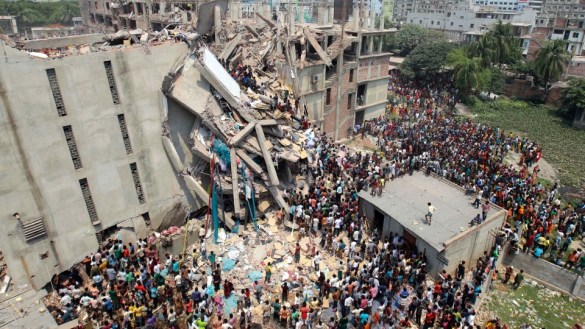
Pictured: how the world ends


Over the last eight years, we’ve seen some pretty dramatic examples of the limits on Presidential power. When faced with nihilist obstructionism, even a talented politician like Barack Obama can only get so much done (and it’s been quite a bit, actually, which is amazing. If the Republicans were even just normal obstructionists, he could be getting fitted for Mt. Rushmore). Nevertheless, the limits on what a President can do haven’t really seeped in, even among many political writers, who get frustrated that Obama can’t wave a magic wand and make something happen. And don’t get me started on people who say stuff like “Why doesn’t he just fix the economy!?” That said, there is one little area where the President has pretty much unilateral authority, and that’s deciding whether or not to end mankind and destroy the sky.

As nuclear expert and deeply-unsettling-guy-to-talk-to-at-a-party Bruce Blair writes in Politico, there are essentially zero checks on Presidential powers when it comes to nuclear weapons, both as a matter of policy and convention. If the President authorizes a strike, it happens. And while we think of strike as maybe one ICBM, it would most likely involve hundreds of strikes on multiple targets, from at least two legs of the nuclear Triad.

The authorization for this strike comes in two main scenarios. One is a “first-strike”, an option which no President has taken off the table, though Obama apparently had to be persuaded to leave it in by an advisor, against his desire. This is in a time of war or an extreme circumstance. In the case of Obama, “(t)his adviser presented a scenario in which a quick U.S. nuclear strike offered the only available tool to eradicate an unfolding terrorist operation meant to spread deadly biological pathogens from a makeshift production laboratory in a remote location to cities worldwide.” Or, of course, he could just decide to on a whim, and short of a coup, the law would mandate following orders.

The second scenario is a President reacting to news of a strike, which could be true or false. Jimmy Carter almost received a briefing of a Russian attack, which turned out to be false. If a President is told that missiles have been launched, he or she has to decide to respond or not in a matter of minutes, literally. The briefing may be less than 30 seconds. And with that info, knowing that if the report is false, and they strike first, they’ll be responsible for the end of the world (since a counterstrike from, say, Russia, will be coming). If they do nothing, much of America will be destroyed, including any chance to fire back. Millions, and really billions, of lives are at stake. Not retaliating could be the end of America, but maybe not the world. And this decision has to be made in minutes.

Even just typing this is enough to induce panic and nausea. The thought of having to make that decision is unbearable. The hook of Blair’s piece was about Trump having this power, which, given his ignorance on nuclear affairs (and everything else), his thin skin, and his swaggering moron temperament, seems like a bad idea. Security officials are already nervous about giving him even the barest of bare-bones briefings. The fate of the world lingering at the tips of his short fingers is too much to comprehend.

But then…who should have that power?  Even by being asked, the question quickly reveals itself to be “nobody.” Merely by dint of winning over undecideds in Ohio, one person can end civilization. A human being, woken up at 2:00AM, and told that the bombs are coming, and most people they’ve ever met may be killed, and they themselves might die horribly tonight, have to decide what to do. They have 5 or 6 minutes in which the literal fate of humankind rests in their hands. Even Ronald Reagan, rarely a deep thinker, couldn’t believe that the most important decision a human could ever make- the most important decision any human ever made- could come down to those few moments.

Think of Reagan’s slipping mental capacity in the second term. Think that he was still the sole authority.

It isn’t just Reagan, or W, or Trump, or Palin. I respect Hillary Clinton, but am sickened by the thought that she might have that power. I respect and admire Barack Obama, deeply, and am revolted that he has the ability to end mankind. Did you vote for that? Did anyone? It is the ultimate exercise in big government.

Christopher Hitchens said in an essay (though I can’t remember where) that nuclear weapons were inherently undemocratic, because they put us all on the front lines of a war no one supported. We could all die, terribly, in either an unseen instant of light and fire, a roiling concussive blast, through the radiation of agony, or from the collapse of civlization, the horrors that will entail, and the slow starvation of a nuclear winter. And the President of the United States has that power. So does Vladimir Putin, who, thanks to a degraded alert system, might have as little as two minutes to decide.

When we talk about the Presidency, and its powers, we rarely discuss this. We talk about an “Imperial Presidency” because of executive orders on immigration, or passing a health care regulation that some people don’t like. But this rarely comes up, or if it does, it comes up in a cliche- do you want his finger on the button? But I don’t think that we have a firm grasp on the kind of power that being the sole authority on the largest nuclear force in the world gives the President. It’s the power over every single life, now and in the future.

I think we don’t because it is too terrifying to contemplate, and if we did so, we’d be too paralyzed to act. How could you actually vote? How could you think about anything else? And one reason it isn’t talked about a lot, other than ear-covering cognitive dissonance, is because to really think about it would prove that nuclear weapons, and their elimination, should be a top priority, for everyone.

We’ve had nuclear peace for a few decades. It has to last until the end of the world, one way or the other (because if it doesn’t, the world as we know it is at an end). That the power to break that piece shouldn’t be in the hands of Donald Trump goes without saying. That it shouldn’t be in the hands of anyone should be equally clear.

Last Trump Post of the Week!

Everywhere today has been stories about the incredible garbage fire/dumpster fire/train wreck-plane crash combo that is the Trump campaign. There’s really little need to rehash it: thinking he can put California in play (or at least pretending to); trying to compete in New York (!) with his top NY aide Carl Paladino (!!); not raising money, not building a staff, having no national or regional ground game, thinking that his twitter feed is enough of a rapid response team (that’s literally true), etc. The polls are beginning to separate, even before the Obama/Warren/clinching the nomination bump (and well before Bernie’s voters step back and realize the real stakes).

There’ll be some ups and downs, and some Clinton scandals and “scandals”, more of the latter, but this will be a dominant theme. And it’ll hurt. After all, the predicate of his entire fucking campaign is that he’s the world’s best manager, and everyone says he is the best leader, and it’s called leadership, ok, and a lot of people say that Mr. Trump, you’re the best leader in business, ok?  That he can’t be bothered to hire a single competent person outside of Paul Manafort- that he thinks Carl Paladino is his New York whisperer- shows that, again, to be as big a lie as anything in his lifetime full of them.

But just for fun, let’s have one more quote about why he doesn’t need to raise money, certainly not the $1 billion he pledged to raise a month ago (sensing a pattern?):

 Naturally, he’s backtracked on that figure, telling Bloomberg, “I just don’t think I need nearly as much money as other people need because I get so much publicity. I get so many invitations to be on television. I get so many interviews, if I want them.

What an unbelievable chump. Never mind that his calculations are ridiculous. He’s such an insecure and arrogant dipshit that he’s bragging about being able to get interviews when he is the nominee for President of the United States. You know who else can get all the interviews they want? Hillary Clinton. And every single major party candidate for President in the history of any medium. This is not a strategic edge. What a ludicrous chump.

Saudi Arabia, Yemen, and the UN: A Case Study in Power

mideast-yemen_horo-e1434219654143

Rubble in the beautiful Old City. Image from timesofisrael.

In the civil war that rocked Yemen in the 1960s, regional and international powers choose sides, and used a local conflagration as a breeding ground for proxy battles, most notably between royalism, as led by Saudi Arabia, and republicanism, led by Egypt and Nasser. Needless to say, there were Cold War mechanisms as well, as there were in every conflict around then. The war in Yemen was considered not just a war for Yemen, but one where the right system could prevail. Nasser was beaten and battered. He lost 15,000 men in that conflict, about as many as in the 1967 and 1973 wars with Israel combined, and indeed, the drain of Yemen contributed mightily to the humiliating loss in the Six Day War.

That’s not to say Egypt was the big loser. The chaos and savagery of regional hatred made the war in Yemen bitter and more cruel than it had to be, with Egyptian forces using chemical weapons to try to gain back ground they had lost.  Looking at today’s overlapping civil wars in Yemen, where the Saudis, for both historical and immediate reasons, have pummeled the Yemeni people with a hellish barrage, not much has changed.

Saudi outrages against human rights, particularly the rights of children, in their indiscriminate campaign, led to the UN putting the Arab-led coalition on a child right’s blacklist. This was a big deal, a huge diplomatic strike against any moral ground the Saudis might have had. Needless to say, this provoked outrage, and this week the blacklist was lifted.

A damning investigation by Colum Lynch in Foreign Policy claimed that the Saudis threatened to withhold hundreds of millions of dollars in UN funding unless they were removed from the list, a blatant act of bribery (though, from the Saudi point of view, it was sheer interest). Needless to say, the Sauds deny this report, saying “We did not use threats or intimidation and we did not talk about funding,” and that the report was changed after the UN had a joint review with the Alliance.

Interestingly, the UN all but admits that this is what happened. Ban Ki Moon said yesterday that he stood by the report, and that this was the most difficult decision he’s ever had to make, but that he “had to consider the very real prospect that millions of other children would suffer grievously if, as was suggested to me, countries would de-fund many UN programmes.”

This, in a way, is correct, and show the tragedy of power. There isn’t much that the UN can do without money, which gives rich nations like Saudi Arabia, and powerful ones like the US and Russia, all the control. These are games played in air-conditioned rooms over millions of lives, over numbers on a spreadsheet. The UN backing down, almost understandably, demonstrates that blackmail works, and that the way the system is set up blackmail can always work, if you have the money to make it happen. Ban, and anyone else who is thinking globally, and not just about their own little corner, have to do a dreadful balancing act.

It’s the tragedy of Yemeni history writ large, but also strangely small. Decisions that impact it aren’t made in Yemen, and they are barely made with Yemen in mind. The battles that take place on its soil almost ignore local conditions, or rather only see local concerns through the prism of power. Saudi Arabia understands Yemen better than any other country in the world, and understands how to work with and manipulate the tribal system, but even they got sucked into the battle partly because of the idea that Iran was supporting the Houthis (who are, lineage-wise, the same people the Saudis supported in the 60s). And now Saudi Arabia, who has always wanted a Yemen that is divided and weak but still stable enough not to be chaotic, is helping to make sure that there is a vast and heavily-populated failed state on its southern border. That the Saudis, like the Egyptians, will suffer for their heavy-handedness is cold comfort to the people ground down, like so many mountains in the implacable progress of erosion, by powerful forces who see their lives worth pennies on the dollar.

Euro 2016, Trump’s Con, and More Quick Hits

norwood-1024x576

Suas an Irish!

  • The Guardian has a fun little article today on Euro 2016, helping Americans choose what team they should root for by finding the closest analogy to a local squad. Ireland was compared to the Buffalo Bills which is…not ideal. Northern Ireland got the Raptors, which is too boring to even be tragic. The analogy for the Cubs was Poland, and I am sure there is a joke there somewhere, but we daren’t touch it. The best description was for Spain, who is your team if you like the Red Sox. “Years without success for one of the sport’s big teams? Check! A resurgence with titles galore at the start of the 21st century? Double check! A nagging feeling that their very best years may be behind them? Check! Check and triple check!” Left out: you’re probably an asshole. 
  • Speaking of the Cubs, as a White Sox fan, let me assure you that, the post at the beginning of the year notwithstanding, we’re never going to speak of baseball again. Bitterly shouting “Big Game James!” every 5th day might be the only joy left in my life.
  • Programming note for next week: we’re going to have a lot of posts on the Waukesha Diversion, which will have a final decision by the end of the month (and it looks like a go). This is a complicated issue, which is key for how we’ll use water in the coming dry years, and really hinges on the role the geography and geology play in our lives. Hope you like Great Lakes stuff!
  • Jim Newell has a smart piece on how Donald Trump might actually bankrupt the GOP by running in places like New Jersey and California. Key line: “There is something about Trump’s personality that makes him believe he needs a marquee media-centric state like California. He probably doesn’t see the typical Republican strategy of cleaning up in the South and the Plains as “flashy” enough for his brand.” This is, I think, correct, and wish Newell had gone a little further with it. The entire idea of Donald Trump, as businessman, is using flash to cover up enormous deficits and kicking the can down the road. Most of us call it lying, but Trump has always known there are a lot of people dumb enough to believe something, and then fail to check on it later (remember his claims that his birth certificate investigators couldn’t believe what they’ve been finding? That’s no different than saying “Everyone says this casino is going to be a huge success!) That’s been the key to his campaign as well. Promises, based on his name and “success”, that everything is going to be good, just believe me. It’s why he keeps saying that he’ll be so Presidential you’ll vomit in terror, ok?   The sell, the con, is to say something is going to be great to hypnotize the gulls and hope they give you money, and then never follow through. The point isn’t to change, but to convince people that you will, and then keep doing it, over and over. He relies on the sunk cost fallacy. People have invested so much that they hope, this time, he means it, and that it’ll pay off. That has worked for him, weirdly, in business. He always flees before the bills come due, usually literally.  I’m not particularly optimistic, but I think that there’s a chance a lifetime of fraudulence could blow up in his face, and the entire image could come shattering down. At the very least, isn’t it pretty to think so?

Elizabeth Warren: The Natural


Pictured: A savage talent


I think Elizabeth Warren cemented herself as one of the canniest politicians working right now when, last week, she came out swinging against superdelegates, calling them unfair, and voting to “‘thoroughly, objectively and transparently’ study the superdelegate system before the 2020 presidential election.” This puts her on the side of angels, of course, (sort of) but it also was a smart and polite way but unmistakeable way to tell Bernie Sanders, whose whole campaign was counting on flipping supers against the will of the voters, to back off. It was brilliant.

Refusing to endorse either Bernie Sanders or Hillary Clinton during the primary season might have been the smartest and savviest move of any politician this season (admittedly, the fumbling flat-footed jackassery of every single Republican trying to figure out what to do about the monster they helped birth makes this a small field). I know that, anecdotally, there was some grumbling from the left about Warren’s refusal to get behind Bernie, the Only True Progressive, and from their perspective, that’s fair. Warren was acting like a typical politician, keeping her powder dry.

But that’s because Warren is, in many ways, a typical politician, in the sense that she is an absolute professional, who understands exactly how politics works. She knows how to get things done, and seems to have an unerring instinct for when to attack and when to lay back. Her endorsement of Clinton got nearly as big of headlines as Obama’s, even though both were inevitable, and now not only does she get to be the bridge between the activist left and Hillary’s relative center, but she gets to be seen as such.

This isn’t just smart positioning, personally. It helps the party achieve its goals of destroying Donald Trump so badly that it creates a whirlpool-level drag on the downticket, flipping the Senate and, in the best (nearly impossible, but what is June but for dreaming) case, taking back the House. The media will probably stop paying attention to Sanders altogether somewhere around the convention, unless he decides to burn down the house, which he won’t. That leaves Warren, whom the media already loves, as the fearless voice of progressive activism, but this one steeped in an understanding, borne from experience, of how things really work. Bernie, of course, knows how politics works, but he ran an explicitly anti-political campaign. It’s really hard to start talking about how to play politics after doing so. Warren can now adopt that coalition, working closely with Sanders, and try to lead it into actual change.

The media’s fascination with her also allows her to be the main point, after Obama (who clearly can’t wait), and Clinton, of course, to attack Trump. And she’s going to be great. She already is. She’s a smart, brilliant, witty-as-hell woman who has zero respect for Trump. She isn’t one of those “he’s a bully but what a man!” types. She sees him as a fraud and a showman, a lucky dope who is emblematic of everything gross and iniquitous about this country, and isn’t afraid to say it. That’s the kind of person (emphasis on woman) who makes him the angriest, and least able to respond, reducing him even more to a pile of spluttering non-sequiturs.

I hope she doesn’t take the VP position, as much as I’d like to see her with a higher profile. She can do battle in the Senate, which she’s quickly mastering. A true activist, with the ear of President Clinton, who knows how to play politics as well as she does the media, and who is fearless in standing up to the real enemy, can help make the Senate reclaim its role as half a co-equal branch. We don’t need all the talent in the White House. A Clinton Presidency and a Warren leadership role is the best chance for real progress.

Trump Grows Up! Again! Why You Shouldn’t Be Worried (And Also Be Very Worried)

In Talking Points Memo EdBlog this morning, John Judis outlines why Trump’s victory speech the other night could be cause for worry for Democrats. In it, Judis talked about  how Trump was reaching toward a less-racially tinged populism which could peel off enough white voters to have some kind of winning collation, or at least message. Judis certainly admits that it is probably too late for Trump to change his basic image, because his “incendiary racist, nativist, psycho-sexual and self-promotional provocations” are not the heart of his campaign, but the heart of who he is.

Still, though, the “Trump gives grown up speech” got some play the other day, for the umpteenth time. He used a teleprompter! He didn’t  spittle out “Mexican” as a pejorative! Is he finally pivoting?

Luckily, thankfully, this kind of nonsense didn’t get much traction. Everyone seems to understand that this was, despite Trump’s protestations to the contrary, the real act. His bombastic racist jackass routine is the real Trump, and his saying that he “can be so Presidential your head will spin” is just part of the act. But say he did start acting more like this on a daily basis (which he can’t, but pretend). Should we worry?

I say no, and here’s why.

trump-psu-2-1024x565

Image from ThinkProgress

Trump has built up his active base (though not all his voters) out of the dumbest, meanest, pastiest juvenile psychopaths filling alt-right message boards and hideous 4chan threads in the country. ThinkProgess has been doing a great job highlighting the racial hatred and misogynistic vitriol he’s unleashing and giving voice to, especially on college campuses. He’s empowering these awful people, these sniggering “anti-PC” cowards, who feel that the voice of white men is being buried under trigger warnings and safe spaces, and now feel like it is an act of courage, and revolutionary radicalism to say things that would have been acceptable in corporate boardrooms 40 years ago.

So even if Trump somehow moderates his rhetoric, his disgusting movement, the human and political equivalent of the Boston molasses disaster, a tidal wave of bitter and choking sludge, will fill in the gaps. These people will get louder as the summer moves on. Especially is he tones it down. There is a tribal connection, and they’ll think the boss is winking at them, playing the game so that he can get in power. They’ll pick up his slack. That’s why you shouldn’t worry about Trump being able to change his image too much. These are the people who will help sustain that.

Of course, while I still don’t think he can win, it is also why you should be worried on the very off-chance he does. And even if he loses, even if it is a historical nut-stomping that will make him history’s greatest loser, these forces he’s unleashed will be with us a long time.

Why People Kill: Scott Atran’s “Devoted Actor” Model and Its Critics

atran

Scott Atran image from jjay.cuny.edu

In his first show back after the attacks of September 11th, David Letterman gave a searing and moving monologue, in which he asked a question, simply and bluntly, that had been on many of our minds. (transcript from Crooked Timber).

As I understand it (and my understanding of this is vague at best), another smaller group of people stole some airplanes and crashed them into buildings. And we’re told that they were zealots, fueled by religious fervor… religious fervor. And if you live to be a thousand years old, will that make any sense to you? Will that make any Goddamned sense?

For most of us, the answer was, simply, no. Even for many of us who had studied Islam and terrorism, and had some reasons, and were able to dimly weave analysis in a vain attempt to comfort ourselves or others, the fundamental question of “why”, was unanswerable, because it tied into the “how”. How, exactly, could a person sprint toward self-abnegation? What was going through their mind as they made that long, sickening turn into the buildings?

That wasn’t the first example of suicide bombing, obviously- it was a tactic that we knew from WWII, and was prevalent in other parts of the Middle East, and especially (though barely remarked upon) in Sri Lanka, by the Tamil Tigers. Suicide attacks are different than the willingness to die you see in many soldiers. They are even different from “suicide missions”, like in The Dirty Dozen (which I know is fiction), or other seemingly hopeless situations. Because the goal in those is still, in a way, survival. It’s not the only goal, but nor is its opposite. When looking at it as a semi-global phenomenon, from Sri Lanka to Japan in the 40s (although that was a late-war tactic, and not used that much) to the modern Middle East, we see that it is widespread, but that only makes it more mystifying, not less.

One of the people trying to explain this is Scott Atran, whose remarkable book, Talking to the Enemy, does exactly that: interviews with radicals and burgeoning jihadists, in the Maghreb and the slums of Europe, to find out why they want to fight and kill, and why they are willing to die.

Recently, Atran, along with Hammad Sheik and Angel Gomez, released a paper for Current Anthropology that hones in on the theory of why, which they call the “Devoted Actor Model“.  Here is from the abstract:

This report presents two studies in very different contexts that provide convergent empirical evidence for the “devoted actor” hypothesis: people will become willing to protect nonnegotiable sacred values through costly sacrifice and extreme actions when such values are associated with groups whose individual members fuse into a unique collective identity.

I think this makes sense. Basically, what they are saying is that group pressures and loyalties can tighten under extreme circumstances, especially when the idea of identity is at stake. Atran’s work has largely revolved around this idea of group bonding, and group identity, and how the willingness to subsume your identity into a higher cause. This is prevalent among people who feel like they want to be part of something bigger because what they have is small, based not so much on poverty, but on humiliation (in the slums of Europe or the occupied and broken territories of the Middle East) and a sense of historical wrongness, heightened by group-based reinforcement. This focus on group identity has allowed others to misinterpret his works, I think. A recent excellent article on Atran by Tom Bartlett in the Chronicle of Higher Education talks about some of the critics of his theories, who seem a little prone to hysterics.

With prominence comes criticism, and Atran has suffered his share. Sam Harris fired the most personal broadside after listening to a lecture by Atran. Harris, a neuroscientist known for his advocacy of atheism, deemed Atran “preening and delusional” and wrote that his views were evidence of either “mental illness or a terminal case of intellectual dishonesty.” Per Harris, Atran believes that Islamic extremists who blow themselves up do so “not because of their deeply held beliefs about jihad and martyrdom but because of their experience of male bonding in soccer clubs and barbershops.”

Equally dismissive is Jerry Coyne, a professor of biology at the University of Chicago, famous these days as a thunderous ridiculer of religion. In a blog post titled “Once again, Scott Atran exculpates religion as a cause of terrorism,” he quotes the following remarks by Atran: “[W]hat inspires the most uncompromisingly lethal actors in the world today is not so much the Qur’an or religious teachings. It’s a thrilling cause that promises glory and esteem.” Coyne then addresses Atran directly, caps-lock on to drive the point home: “WHAT WOULD IT TAKETO MAKE YOU ASCRIBE ANY OF THEIR ACTIONS TO ISLAM?”

In many ways, these criticisms are the perfect mirror to our degraded political culture, in which the President is pilloried for not saying “Islamic terrorism” even as he bombs half the known world. It’s very easy to say “it’s because of Islam!”, but while that is true in the proximate sense- and is a clear sickness in much of the Islamic world- that still doesn’t actually explain why. It just sounds like truth-telling, a chest-thumping bullying through any pusillanimous nonsense, when in reality it doesn’t get us any closer to the truth of why people kill. There are a billion Muslims in the world. There aren’t a billion suicide bombers. And it doesn’t explain why Tamils were willing to do the same.

That’s what makes Atran’s work so valuable. He certainly doesn’t actually shy away from the reality of Islam, but he asks what it is that makes these people do this right now. There’s nothing inherent in Islam that commands suicide vests (as the Chronicle article shows, Kurds abhor the idea). Nor is there anything inherent in an occupied people that make them go to such moral extremes. So why in this time and place is there an epidemic of people willing to kill themselves for Islam? What social pressures lead someone into this? What about the modern Middle East, and Europe– not to mention Western China, Central Asia, and other places? (I know that the last two are not indistinct, but still.)

I think work like this is extremely valuable, if we really want to understand the reason why we’re in these wars, personified most gruesomely and atavistically by ISIS. If you want, you can say the somewhat relevant, but still fairly facile statement which is that people are willing to kill themselves because Islam, or whatever is passing for it in certain quarters, is telling them to. That’s true. The real important question then is why do some people listen? Understanding that is the whole ballgame.

The Times Finds The Worst

giphy

This is the movie where this blog’s name sort of came from! Isn’t that neat? Image from giphy.com

There might not be a lower form of political allegiance than basing your positions against a candidate’s worst supporters. Every candidate has some dumbass people voting for them; it is statistically inevitable. But that doesn’t mean it isn’t disquieting when fellow supporters say really dumb things to the NYTimes. I’m going to caveat that they are young(ish), and the heat of a primary battle makes monsters of us, all, but come on…

(Names withheld- they are in the Times, but it is not my job to call them out further)

(blank) a 26-year-old filmmaker from Glendale, Calif., was not interested in milestones. He said he thought Mrs. Clinton was a crook. “She could be indicted literally tomorrow if the system is not corrupt,” he said…

(blank) an actress living in Los Angeles, assailed Mrs. Clinton for having proclaimed victory before the Democratic Party had formally bestowed it on her at the convention.

“I think it’s absolutely unjust, undemocratic, un-American,” she said. “What kind of example is that setting?”

The first one could easily come from a Trump rally, and I am pretty sure if pushed, the speaker would give no more a coherent answer to the question of “for what” than did Trump (“for the servers!”). The second makes one think she started paying attention to politics approximately yesterday.

And all that’s fine. It is what happens when an exciting candidate comes to the forefront. New people get involved, and that’s great. And again, passions run high. But some of this has to come from the top. Sanders didn’t come close to congratulating Clinton yesterday. He doesn’t have to concede, though he should accede to reality. This isn’t a matter of playing the room. The crowd wouldn’t have booed him if he started to say nice things about Clinton.

I still think he will. I think he’ll take a few days, talk to Obama, and then begin to come around. As many have pointed out, this is the 8-year anniversary of when Hillary conceded eight long years ago, and she became a dynamite surrogate. I don’t expect the same level of commitment from Sanders, who has no real party loyalty, but I think he’s canny enough to know that it is time to roll it up.Maybe one last big, tearful, joyful speech in DC next week. Maybe the Times will find people who are more elegiac next time.

What If They Threw A Contested Convention And No One Came?

2016-03-12-1457776885-8487260-berniesanders

A legitimate thank you for moving the Democratic Party to the left.

One of the stranger political locutions of the last few weeks- outside of every top Republican being shocked that a white nationalist candidate would appeal to naked racism- has been Bernie Sanders saying that he believes “the Democratic Convention will be a contested convention.”  There was a strange passivity there, implying a lack of control. It wasn’t that he was choosing it to be contested in the face of math, reason, and democratic imperative- it just, sort of, was. Life, you know? What are ya gonna do?

That willingness to fight on despite having lost, and despite needing to do a 180 on superdelegates, was laid bare in a Politico article late last night, which demonstrated that it was Bernie Sanders in control of every decision the campaign made, including spending. This was a different narrative, pushed by erstwhile supporters and foes alike, that most of the annoying attacks and counterproductive strategies went through Jeff Weaver, whose pugnacity made him something of a centrist and center-left punching bag, Bernie’s own Mark Penn, except competent and resourceful and more likeable and able to do good for his candidate and understanding how campaigns work and not being unable to find his ass in a phone booth with two hands and a map. So not at all like Mark Penn, except in terms of being a target of loathing.

And, assuming that this article is true, and not just the ass-coverings of sunken ship survivors who realized that they might be playing with fire, and their careers, this doesn’t speak as ill of Bernie as I think people are making it out to. Yes, there is the usual bitterness that comes with a hard-fought campaign, where you focus every day on one person who is keeping you from getting what you want. That’s human nature, and that’s politics.

Some of the bitterness is disquieting for Dems, but also normal human nature, such as his anger at Sherrod Brown.

Aides say Sanders thinks that progressives who picked Clinton are cynical, power-chasing chickens — like Sen. Sherrod Brown, one of his most consistent allies in the Senate before endorsing Clinton and campaigning hard for her ahead of the Ohio primary. Sanders is so bitter about it that he’d be ready to nix Brown as an acceptable VP choice, if Clinton ever asked his advice on who’d be a good progressive champion.

In some ways, that doesn’t seem to bode well- it makes Bernie look like the self-appointed progressive messiah, who positions himself as the only acceptable candidate for the Left, and anyone who doesn’t believe so is an apostate. But really, that’s just politics. Everyone gets pissed when they don’t get an endorsement, especially one they are expecting. This should be fine. But…

But the good and the ill of the Sanders campaign was laid bare in what was, for Politico (as always, obsessed with process) a transition paragraph.

This isn’t about what’s good for the Democratic Party in his mind, but about what he thinks is good for advancing the agenda that he’s been pushing since before he got elected mayor of Burlington.

This campaign started out as an agenda one. It was a campaign that Bernie thought he could win, of course. No one runs for President without thinking that, with a few breaks, they might win (and don’t forget how successful a politician Bernie Sanders has been). He’s pushed a radically (for our post-Reagan times) progressive agenda, and has been able to move the party to the left.

That’s where the bad part comes in. In running a revolution, and not a campaign, Bernie and his most ardent supporters have convinced themselves that the Democratic Party is the obstacles to progressive change, and not, for all its ills the major vehicle for it. Politics work in this country because activists push creaking parties in one direction of the other, and sustain that movement. Sometimes you catch lightning in a bottle, like with President Obama, and sometimes you push party elders toward your positions, like with Hillary Clinton. But this is a good thing. It isn’t a loss.

It’s only a loss, weirdly, if they refuse to treat it like one, and continue to fight at and until the convention. (He’s staying in, for now, but that’s fine.Somehow I don’t think Washington DC is going to give him a boost.)This isn’t contested in any real sense, unless Bernie wants to make it such. But I think that’s what Obama will be telling him when they talk on Thursday, as is being reported. I imagine that it there will be a few major talking points.

  1. Don’t tell your supporters this was stolen. For one thing, that’s super insulting to the millions of people who voted for Hillary. They don’t represent the 1%. If your supporters think this was stolen, it’ll be harder to sustain the momentum you built. Have them keep driving the party. That’s how this works.
  2. Oh yeah- don’t tell them that it was stolen because she’s running against Donald Trump. As my friend BMK said, the conversation should involve the phrase “Donald Trump appearing in the first paragraph of your obituary”.
  3. You did a great and good and amazing thing. This is one of the most positive and remarkable campaigns in American history, and you will continue to play a huge role in advancing your agenda. But there is really only one viable high-level political path for that, and that’s the Democratic Party. We can work together on this. Make up with Sherrod Brown. Get over it. Get back to work.

The Politico article showed what a canny and involved politician Bernie Sanders is, to his great credit. And the race showed that a single-minded focus on the evils of inequality can have a remarkable impact. I don’t think Bernie is going to burn it to the ground. The question is whether or not he continues to push for positive progressive growth, or retreats into bitterness.

Why Labor Rights As Part Of The Global Supply Chain Can Work

image

Pictured: not actually needed for the global economy to work. Image from ctv.com

One strange thing about staunch free-market advocates– who in self-image are as clear-headed about the real world as they are stout-hearted– is the mystical attachment to the lack of human agency in a human endeavor. The mystery of the market, and the “invisible hand”, is essentially the Gaia to their cute girl at the co-op. When global labor problems, and the immiseration of the Third World, is brought up, you’ll find shrugged shoulders and mumbling incantations about market forces. It’s strange to think that an economy predicated on container ships nearly a quarter-mile long and capable of carrying tens of thousands of tons, that can be unloaded by robots in massive ports, is somehow beyond the reach of human intervention.

There’s a growing movement to change that. It’s really easy to be upset when a Bangladesh factory collapses, or when you hear about union organizers for a South American sweatshop being killed, or any other of the iniquities of the global economy, but it turns out there is actually something that can be done. The invisible hand, shockingly, in attached to our arms.

Just as we have passed laws in this country that stop child labor, allow for organizing, and create working conditions that, in theory, allow you to live, we can do so for other countries. Obviously not directly, but by enforcing supply chain standards for the American and other Western businesses that use overseas factories. Over at Lawyers, Guns, and Money, Eric Loomis gives an outline of what this might look like (with a promise to delve deeper into it in the future).

1) All workers have the right to a union or workplace organization of their choice, free from harassment by employers or from corporations higher on the supply chain.

2) All workers have the right to a safe workplace.

3) All workers have the right to be free from physical, sexual, and verbal abuse.

4) All workers have the right to a livable wage based on local conditions.

5) All communities near global factories have the right to be protected from pollution

6) Western companies must take legal responsibility for the conditions in their supply chains. Western countries need to pass legislation ensuring this.

7) Western companies must agree to legally binding codes around pollution in their supply chains.

8) Corporations must take legal responsibility to eliminate all child labor, prison labor, and coerced labor in their supply chains.

9) Workers in supply chains must have legal recourse to violations of the basic principles listed above. If that cannot happen in the courts of their home nations, it must happen within the home courts of the western companies. That legal recourse should include access to corporate information and include the possibility for financial compensation for suffering.

10) These laws and regulations must travel with companies, so that they cannot escape national law in order to create a race to the bottom. Rather, the new legal regime follows the company wherever it operates.

To me, these seem like a no-brainer, and I think the political arguments against them won’t hold much water. Let’s look at a few of those.

  • The “It’s More Than They Make Now” Argument. This is a common one, especially amoing otherwise sympathetic lefties. The idea is that if you are in a sweatshop in Dhakar, you are maybe making more than you would be in a village in the countryside. This is possibly true. It also ignores the violence, lack of social safety net, and breaking of tradtional bonds that comes with it, of course. But the argument, the “race to the bottom” is that if make it less profitable for the multinational in Bangladesh, it’ll go somewhere else. That’s true if you work on a country-to-country basis, but not if you do so from the top down. If companies have to treat workers well in Mexico or Senegal or Vietnam, they won’t be able to go anywhere else. You can have the benefits of the global economy without worrying about making your entire country a hellhole for employees.
  • The “It’ll Never Get Passed” Argument. On the surface, this does seem to be a pie in the sky argument, but there’s really no reason for it to be so. I don’t see where the massive opposition will come from. After all, this isn’t going to cost Americans jobs- just the opposite. It staunches the flow by making it , if not more profitable to manufacture in America, at least not prohibitevly expensive. There are no real economic arguments against it, except the “corporate profits will be less” one, but come on. That only works when you paint them as job creators. That won’t fly. It works politically when you can ramble about job-killing regulations, but we’re talking about adding more regulations to countries that have “taken our jobs.”
  • The “Why Should We Support Their Unions When Ours Are Getting Killed Here?” Argument. This is a fairly persuasive one, at least emotionally.  After all, American labor standards have been ruined over the last generation. But that’s due in part to the globalized economy which incentivies businesses to pull out, and incentivizes states (who didn’t really need it, in many cases) to strip away more worker’s rights in order to keep or attract businesses. This creates pliant workers, who are worried that if they don’t acqueise to everything, they’ll be out of a job. But this stops the race to the bottom, and in doing so, I think, can reinvigorarate the American union movement.

I don’t think it will be easy, nor do I think it will create an international brotherhood, and nor do I think that we’ll see the glory days of the labor movement come roaring back. But it is, in many ways, a simple fix to the deep cruelty of the global economy, both here and abroad. A very comlicated and time-consuming one, and a long batle, but one that this nascent progressive coalition can fight, by rallying a large and diverse group of activists, from anti-globalization turtle-huggers (whom I love) to the bluest of the blue collar. It’s a winning issue.