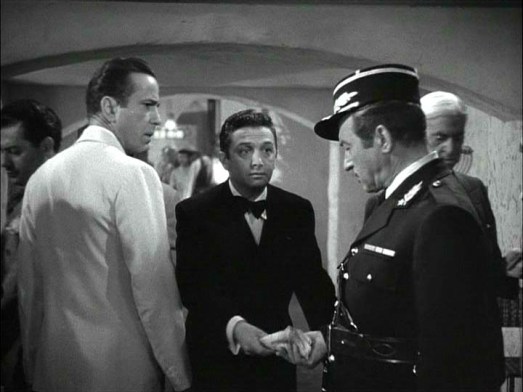
No, Nixon Would Not “be drummed out of” Today’s GOP: He’d Be Running It

zi1zolot14bvn7ezemn4

Note: Not particularly liberal!

If you are bemoaning how far lunatic right-wing today’s Republican Party has gotten- and you should bemoan it, on a little-read blog, if possible- then it is considered a smart thing to say that “Hell, Nixon would have been too liberal for them.” I don’t need to link to the thousands of times you’ve read this; the most recent example is this Salon article. It’s an interview with Evan Thomas, who has written a book about Nixon*.

Part of that was Democrats on Capitol Hill, but he believed that government had to govern. He passed as much social welfare legislation as Lyndon Johnson. He would get drummed out of the party today as a liberal.

That is true, at least in the beginning. He wasn’t a nihilist about governing. But saying that Nixon would have been too liberal is to ignore who Nixon actually was, or more accurately, how the modern GOP is the ravening child of his mutated vision. He wouldn’t be kicked out today: he would have be leading the charge, with a sense of victimhood and oppression that would make Ted Cruz look honest**.

Continue reading

Superdelgates and “Stop Trump” Are Not Anti-Democratic

One of the great unresolved, and probably unresolvable, questions in American public life is what is meant by “elite”.  To a large extent, this question is unanswerable by its definition: elites are always just the other, a useful tool, and thus inherently malleable, a shifter specter always in the shadows. It has been applied to the very wealthy, the political class, snooty college students, rampaging Harvard professors, union bosses, outspoken leaders of minority groups, and practically every other collection of people in America, no matter how insignificant, except for probably working-class whites, aka, “real Americans.”

A clear distillation of this was in the lead-up to the 1972 campaign. After the chaos and tumult of 1968, where Hubert Humphrey, who didn’t enter a single primary, was awarded the Democratic nomination, only to barely lose to Nixon, the party decided they had to reform. The McGovern Commission was tasked to overhaul the process, which shaped the primary system we know today. This was explicitly designed to cut the legs out from under party bosses like Richard Daley and labor leaders like George Meany, the quintessential politicians in the smokey room, deciding what was best for everyone.

On the surface, of course, this was right and good. The people should have more of a say, and not the jowly elites of a dying era. But to this, Daley and Meany could (and did) easily respond: what elections have you won? You radicals, you elite college students, have never won anything. We rose to power because we know how to win elections by giving people what they want and representing them. Being able to have ghost voters and ward heelers is all well and good, but unless you have a platform that makes people want to vote for you, you’re going to lose. They made the claim that they were the ones who represented the most people.

The disaster of 72, in which McGovern, one of the finest public servants America has ever produced, got trounced by the venal band of criminals in the Nixon administration, made the party reform the still-nascent primary system, by creating a system of superdelegates, whose votes were unbound by any piddling election, and who could more or less swing a nomination by themselves. It represents the return of the Establishment.

This system, and the primary idea in general, is coming to a head this year thanks to the insurgency of Bernie Sanders and the insurgent lunacy of Donald Trump. On the Democratic side, the idea of a lack of democracy in the system is exemplified by this Charles Blow column, in which he argues that the Democrats do not practice democracy, cleverly titling it “The (un)Democratic Party”, which is very, very clever.

He cites as his first example superdelegates, which he argues tilt the balance of an election by announcing in advance who the elites have chosen, and therefore giving momentum and media coverage to the establishment pick. This makes a certain amount of sense, of course. Bernie, it is assumed, can’t overtake Hillary because of superdelegate math, which means Hillary is already being treated as the nominee. But Blow also thinks that caucuses are undemocratic, because only those with enough time and passion can do them. The young radicals who support Bernie, for example, who are a contradictory elite.

There are two weird arguments here. The first is that being jazzed to votes makes you an elite, and is therefore somewhat sketchy. It’s the establishment argument used to undercut a genuine passion for Bernie. The second is that superdelegates are completely unresponsive to popular passions or electoral persuasion, a notion disproven in the last open primary on the Democratic side. Obama supporters were terrified that Clinton superdelegates would give her the nomination, but they switched over when it became clear that Obama was the choice of the majority of voters.

Because that’s the thing with superdelegates, or the Daley/Meany branch. They are very, very concerned with winning elections, which means putting their support behind the candidate they think gives them the best shot. Of course there is corruption and incest and greed in the selection, and they aren’t going to be right all of the time, either. But that’s part of having a party system. The party wants to pick a candidate it thinks can win, and the primary process is designed to give them an idea of how to do that. It isn’t designed to bind them to the passion of a minority. It makes it incumbent upon the lesser-known candidate prove they can appeal to the most people, which is what Obama did in 2008, and Howard Dean failed to do in 2004.

The Republican are figuring this out now. The “Stop Trump” movement is being assailed by people as anti-Republican as Gawker’s Hamilton Nolan as being the only thing worse than Trump getting the nomination. The anti-democratic measures being taken by party elites to change the rules so that they can possibly deny him the nomination are seen as a subversion of popular will, and to an extent, that is true. But to a greater extent, that is the absolute right of a political party.

Trump is winning some 30% of the GOP voters over, and is pretty much despised by everyone else in the country. He has almost zero chance at winning because he only appeals to a very small slice of the people. A party isn’t bound to a suicide pact because of a loud minority.

(Of course, that we got here is the fault of the GOP, which has no center and has destroyed itself, peddling insanity for decades. This is fine by me, but doesn’t change the central argument.)

I don’t think it is in the best interest of the GOP to Stop Trump. If they nominate, say, Paul Ryan, the party will tear itself to shreds even more than it has done. Trump and Cruz combined represent the majority of their voters, and there would be a revolt. Giving the nomination to Cruz would alienate the Trump people and they’d still lose huge, with a “true conservative”.  Their best bet is to let Trump go down in flames, say that they were hijacked by a billionaire madman (without talking about why said madman appealed to their voters), do everything they can to obstruct Hillary, and try again in four years.

But that’s just the smart play here. If it wasn’t, they wouldn’t be bound to do it. We have a fairly-recent notion that the will of the people who vote in primaries is sacrosanct, and that to deny them their choice is elitist and antidemocratic. It isn’t. The candidates picked in the primary are chosen because they pass a test and prove they can appeal to people in Iowa and California and South Carolina. If a party legitimately doesn’t think that they can win a general election- that is to say, if they don’t think a majority of people want to vote for them- then it isn’t undemocratic to try to tilt the scales to someone who can win.

There are a million things wrong with our democracy, perhaps fatally wrong. A party using whatever method necessary to pick a candidate who can best represent their interest and win is not in the top 50%.
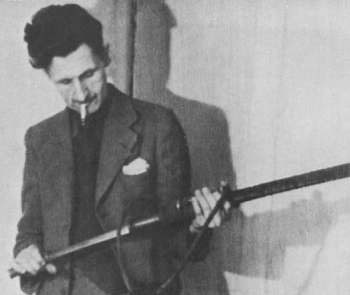
 

Trump on Abortion and Language: The Media Still Treats Him Like A Real Person

1200x-1

I mean, just look at this guy, will you? Image from MSNBC.

OK, so Donald Trump is going to be doing another townhall-style thing with Chris Matthews tonight, which means two things: 1) you are going to be hearing a lot about “my old boss Tip O’Neil (the over/under on mentions by Matthews is 987), and 2) you’re going to be hearing a lot of nonsense which is mistaken for “telling it like it is.” This isn’t deep prognostication; everything said during the show has already been dissected by the media. The real clambake is when Trump stumbled onto abortion, a topic about which he is as ignorant as anything else.

He basically managed to be both cruel and politically stupid, which are rarely the same thing for the GOP. On the one hand, he basically admitted that women would have to be punished if they sought an abortion when it was banned, which is correct, of course. That’s the hideously logical conclusion to making something illegal, although it’s something the GOP doesn’t like to admit. But more than that- and Charles Pierce thinks this is the big one– in doing so, he reminded us all that when you make safe abortions difficult or impossible to obtain, people will get unsafe ones.

Continue reading

Dear #neverhillary Bernie people…

Today, thanks to the timely death of Antonin Scalia, the most brazen assault on public sector unions of our time was killed. Friederichs vs. California Teachers Association couldn’t survive a 4-4 court, which means the lower court ruling was upheld. If Antonin Scalia was still around, it would have won 5-4, and the ability of unions to fund themselves would have been gutted. The public sector- the last great hope of the middle class, which is why it is under constant assault- would have collapsed into a race-to-the-bottom spiral.

This isn’t the last attempt at this. Public sector unions show that unions can still work, which is why they have to be destroyed. A conservative justice will tilt the balance again. It’s why the resistance to Merrick Garland has been so implacable. Conservatives are hoping that they can hold out til next year, when a GOP President will nominate a justice to finally kill off unions (among other things).

But please, remind me why there isn’t a dime’s worth of difference between Hillary and Ted Cruz or Donald Trump.

The Wisconsinization of Illinois

rauner-cst-030914-01

“Nice work, Walker!” Image from ChicagoNow

I’ve always loved Wisconsin. It’s fun to make fun of, but I have never once not had a great time in the state, whether camping up north or near Kettle Morain, hanging out by the lake in Milwaukee, relaxing in Door County with my lovely bride, reveling in the weirdness of Madison, or spending time at scenic Lake Ripley, my favorite spot, Wisconsin is always warm and hospitable. It’s got a great drinking culture, which doesn’t so much revolve around experimental cocktails as much as “the more the merrier”, and a great attitude toward eating. If there is one thing over which Scott Walker and I can bond, it’s ham, and the desire to eat more of it, at all hours. Ham for breakfast, lunch, and dinner. You can’t go wrong.

But ham is probably the only area in which Walker and I would agree on anything (although we could both confirm that empirical reality that he won’t be President, though I imagine we have different feelings about that). One other thing to love about Wisconsin was its progressive tradition, which came about naturally, from workers and farmers, as a reaction to the power of capital and its corrupting nature. That’s also why the backlash in Wisconsin was always so fierce, whether that was the union hating Herb Kohler Sr or the drunken lout McCarthy. Now, that backlash has reached its apex, as Walker and his pet legislature have turned this great state into their personal Koch-funded experiment, destroying voting rights, the social safety net, corporate accountability, and the environment. In short, trying to wreck everything that is great about Wisconsin.

Continue reading

Former Trump Supporter Shocked That Trump is Trump

casa31

Shocked!

Stephanie Cegielski, former Communications Director of the Make America Great Again Super PAC, penned a missive in xoJane about why she can’t support Trump anymore. It basically boils down to no one thought Trump could win, and that he would be a great candidate to shake up the system. She was tired of the direction the country was taking, and thought this would be a great start.

The Trump camp would have been satisfied to see him polling at 12% and taking second place to a candidate who might hold 50%. His candidacy was a protest candidacy.

You’ll excuse me, but that’s nonsense. I’m sure there were some pros who thought that, but at no point did Donald Trump think he wasn’t going to win. There is a convenient narrative among former supporters that this was a lark, and that Trump is as surprised as anyone. He might not have thought it would be this easy, but Donald Trump doesn’t think he is going to lose. Even when he does- which is often- he immediately spins it in his head as a win of such towering genius that it’s like a billion times better than anyone has ever won.

Donald Trump was never a protest candidate, like Bernie Sanders was originally intended to be before his message found deep purchase. That wasn’t Trump. He assumed he would win. Cegielski’s other reasons for her initial support are equally unconvincing.

My support for Trump began probably like yours did. Similar to so many other Americans, I was tired of the rhetoric in Washington. Negativity and stubbornness were at an all-time high, and the presidential prospects didn’t look promising.

So, you don’t like negative people without a solution, and you stuck around past the rapist speech? This is nonsense. Trump was always a bitter, mean, vulgar, spiteful megalomaniac who never once expressed a positive thought that didn’t revolve around his own world-historic conquerings. Hell, half his introduction speech was spent talking about how much richer he was than Mitt Romney.

To say that Trump now is different than the Trump of June 2015, or that it wasn’t clear that he was always going to be this way, is self-serving in the extreme. It was always clear that he was an ignorant blowhard: he has been his entire life.

Cegielski’s note is to Trump supporters, so it has some value. It isn’t a mea culpa but a note of warning to them that their hero is a false one. But assuming that a woman (!) who has scorned Trump (!!) will be listened to shows that she has just as little awareness of what Trump is, and what is fueling him, as she did all those starry months ago, at the innocent beginning, when calling for a wall around Mexico was a springish lark. How could it have gotten so bad?

The Tribune Has Lost Its Damn Mind, Cont.

In life, you meet thousands of people. With some you have a deep connection which spans the decades. Some people you are extremely close to for a short but intense while, and it burns out. Others you are friendly with, maybe even close to, but lost contact with, and realize sadly that there have been dusty years in between the last time you’ve talked, and they are out of your life.

Other people you know briefly 50 years ago, talk once on a bus, have a mildly unpleasant interaction with, and then write about decades later when they are nominated to the Supreme Court.

The Chicago Tribune has decided, in its wisdom, to run a piece from a guy who went to Jr. High with Merrick Garland. The connection, in full, consists of two anecdotes. In the first the author hopes to brag to a new seatmate about his grades, but it turns out young Merrick had straight As. In the other, a few years later, Garland may or may not have cut off our author in a race.

This searing anecdote is what the Trib has given us. Zero insight, an unsubstantiated story, that, even were it true, is meaningless (breaking: kids in competition can be hotheaded), and an odd grudge. Of the thousands of people with whom Merrick Garland has interacted in his life, it’s hard to imagine a less interesting or meaningful connection. I look forward to him not being asked about this non-event in his non-existent confirmation hearings.

What Trump’s Particular Brand Of Lying Reveals

All politicians lie. That’s not a statement of cynicism; it’s part of the job. At some point, you have to hedge what you are really thinking, or what you really believe, because winning an election means appealing to the most citizens you possibly can. We’ve had spectacularly successful Presidents who have had an uneasy relationship with the truth. Lyndon Johnson and Nixon were both world-class liars. That’s not a positive thing, of course, but it is to say that Donald Trump being clinically dishonest does not, in and of itself, disqualify him from the Presidency. But it is his method of dishonesty, the kinds of lies he tells, and what that reveals not just about him, but how he’d run the country, that is something we’ve never seen. It is as dangerous as his rampant xenophobia, his bitter misogyny, and his huckster’s ability to appeal to the darkest heart of America.

Trump’s lies are possibly unlike anything we’ve ever seen, not just because of what they say, but because of what it says about him, and the reaction that his campaign has to it. His lies automatically become not just truth, but axiomatic and inevitable. What’s stranger, they become policy. This is the result of a man who has been surrounded by a fawning payroll for his entire life, cosseted by servants and sycophants. His whims become reality, and if reality disagrees, it can go pound sand. This is who he surrounds himself with, and it would continue into the White House. A few examples here will suffice.

Continue reading

Donald Trump Performs The Impossible…

He makes Ted Cruz look like an honorable and decent person.

Let’s point out, again, everything horrible here.

  1. The Republican frontrunner is attacking his rival’s wife
  2. The Republican frontrunner is attacking his rival’s wife, based on her personal appearance
  3. The Republican frontrunner is attacking his rival’s wife, based on her personal appearance, on Twitter, his desired forum for discourse.
  4. The attack comes in the form of a reweet from someone who has named himself “Don Vito 08”, which is perfect image of a Trump supporter- sad and lost but with delusions of greatness underscored by violence.
  5. Again, he makes Ted Cruz- who is Richard Nixon without the charm, personal magnetism, or higher sense of ethics- look like the big man here, with the moral high ground.

None of this matters, of course. Trump is beloved because of his vulgarity. Because he sleeps with women who look like Melania despite being the human incarnation of lung cancer. Because he swaggers like a caricature, like someone playing Vito Corleone in a low-rent Godfather knockoff in the worst community theater in Secaucus. Just remember that he is the frontrunner. The plane has crashed into the mountain.

Ted Cruz Makes Clear How Much He Hates America

There aren’t really any words.

“We need to immediately halt the flow of refugees from countries with a significant Al Qaeda or ISIS presence,” the Texas senator said in a statement. “We need to empower law enforcement to patrol and secure Muslim neighborhoods before they become radicalized.”

It’s a mark of the wild danger howling through the country that this kind of loose and dangerous talk drips easily from a major candidate. What happened in Brussels is a horror, and it is the kind we’ll be living with for many years. There is no easy solution (more on this forthwith), but there is also no question that this kind of weaponized rhetoric only serves the cruel forces of Islamic militancy.

What’s clear is that Ted Cruz’s major problem with America is that it is, well, America. This is clear in a further part of his statement.

“The days of the United States voluntarily surrendering to the enemy to show how progressive and enlightened we are at an end,” he said. “Our country is at stake.”

The “voluntarily surrendering” is inflammatory and reality-ignoring and dangerous enough (were it true, you’d think Cruz would have the stones to pursue impeachment). It’s the second part that really captures his whole program: he has nothing but contempt for the Enlightenment values the country was founded upon. He is directly saying that since our country is at stake, everything that makes America what it is should be thrown over the side. It’s a sneering yawp at modernity itself.

He means it, too. He can’t really believe that ISIS is an existential threat. But the march of progress is an existential threat to his perverted value system. The country is at stake only because atavistic reactionaries like Ted Cruz aren’t in complete control anymore. He wants a grim mix of plutocracy and theocracy, and fears that he won’t be able to get it. Attacks in Europe give him the opportunity to promote his real program: the erasure of post-Puritan progress.

Combined with Trump’s lunatic ravings about borders and shutting it down “until we figure out what’s going on” (an off-the cuff remark that was made into a somehow-viable policy), it is clear that the GOP has zero interest in the threat of radical Islam other than its use for them in their endless culture war. Everything is a symbol, a fetish object for their retrograde obsessions, and the deaths of dozens of Europeans is merely a cudgel to win the next battle.