Trump’s Security Briefings: The First Real Sign Of the Sweaty Terror

dr-strangelove-still-580

“On my first day in office…” -Donald Trump

Until now, the fears of a hypothetical Trump presidency- and even just typing that makes me a little woozy– were just that: hypothetical. We’ve all been able to imagine just how scary it would be, given his combination of rampant insecurity, raw egotism, paranoia, and general inability to keep two coherent thoughts in his head at any one time. But now, as the possibility becomes decidedly more real (although demographically unlikely), the actual outlines of just how fearful his win would be begin to take shape.

Hillary Clinton’s excellent attack on him  yesterday, in which she mockingly demonstrated his unfitness to serve (and demonstrating that she knows how to needle him), was just the beginning.  He further elaborated upon his attacks on the judge in his civil case, claiming that merely being of Mexican descent was a conflict of interest with Trump, a truly frightening line of thinking. And today, the Times has a piece by legal experts worried about his contempt for the First Amendment, separation of powers, and more.

But again, those are all still in the realm of “wouldn’t it be bad if he became President?” As he gets closer to the nomination, though, various norms start to take hold, and we see just how grotesque his victory really is. Reuters had the far more interesting story, about how security officials are worried about giving Trump the daily briefings that are traditionally accorded a nominee.

Eight senior security officials told Reuters they had concerns over briefing Trump, whose brash, unpredictable campaign style has been a feature of his rise as an insurgent candidate. Despite their worries, the officials said the “Top Secret” briefing to each candidate would not deviate from the usual format to avoid any appearance of bias.

Now, to be fair, one says that the briefings are more of an overview, and won’t tell him much that he won’t get from reading the paper. And it’s not like he has the intellectual wherewithal to actually explain anything. The briefings can be politically advantageous, because they give a patina of respectability to his rantings (“I’m getting security briefings because they know I’m the smartest. And let me tell you, people, ISIS is bad, ok. And the people doing the briefings are saying, ‘Mr. Trump, you have to save us, crooked Hillary can’t do, you’re the only one who can stop this’, ok?”).

However, it isn’t the politics of it. It’s the fact that people are beginning to really realize how different this is from anything we’ve ever seen, how large a mutation. We have someone who is not just intellectually unfit, or even morally, but tempramentally and emotionally. We have someone who is truly dangerous, and the people tasked with keeping this country safe are genuinely terrified. This needs to be made a much bigger deal. We’re seeing what the actual election of Donald Trump as President means- a complete breakdown of every national apparatus. The media needs to hammer this, to make sure he loses in such a way that completely discredits the terrifying politics of personal resentment.

(Of course, in the story, Rueters also quotes a sneering RNC official who makes an flagrantly dishonest snark about the email scandal, I guess for “balance”. This allows places like The Hill to have headlines reading “US Intelligence Officials Concerned About Briefing Trump, Clinton”. Goddammit, Reuters, and The Hill. This isn’t balance. Both sides aren’t doing it. This only normalizes the most abnormal and scary campaign we’ve ever had.)


“Until we find out what’s going on” Continues To Be Official Trump Policy


Pictured: John Kerry?

Remember when John Kerry was permanently labeled a “flip-flopper” thanks to a smart Bush team and an enabling press, who, with few exceptions, loved the label, adopted it, and breathlessly discussed it? It was fine to discuss his positions and character, of course, but any normal political act was instantly labeled another “flip-flop” by a press almost sexually enamored of a swaggering war President.

That’s normally how things work. Labels get stuck because the press is lazy and people easily accept quick caricatures in place of actual characterization. Bush was dumb (instead of arrogantly incurious), Gore was boring and a liar (instead of neither), McCain was grouchy (true!), Obama was aloof and arrogant (kind of true), etc. That’s the way it usually works.

That’s why one of the more genuinely frightening things about this election is that it has revealed, once and for all, the power of pure thuggishness in the face of any rationality. It’s why no labels have really stuck on Donald Trump. The rage he channels is enough to flatten the incredible contradictions, reversals, and sheer ignorance that underpins his campaign, like a boiling river leveling a hapless and god-beseeching floodplain town. His position on terrorism, or rather “terrorism”, makes this clear.

Continue reading

AQAP Still Has Eyes On The Future

On Friday, Yara Bayoumy, Noah Browning and Mohammed Ghobari filed an amazing Reuters investigative report about al-Qaeda in the Arabian Peninsula, and how they were erecting a true mini-state in the south of Yemen: keeping the peace, collecting taxes, doing the roadwork, punishing the rich for stealing from generations of the poor, and so forth. They were levying tributes from ships, much like a real country. It’s a tremendous read, and a powerful look at how smart terrorist organizations work

AQAP has flown under the radar since the terrifying rise of ISIS, and have even been relegated to the back of Yemeni news thanks to the Huthi rise and the Saudi invasion. But they have never stopped organizing, and most importantly, have never stopped learning lessons.

yemen

Image from Reuters.

Continue reading

EgyptAir Hijacking and Our Weird Formulation on Terrorism


A man believed to be the hijacker of the EgyptAir Airbus A-32

Pictured: Not a terrorist. Image from AFP-Getty via BBC


Thankfully, the EgyptAir hijacking turned out to just be a guy with a fake suicide vest who may or may not have been distraught about a woman. This was handled with what I can only believe to be typical Cypriot humor.

Earlier, Cypriot President Nicos Anastasiades had responded to a reporter’s question about whether the hijacker was motivated by romance, by laughing and saying: “Always there is a woman involved.”

That aside, and the “troubling questions” about security we’re told the incident begs, there has been a strange formulation floating around all day. I first saw it in a Times “Morning Briefing”, but you’ve undoubtedly seen something similar. “A hijacker told the pilot he had explosives and threatened to detonate them, officials said, but he may have been motivated by personal factors, not terrorism.”

That’s an odd way to put it, and revealing. Yes, there were no political motivations, which of course means it isn’t terrorism. If he blew himself up, of course, it wouldn’t have mattered to anyone involved. Being killed is being killed. It’s the same kind of excuse we have in this country for being solemn for a few minutes after a mass shooting, telling each other that to talk about guns is to “politicize” it, and then going on our way- unless the shooter screams “Allah!” while pulling the trigger.

The San Bernardino shooters had no real connection to ISIS, no more than I do. They just were inspired by them, but there are a million factors that go into why someone decides to kill. They do it for any reasons, whether they are a recruit from Belgium or Adam Lanza or just someone who wants to pick a wolf costume and chooses ISIS, because it just happens to fit perfectly.

That’s why it is strange to say “motivated by personal factors”, and not terrorism. People join terrorist groups for personal factors, because they are angry or lost or feel small, and can be pushed over the edge from despair into inhuman violence by skilled recruiters and peer pressure. Some, yes, are just sociopaths or criminals, and a handful are true believers- but even among them, it is “personal factors”.

We treat terrorism as a free-floating evil, capitalizing the theological construct and applying it to humans, which weirdly robs people of their agency. We don’t see terrorism as an earthly phenomenon with earthly reasons, born from the same violent impluses that have led men to be wolf to men since they first realized that pain wasn’t something that was just felt- it could be inflicted.

Until we decide that we have to treat this as an actual human event, and not a mythological evil, there is no way to minimize its destructive power, or to lead people away. Saying “it’s not terrorism; it must just be a combination of sickness and desperation” is a perfect exercise in missing the point entiely.

Obama’s Drone Legacy

b8af10a3-5c51-4aa1-94da-68f32499eac2

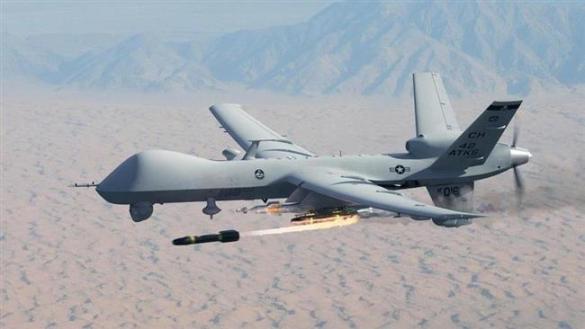
An outstanding editorial in the New York Times today about President Obama’s drone legacy by the ACLU’s Jameel Jaffer and Brett Max Kaufman. The gist of the editorial is that Obama has greatly expanded the use of drones while creating a sketchy and mostly-hidden legal regime that justifies their use. Jaffer and Kaufman argue that the President should publish the Presidential Policy Guidance, release the justifying legal memos, acknowledge the all drone strikes “not just those carried out on conventional battlefields”, and “establish a policy of investigating and publicly explaining strikes that kill innocent civilians, and of compensating those victims’ families.”  All of these seem to me to be reasonable, and entirely compatible with living in a democracy.

(Disclosure? Brett is one of my best friends, the kind of stand-up fellow that everyone should know. That’s not why I like this article of course, but it’s goddamn exciting to see your friend’s name in the Times.)

The heart of the article is a stark reminder of what Presidential power does, and how it is nearly impossible to restrain once unleashed. Even if you think that Obama is justified to use drones (in which a case can be strongly made) or he has used them judiciously and wisely (a much harder case to make overall), anyone should be scared of what happens when someone neither as wise nor judicious takes over.

Continue reading

The Yemeni Nursing Home Massacre and the “Globalization of Indifference”

220px-aden_postcard1

Yemen is a country being pulled apart and battered by several different conflicts, internal and external, some a product of its history and some the imposition of global trends. It’s a proxy war for some nations and a Petrie dish for others.  It’s a country where modern violence has become, to the outside world, quotidian and expected, and where it takes a particularly horrific, or at least focused, attack to garner headlines.

Such an attack happened last Friday, in the Southern port town of Aden- once the capital of the secular and socialist south, later the hotbed for a new democratic Yemen, and now the bloody plaything for competing millenarians and indifferent governments. On Friday, at a nursing home, 16 nuns, volunteers from around the globe, were bound and executed with shots to the head.

(This was extreme enough to warrant an immediate disavowal and denunciation by Ansar al-Sharia, who said it wasn’t the way they fight. And it is true- since reforming in the last decade as AQAP, they have avoided the kind of blood-thirsty acts that alienate a local population.)

The global reaction to such a shocking crime was at once justified, but also indicative of how societies come apart at the edge of attention, until all it happens all at once.

Continue reading

What Donald Trump’s Bonedumb Ad Shows Reveals About GOP Foreign Policy

So, Donald Trump has finally released his first campaign ad, and it has some pretty interesting parts, showing not just how dishonest his campaign is (which is a given) nor just how divorced from reality is the entire Republican foreign policy debate (also a given, but maybe less so), but how the GOP has constructed an entire alternate reality in which they can’t help but live.

The interesting part isn’t that, when you Google his ad, the first few pages are media coverage of it, showing how much his campaign and the liberal media conspiracy feed off each other. Nor is it the nakedly racist xenophobia sounds like open mic night at the Bunkersville Patriots Lodge (though that matters). It isn’t even that the ad promises to shut off Muslim immigration until “we figure out what’s going on”, which might be the first time a campaign pleaded that we give it a few minutes to think, ok? It isn’t even that the swarms of Mexicans crossing the border are actually Morrocans.

(Speaking to NBC, his loathsome campaign manager  Corey Lewandowski clarified: “No shit, it’s not the Mexican border but that’s what our country is going to look like. This was 1,000 percent on purpose.” It’s an interesting argument, really. This isn’t what our country looks like, but it is what it is going to look like unless we build something we don’t currently have. One could ask why it doesn’t look like it now, then, but that would be churl.)

Continue reading

Snowden Spills His Secret

Edward Snowden, the 29-yr-old responsible for one of the largest national security leaks in US history, has an auspicious name.   In Catch-22, Joseph Heller’s biting, terrifying, wildly-funny and scathing satire on the the whole nature of war, the corruptibility of man, and, most importantly, the self-defeating loops of logic man twists himself into to justify inherent barbarism in a civilized age (of which the eponymous catch is just the most famous example), the main character, Yossarian, is haunted by an unknown character named Snowden spilling his secret.

The chronology of the book jumps back and forth, but the driving action is that something snapped in Yossarian when Snowden told him his secret.  The madness of the enterprise revealed itself in full for Yossarian.   It isn’t until late in the book that we see what caused the driving action, what really was Snowden’s secret.  (and spoiler alert here, I guess, though it was published almost 50 years ago, so come on).  While on a bombing mission, Yossarian’s plane took flack, and Snowden was injured.  Yossarian went to help the moaning man, complaining of the cold, and at first saw a good-sized wound on the man’s leg, but nothing absolutely fatal.  But then Snowden’s secret was revealed.  Yossarian removed the man’s jacket, and saw that a huge piece of flack had torn through his stomach.  The jacket had been weakly holding everything in, but then it all came out: all that made Snowden, blood and organs and flesh, poured out onto the floor and onto Yossarian.   The whole inner-workings were brought to light.  Man is just flesh, and war is designed to destroy that flesh.   The whole sick nature of everything was revealed.

It isn’t really stretching the point to say that Edward Snowden did much the same thing, only a bit neater (and honestly, it makes me think the name is fake.  It is almost too perfect).   The apparatus that this amorphous war has created has been brought to light.  I think most people suspected it, but the depth is stunning.  And perhaps the most surprising part is that everything that is done is legal.  Laws were passed by elected officials that allow for the government, which has also arrogated unto itself the right to assassinate American citizens and throw people in jail for indefinite periods without a trial, can mine nearly everything you do online and on the phone.

This is raw power, and it is scary.  The thing is, there can be arguments for why the government needs this, or why it is absolutely necessary for national security.   The problem is that we never had them (and I am a little worried that now the argument is going to be more about whether Snowden is a traitor or a hero than what he helped expose).   This is poison to a country that fashions itself as a democracy and an experiment in self-governance, as Charlie Pierce would put it.

So these are the things we can now discuss, now that they have been brought kicking and screaming into the sunlight.  Should the government be able to monitor your online and telephonic presence to any extent?  If yes, how much?  Does merely drawing connections between who is calling whom without actually listening in really invade your privacy?  Who gets to decide this?  The President? (not just this one, but any.  For Dems- of whom I am one- who think it is OK because of Obama, imagine that Scotty Walker somehow becomes the next President.)

More than that, at least in my opinion, is the question of worth.  The biggest elephant in the room, that no one would touch with a ten-foot pole, and other cliches of the type that we’ve been using for 12 years to avoid the real issue, is that guaranteed safety is at best illusory and at worst an invitation to live in North Korea, only without the dumpy charisma of Dear Leader Jr.   What we have done is upended our country, and our idea of privacy, due to a major and horrifying terrorist attack.  This was completely understandable, but terrorism is also a rare thing, and something that happens, and is, at the end, not 100% avoidable.  People will always want to hurt others, and unless we want to live in a police state, one who is constantly sending troops and robots around the world to do our bidding, it won’t ever be completely solved.

The problem is we weren’t really asked.  We were taken advantage of due to our fright, and our apathy.  This was partly the product of a strange confluence: this scarring, shattering, atavistic attack was roughly coincidental with the rise of social media and the death of public reticence.   We all have given up a lot of privacy.   Hell, right now, I am imagining there are people who want to know what I am thinking about this, and hoping that my picture reveals a “mysterious charm, like Batman”.   The government in a large way is merely taking what we have given.

But now they have to ask.  Now, thanks to Snowden, every elected official will have to take a stand on what they think of this (assuming the media does their job, and that is a big assumption).   We can finally talk about what has been done in our name, for us, to us.   A country of the people and by the people can’t have it any other way.  So it is messy and horrible and a stinking bloody peak into the world right under our fragile skin, but this was a secret that needed spilling.   America’s great sin over the past decade has been to not talk about this new kind of war.   If we don’t, one day the satire of Catch-22 is going to seem like a gentle look at a softer past.

Live blogging Obama speech

1:59 There is a lot I fault this Admin with regarding terrorism, but I also find the other side completely irrational and self-defeating and willing to do anything to destroy the POTUS.   But these stirring words, even though I agree with them, just ring so hollow after 12 years of this increasingly desperate nonsense.   If something can change now, it will be positive, but so late.  So many wasted lives around the world.  There was a chance after 9/11 to remake the world into something better.  But it was trashed, burnt away by gleeful pyromaniacs and sneering playground bullies.   Its cold and stupid logic persisted, and in some ways was heightened.  I think this Admin is doing a better job, but it is relatively worse, given expectations.  The idea that now, 12 years on, we’re trying to formulate a strategy to met the challenge, and, even worse, that no one really thinks we’ll be able to, is the whole rot of our political and moral culture in one depressing run-on sentence.

More thoughts later, perhaps.  Comments are always open.

1:53 “I’m willing to cut the young lady who interrupted me some slack, because this is worth being passionate about.”  That is excessively well-done.

1:52 I was worried he was going to quote Daniel Tosh.  Phew!

1:50  I love seeing the President be heckled.  It reminds me that we’re all right.  He handled it well.  I also did not expect all the applause.  I couldn’t really understand her, so I don’t know who they were applauding, but it is clear that everyone is on the same page.

1:50 People are going to say this is really partisan, and it is, but absolutely right.  It is crazy that it is suddenly dangerous to try people in courts.

1:47 I like when they point out that we actually have been able to try terrorists with relative ease over the years.

1:45 “I look forward to working with a collection of kill-crazy destructive vandals to help them paint me as a secret Muslim who wants to institute Sharia law”

1:44 It is true that they want to shield for journalism, but just because the law doesn’t exist isn’t a reason not to obey its spirit.   That was just a huge bit of cognitive dissonance, on a level we don’t usually see from this Admin.

1:41 Despite my carping, I’ve liked about 65% of the speech.  Maybe 75%.  But much of this is what I liked in 2007 and hasn’t translated into smarter action.   He came really close to the John Kerry line about how terrorism can be a law enforcement issue.   But not close enough.

1:40 Greg sums it up over on the twitter, which is where the cool kids hang out.

On diplomacy – yes, US has to be active. But US practices risk avoidance not risk management.

1:36 OK, so he got the people who hate the drone strikes and think they are a huge immoral and illegal over-reach angry in the first half-hour.  Now he is talking about foreign aid as a much better investment than military strikes.  Feeding people in Yemen and building wells.   So now everyone else will be angry.

1:35 “We cannot take action everywhere these radical ideologies take root”.   Yes, and yes again!  Too bad that is seen as wimpy.  Hell, we had people want to storm into Chechnya and Dagestan a few weeks ago (and frankly, I would have bought their plane tickets).

1:31 OK, I agree with the idea that in extreme cases citizenship doesn’t really matter.  That has been true in other wars.   I don’t even disagree that al-Awlaki was plotting against the US.  But the huge issue for me, at least, is that we crossed this incredible pass for someone who really wasn’t a major threat.  He was a little more dangerous than John Walker Lindh, perhaps (and doesn’t that seem like such a distant name from a far-off time), but he was not the impossible danger that made it worth taking these steps.

1:30 Nixes any drone strikes on US soil, brings up legal twister of due process.   Not judicial process.

1:28 Congress is briefed on every strike.  Might be over-estimating the popularity of Congress, here.  “Oh, Congress says it is ok?  Well, then I’m on board!”

1:26 As many people have pointed out, the idea that these drone strikes result in less civilian deaths (despite the Franciscan flagellation, which seemed honest, about these deaths) is partly a result of a morally obtuse concept that military-aged males near drone strikes are by definition non-civilian.

1:22 State sovereignty is great, but the question has always been: who is the state?  We deal with governments like Salih’s, whose “the state is me” ideas didn’t really pan out beyond the Yemen version of the Beltway.  (The Jambiya?)

1:20 This is true- America is at war with AQ and others.  It is “affiliated” that is the tricky thing.  We still don’t know who everyone is.  Oh wow- that was the heart of this speech.  “Legal doesn’t make it moral”.   This is what many of us who voted for Obama want to hear- be strong, but don’t over-reach.  We haven’t seen much evidence of this, and that is a disappointment, but maybe this is a turning point.

1:17 That’s great we aren’t triggering firefights with tribesmen with whom we have no beef.   But we sometimes drone the living death out of these self-same tribesmen.   This is saying all the things that I want to hear, but there is a certain dissonance with action.

1:13 Define it not as a boundless war on terror, but specific actors.  This, right here, is what people have been saying for 12 years.   But while this sounds great, working with Pakistanis, Yemenis, the AU to get rid of al-Shabab, it elides the fact that many of these actions are wildly unpopular in the countries that we are acting in.  I believe in partnerships, of course, but working with the wrong actors is almost as bad as going solo, and sometimes worse.

1:12 Bringing up all the other terrorist attacks before him.   Two things here: one, saying that we don’t have to have a national freakout every time something bad happens, and two, saying: really?  You want to impeach me over Benghazi?   Come on!

1:10  McVeigh wasn’t a Muslim!

1:09 I like this analysis of the difference between local operatives, regional affiliates, etc.  Some groups are just collections of names and guns.  We can’t use a blanket approach, and lump everything under the “islamist” umbrella.   But while the rhetoric is there, it still needs to translate to action.

1:07  Brings up James Madison.  Charlie Pierce just sat up straight.   It is also amazing that, in 2013, saying that we need to define the scope of this battle against extremism makes for a big speech.   12 years on.

1:06  I never really liked the “we spent abroad and not here” tactic, but it is undeniable.   It just smacks of isolationism.

1:04 Osama is dead.  If you had that on Speech Bingo, you aren’t terribly creative, are you?   There was nice talk about stopping torture, but that just serves to remind that we did torture people, and no one has been punished.  Just more rhetorical rug-sweeping.

1:03 Brings up Iraq.  Saying that it shifted focus shouldn’t be controversial, but somehow always is.

1:01 Doing the Obama thing where he links our history into the issues of the day- our character, our shared experiences, our “commitment to constitutional principles”.    This is a common trope for him, and for others, of course, but he seems to do it with a special intensity, perhaps because he has always had to try to prove he is “American”.   It sets a tone for a “this isn’t radical what I am about to say”.

OK, so we’re going to be live-blogging the Obama speech.  Haven’t done this in a while.  I know it is more of a twitter thing, but I’m old-fashioned.   The important things to look at in terms of Guantanamo are if they are planning to release anyone, or just shift detainees to federal supermax prisons stateside.