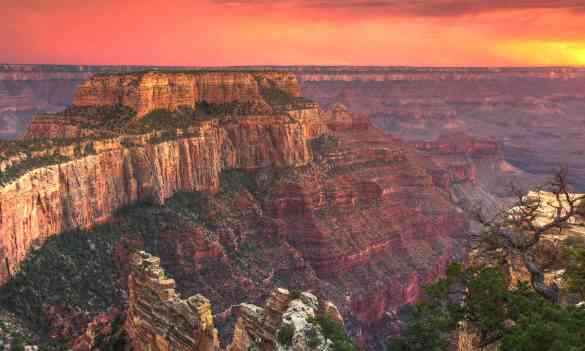
There are people who gaze upon our shared heritage and think: we should drill here.
As bad as you thought it would be, it’s going to be worse
There are people who gaze upon our shared heritage and think: we should drill here.
As bad as you thought it would be, it’s going to be worse

The Beginning
President Obama gives a farewell speech as only he can: filled with hope and the pledge to fight
Lawyers, Guns, and Money has a guest post up today by by Valerie J. Bunce, the Aaron Binenkorb Chair of International Studies at Cornell University, and Mark R. Beissinger, the Henry W. Putnam Professor of Politics at Princeton University on how democracies die. Read it.
There are three pieces to the puzzle of why and how democracies fail. The first involves public opinion. In Russia, for example, growing public worries about crime and social disorder, economic collapse, and national security paved the way for the rise of a leader who promised political order, economic growth, and strong government—in short, making Russia great again. In many instances of democratic collapse, there was a decline in tolerance, as publics grew more polarized, more locked into their own views and into networks of like-minded people, and more distrustful of and angry at each other and the government. There was a thirst for new styles in politics, flamboyant rhetoric, and a willingness to gamble. Citizens voted for change; they did not vote to end democracy.
The second piece is dysfunctional political institutions. Just as the rise of Victor Orbán in Hungary was preceded by the collapse of the party system, so too was the rise of Hitler and Mussolini foreshadowed by prolonged parliamentary paralysis. In failing democracies, public trust in political institutions declines, and government can no longer fulfill the basic tasks expected of it. In the American case, there is ample evidence of such trends—from the Republican obstruction and gridlock in Congress to repeated attempts to shut the government down. Little wonder that trust in Congress has plummeted to the mid-20 percent level since 2010. Mistrust of government is contagious, poisoning democratic processes. Echoing Trump’s rants about a “rigged system,” nearly a half of all registered voters believe that voter fraud occurs somewhat or very often in the United States, despite ample evidence to the contrary.
The final piece of the puzzle is the role of politicians in terminating democracy. As Nancy Bermeo reminds us, it is political leaders that end democracy, not angry publics or dysfunctional institutions. But how leaders have taken down democracy has changed over time. During the interwar years and the Cold War, democracy tended to end through military coups or declarations of national emergency. By contrast, contemporary would-be autocrats have played a more subtle game, undermining democracy from within. Claiming to have the support of the people (and therefore the right to use all means necessary to defend the nation), they use legislation, appointment powers, and informal interventions to whittle away at checks-and-balances, the rule of law, and civil liberties.
I don’t think we’re capable of recognizing, broadly, through out institutions, just how much damage is being done so quickly. The media, the other branches of government, the public at large: we’re too sprawling and unwieldy and atomized. It’s frighteningly easy for this swirl to be harnessed and this vacuum to be filled.

The National Security team
We’re about to see the staggering combination of venality and incompetence. The real feature of authoritarian (as opposed to totalitarian) states isn’t that they are thorough; it is that they are fundamentally lazy.

Which is which?
The New Yorker looks at two different kinds of Trump supporters, and asks us to understand the line between them.

The only difference is who’ll be holding the sign.
The Republican Party is already trying to pretend that Trump himself is an aberration, but will fully embrace its animating principles.

Human beings
Among many other things, this election reintroduced and normalized the American tendency to see everyone else as less than human.
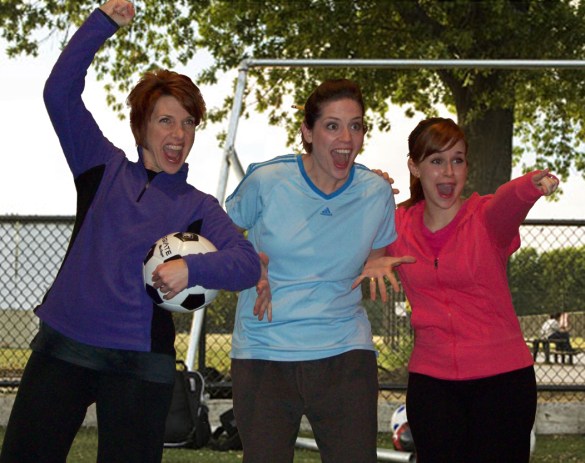
Pictured: the electorate, apparently
The most important people watching the debate, we’re told, are college educated suburban white women. The fate of the Republic apparently hangs on people who haven’t seen Trump until tonight.
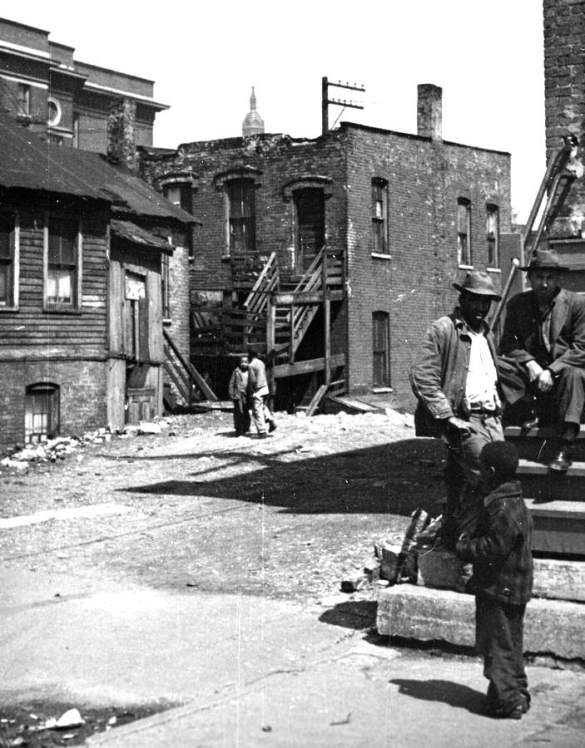
A neighborhood set to be destroyed to make the 290 in Chicago. Image from WBEZ
We’re talking about the building of highways is one of the hidden racial histories in the US, and much more.

More in-depth investigative reporting from The Guardian uncovers papers thought destroyed that tie Walker to a nexus of anti-Democratic, but possibly tragically legal, corporate greed.
 Shooting Irrelevance