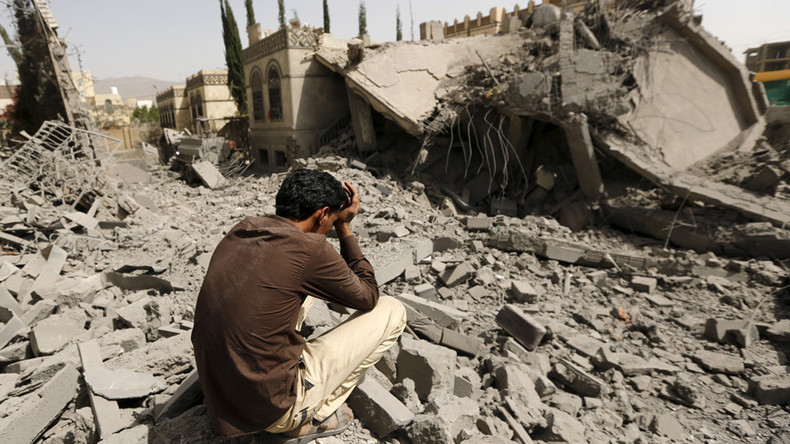
Genocide in Yemen, turmoil in Lebanon, major power war, Jared Kushner, and Tom Friedman. We live in terrible times, with Mohammed bin Salman and his techno-tyrant ambitions at the center of them.
Genocide in Yemen, turmoil in Lebanon, major power war, Jared Kushner, and Tom Friedman. We live in terrible times, with Mohammed bin Salman and his techno-tyrant ambitions at the center of them.

I would like every day to be as happy as this picture once made me.
I think tomorrow we’ll get closer to being on pace. Working on a long post about Saudi Arabia and Iran, as it looks more and more like we’re heading toward a catastrophic mid-major power war, one in which the US will either be drawn in or let Saudi Arabia get annihilated (guess which!).
But for now, a quick happy thought about Ted Cruz being embarrassed.
538 has a fun chat about the Democrats taking back the Senate, and there is some back and forth about Texas being in play next year.
micah: But here’s my argument for buying Democrats at 30 percent: They basically need one seat in addition to Arizona and Nevada. They might get that in a month. And even if they don’t, if it’s a super Democratic-leaning year, as we think it will be, I’d bet Democrats in red states will be mostly safe.
Moreover! I think people think too narrowly about what states could be in play.
Like, if Democrats have a +10 advantage on the generic ballot and it’s an anti-incumbent year, who’s to say Ted Cruz won’t be in trouble in Texas?
Now, I’m not betting on this (and neither are they). But it’s not impossible to squint and see Ted Cruz in real trouble, considering that he is still somehow more unlikeable (though not as hatable and truly deeply loathsome) as Donald Trump.
However, it’s also easy to see Ted Cruz sort of wanting to lose in a Democratic landslide year.
It’s this here blog’s long-standing contention that Ted Cruz is running in 2020. He was planning to whether Trump won or lost. It’s why he’s been so fiercely loyal to the man who insulted his wife’s appearance and accused his father of murdering JFK. I have no doubt he was going to run “more in sorrow than anger” against a man who betrayed conservatives.
(Note: the casus belli would probably be that Trump didn’t have Hillary Clinton executed or something. It isn’t like Cruz would go against Trump for any decent reasons.)
So losing in 2018 would help this case. Trump was such a bad conservative he lost the Senate, and gave it to hated Chuck Schumer. We hates the New York…elite, don’t we? Very tricksy.
This also has the benefit of letting Cruz off the hook. He’d have to start running for President right about the same second his term would begin. While running for re-election, he certainly won’t admit that he has no interest in being a Senator. Indeed, he’d be indignant that anyone would even ask him about that (no one does hypocritical indignation better than Cruz, except maybe Newt).
If he lost, he wouldn’t have to pretend that, like, God got on the horn with him a few days after the election and told him that, on second thought, he should run for President. Even for Cruz, that would look bad.
The best part is that it wouldn’t work. He’d get blown out in the GOP primary by Trump (or anyone else if Trump is gone by then, which: oh god please), win or lose his seat. He’ll be humiliated. Remember, Ted Cruz is nowhere near as smart as he thinks he is. He miscalculates all the damn time. I just hope he gets humiliated in the primary after being humiliated in his Senate race.
Just the thought of it is already making me smile. And in these dark days, we’ll take what imaginary pleasures we may.
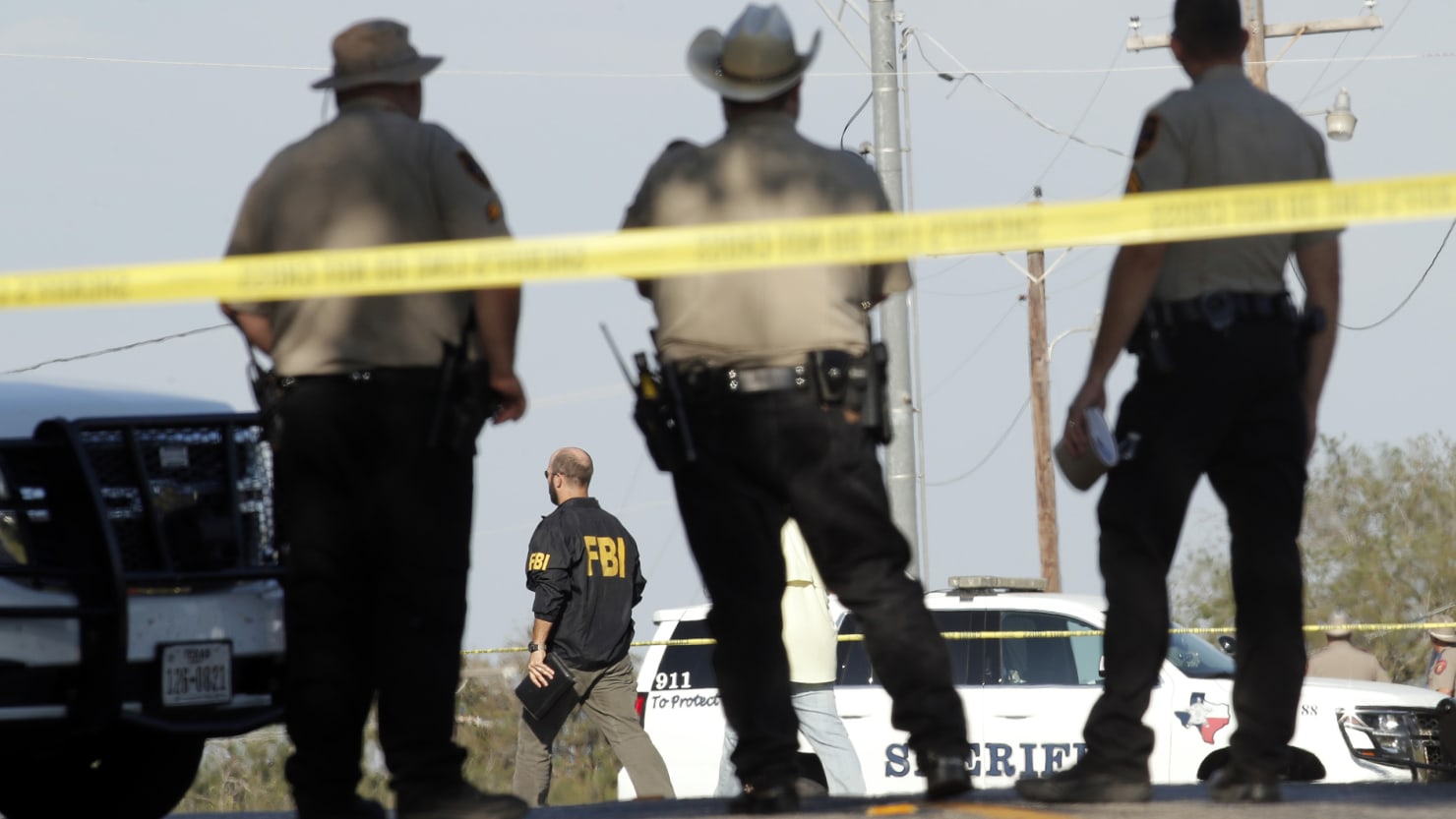
Scene: America
After every mass shooting or attack on our daily lives, we rush to figure out motivation. It can quickly get grotesque, as each side stakes out assumptions on the killer, and Twitter rings with claims that he belonged to this or that militia or that he evinced support for climate change or that he was a Muslim.
We know that if the killer pledged allegiance to ISIS, regardless of any actual connections, it will be cynically exploited by the right and immediately politicized, while if it was committed by nearly anyone else we’ll have to say that there was nothing that could be done, it is a health issue, etc.
We know that if the killer was a Muslim, many on the left will be more ready to criticize reaction than to explore why it is that ISIS is able to turn troubled young people into killers with numbing regularity. And we know that the right will act as if these shootings are somehow unique, as if they have nothing to do with any of the other shootings that are beginning to blur in our minds. They act as if you are somehow less dead if shot by a Christian.
We know this, and we already have our reactions planned out while the echo of bullets still bounces off the mountains and thunder across the plains. In a way, it isn’t even cynical: how else can we cope with a problem that seems intractable, and is made so by the most craven politics imaginable?
One way we comfort ourselves, or at least move the conversation into another gear, is when we look for proximate causes. We see in the Texas shooter a history of domestic abuse and violence, and are horrified that he was able to arm himself with such heavy vengeance. Or we see the mental health issues, and pretend that it had nothing to do with guns, per se, as if he could have walked into a church and hollered 26 people into a terrible grave.

Scene: America
(Needless to say, we don’t think Omar Mateen was troubled; he was just a terrorist.)
A violent past, a troubled upbringing, being lonely, being angry, being mentally troubled: all our killers have most or all of this in common. But they have something far deeper. They all live in America, a nation that seems rapidly plunging into a wild kind of madness, a yawping howl that is eating us alive. The violence inherent in our country and buried under our immense and sometimes-inspiring contradictions is burbling to the surface in a shambolic frenzy of limbs and fire.
This violence is part of our past. In this, of course, America is not unique; no borders have been drawn without suffering and oppression over time. Nor are we the only country that’s unraveling. It’s happening in the heart of Europe, and accelerating in the Middle East.
But there is a continent-spanning violence that created our nation, which was birthed in multiple waves of genocide and midwifed by slavery. There has been violence in the expansion of the west, the ever-present violence of Jim Crow, the murder in the cities, not to mention the life-ruining hucksterism of swindlers and city boosters and those who claimed the rain followed the plow.
And through it all, there was the gun. The gun has always been there. Never mind that the 2nd Amendment is clearly licensing state militias; never mind that in the old west you had to check your guns in town.
Pictured: not pro-gun!
But that didn’t matter. For an enormous amount of people, the gun isn’t just a tool designed to accelerate lead into another person’s body in order to rend flesh and pulp organs and shed blood: it was the symbol of freedom.
Or, to be more accurate: it is a symbol of freedom for exactly those reasons.
To me, that’s the heart of our madness, and one of the reasons we have this free-floating violence, which can land anywhere at any time, and why none of us are safe. We have literally fetishized the gun, not in the juvenile sense of it being a penis-replacement, but in terms of making it a totemic item of worship, something irreducible from the intangible fantasies that make us America indivisible.
Think about that. We’ve taken it for granted for so long, and buried it in a way over anger at the cynicism of NRA-funded prostitutes in Congress, not to mention the profit-driven murderous culpability of gun manufacturers, that we haven’t looked at how insane these beliefs are. And even if we have, we haven’t really looked at the moral impact of these beliefs.
Obviously, it isn’t just the gun worship that is leading to this crack, this terrible violence. Economic dislocation plays a role, and as I’ve argued, the fact that a continent-spanning multi-ethnic nation that has very recently absorbed into it enormous parts of other countries can’t survive as a democracy, certainly not in the age of atomized media. Distrust and paranoia have always been part of our character, and they’ve been spavined even wider into something gulping and black and endless.
But to me, so much of this comes down to the gun. We’re a nation that is soaked in violence, watered in its visceral resolutions, and we tramp through the muddy slurry that is our only path. It’s why mental illness takes its murderous form, and why so many of us decide that taking out as many people as possible is a viable death fantasy. It’s why the rest of us have our lives and our futures beholden to their whims, and to the luck of not being in a place that has bloomed suddenly into a red nightmare.
Why did those people die in their pews? There are a million reasons, but it boils down to one: they live in America in the 21st century, when all our contradictions come crashing down.
The people who take aim at everyone understand this more than nearly anyone else. It is those whose last moments are spent in pain and terror who feel it the most.

What’s this week been up to?
Happy Friday! Let’s get to the readings…
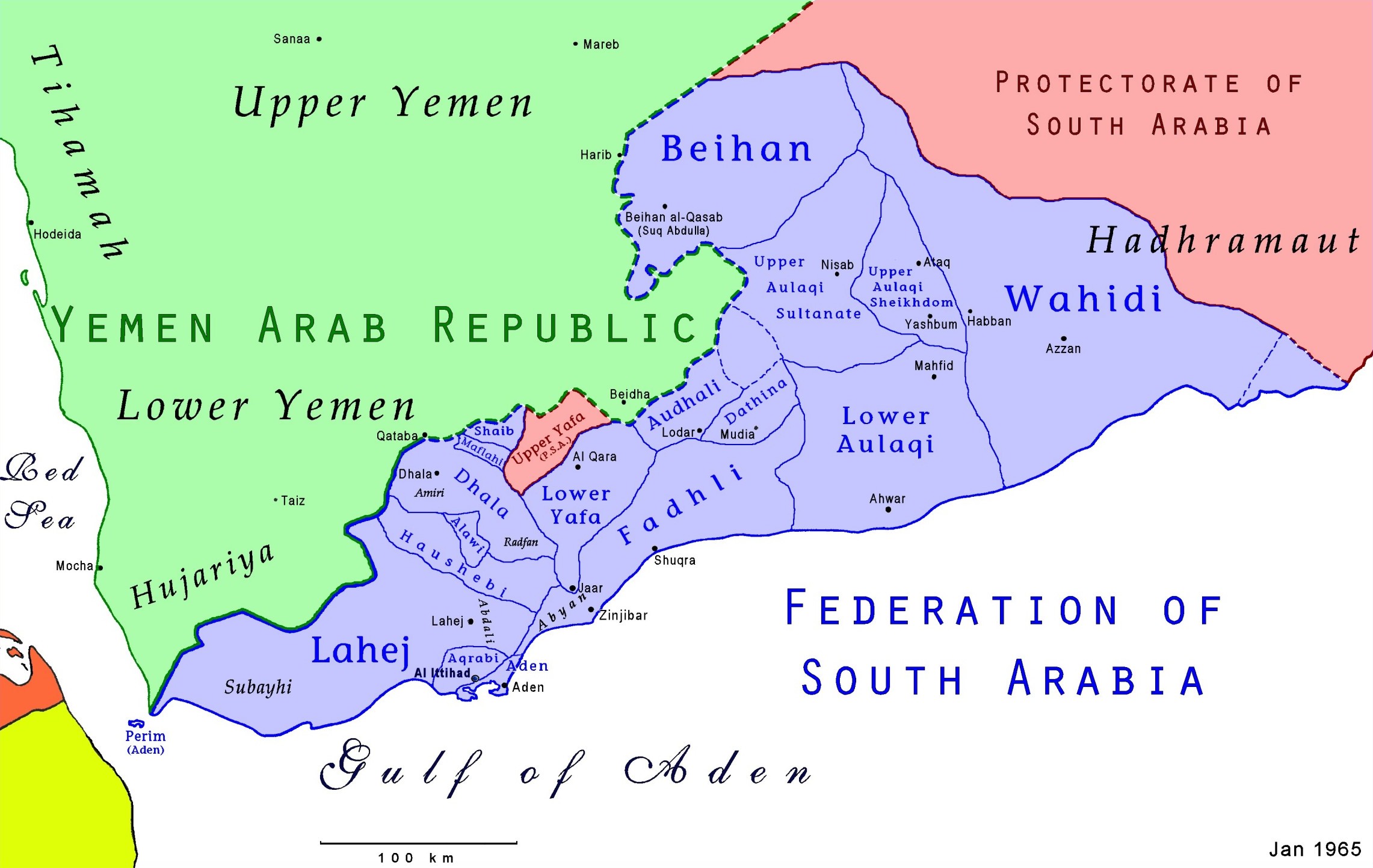
This map actually sort of makes sense
Some fine reporting by al-Jazeera on how the UAE is funding, and often literally fighting for, independence in south Yemen. Their motives seem to be a mix of regional power displays (Saudi Arabia is obviously against this move, violently supporting the Hadi government) and geopolitics, as their influence in a newly independent state will give them primary control over the region’s shipping lanes.
But, like, is this a good idea? In theory, the concept of splitting up a country is anathema to us, but it isn’t like the modern country of Yemen has a long history of unity from the sands of Saudi Arabia to the sea. It was originally unified in 1990 after the rapid decline of the Soviet Union made socialist South Yemen untenable, but then split again into civil war in 1994, only to be forcibly reunified by then-President Saleh and cadres of returning jihadis, who started to impose their concrete-grey vision of Islam on a more liberal area.
Looking at 20th-century history, one could argue that Yemen was split due to colonialism, with the Brits ruling southern Yemen out of Aden, but as cruel as their colonialism is, it was basically a concession to reality. The south was essentially never ruled by Aden.
Hell, most of the north was rarely unified. Even Yahya Muhammed and Ahmed bin-Yahya ran a “kingdom” based on constant negotiations and deal-makings, not absolute control. And never over the “south”.
None of this is to say that Yemen is a made-up land like Iraq, which is violently fraying again. It’s the idea of a modern nation-state ruled by a city in the north is essentially foreign, and against the way that Yemen has been governed for most of history.
To say that the south will never be governed by Sanaa doesn’t strike me as particularly defiant. It’s just saying what has been true for all but less than thirty of Yemen’s thousands of years.

Very excited about a new blog by ThatCapeTownGirl, who has as one of her initial posts an in-depth look at water in South Africa, and how it appears to be used as a political cudgel against the poor (which in South Africa of course is unmistakeable racialized).
While there has been a heavy drought in Cape Town for much of the year, this blog looks at how it is disproportionately being politicized, and how slow the recovery has been. She fears this may be an attempt to “economize water”, a great turn of phrase. There will always be people who capitalize on disaster, and water is one of the last great frontiers in commodification. It’s the one we have to fight the hardest. Once water becomes a tool of commodity, there really isn’t anything left. We’re all bought and sold.
Looking forward to reading this blog and learning more about South Africa!

Hell yeah! This picture again!
Easily-lost Army Sargent Bowe Bergdahl, who pled guilty and is currently awaiting sentencing, has used in his defense wildly-inflammatory and prejudicial comments made about him by then-candidate and now-President Donald John Trump (just to remind you that yeah, this really happened).
“We’re tired of Sgt. Bergdahl, who’s a traitor, a no-good traitor, who should have been executed,” Trump said at a Las Vegas rally in 2015. “You know in the old days — Bing. Bong,” Trump said while mimicking firing a rifle. “When we were strong.”
He also added: “thirty years ago, he would have been shot.”
A few thoughts on this and what it says about the Current Occupant:
OK, I actually gotta run. I’ll do a full post on the New Yorker automation article in a bit, because there is a lot of irritating stuff I want to yell about.

Congrats to George Saunders, winner of the Man Booker prize! In the 4th-year that the prestigious literary award has become even more prestigious by allowing any English-language author to win, Saunders is the second American to do so, winning for the brilliant Lincoln in the Bardo. Needless to say, this is already causing gnashing of British teeth.
As an internationalist, and someone who loves many English writers, I understand. As an American though, I say go pound sand, John Bull! U-S-A! U-S-A!
As of now, the POTUS has no comment on the book or the prize.
Actually, I shouldn’t be so glib. This is the first time, I think, that I’ve actually read a Man Booker winner before it won the prize, so this puts me only one ahead of Trump. However, I also have a review of it, so if you haven’t read this masterpiece of horror and of American history, you should do so. And read my review.
The novel might not be of the moment, but it speaks to us, as a country, and as individuals. It’s about acceptance, but that acceptance isn’t a call for passivity: it is a call to arms. It’s about taking up the mantle of what it means to be a free and engaged people, with all the burdens of history we carry, and all our individual weaknesses, and doing something with them. It’s a ghost story about love, which, really, is all that the mythology of a country really is.
One of the more grotesque manifestations of Donald Trump’s attitude toward the humanitarian crisis in Puerto Rico is that he insists on referring to the island as a collection of “thems”, as opposed to “us”, or rather, the US. We can’t leave “our” first responders there forever; “they” have to help “themselves”; “they” should be grateful.
Obviously, there is surface-level racism at play here, but there is also a bone-deep ignorance of Puerto Rico’s status. Its people are Americans, but not “Americans”- they can’t vote in our national elections and don’t have any full members of Congress. And clearly, the bulk of American sympathies toward them have a paternalistic remove.
That’s because Puerto Rico exists in a kind of hazy borderland we want to ignore: the one between the present and a bloody past. Our occupation of Puerto Rico is part of the same colonizing energy that saw us wipe out nations to expand across a continent. Our ginned-up war with Spain was of the same era that the west was finally “won”. Indeed, while the “Frontier theory” of Frederick Jackson Turner isn’t much-regarded, his point that once America reached the Pacific it needed new areas to occupy is pretty much spot-on.

You’re welcome, Puerto Rico!

This picture might be overly bucolic, but there is no Fox News
In this week’s New Yorker, John Lanchester has a really interesting, humbling, and depressing read about how civilization turned out to be really bad for people in general. It made us unhealthier, more stressed, and, though he didn’t say it, downright meaner.
He says outright that the Neolithic Revolution is the worst thing that’s ever happened to humans, and that if we had slowed our roll a few hundred thou after harnessing fire, we’d be much happier.
That isn’t to say we’d be stupid. As Lanchester points out, there were literally thousands of years after the dawn of agriculture but before the rise of city-states. This was a time where there was art and some religion, mythologies, and knowledge about how the world worked. People, it seemed, didn’t resist collecting into civilization because they didn’t know how, but because it didn’t seem to make sense.
The whole article is really interesting, and points to some fascinating-sounding scholarship, but this might have been my favorite part.
The study of hunter-gatherers, who live for the day and do not accumulate surpluses, shows that humanity can live more or less as Keynes suggests. (Affluence without abundance- ed) It’s just that we’re choosing not to. A key to that lost or forsworn ability, Suzman suggests, lies in the ferocious egalitarianism of hunter-gatherers. For example, the most valuable thing a hunter can do is come back with meat. Unlike gathered plants, whose proceeds are “not subject to any strict conventions on sharing,” hunted meat is very carefully distributed according to protocol, and the people who eat the meat that is given to them go to great trouble to be rude about it. This ritual is called “insulting the meat,” and it is designed to make sure the hunter doesn’t get above himself and start thinking that he’s better than anyone else. “When a young man kills much meat,” a Bushman told the anthropologist Richard B. Lee, “he comes to think of himself as a chief or a big man, and he thinks of the rest of us as his servants or inferiors. . . . We can’t accept this.” The insults are designed to “cool his heart and make him gentle.” For these hunter-gatherers, Suzman writes, “the sum of individual self-interest and the jealousy that policed it was a fiercely egalitarian society where profitable exchange, hierarchy, and significant material inequality were not tolerated.”
This egalitarian impulse, Suzman suggests, is central to the hunter-gatherer’s ability to live a life that is, on its own terms, affluent, but without abundance, without excess, and without competitive acquisition.
What really strikes me about this is how hunter-gatherer societies embrace and understand the role of luck in life. Think about it. You could be an amazing hunter, but if something else spooked the animals, they’re off and running before you unleash and arrow. You could throw a spear perfectly, but if the gazelle zigs left instead of right, it falls clattering to the earth, pointedly and pointlessly.
So much in life is about luck, chance, and circumstance. You could stumble into some sweet hunting grounds or be born rich. You could watch the prey you’ve been stalking get freaked by a bird and run off, or you could grow up in the shadow of industry that’s poisoning your water and putting lead in your brain, limiting opportunities in life.
Things happen. As we’ve grown as a species, we’ve invented new ways to heighten the role of luck, the roll of the dice. Capitalism exacerbates this, with all its talk of meritocracy. Racism, prejudice, and borders make it stronger. Where you are born and to whom you are born make more a difference than who you are.
Hell, luck can extend to the random sequencing of a genetic code, a little glitch that makes you sicker or weaker or less able to rise up. That’s luck.
Paul Newman, in talking about his camp for sick children, had one of my favorite quotes about luck in life.

No! You’re not allowed to be this handsome and wise!
“I wanted, I think, to acknowledge Luck: the chance of it, the benevolence of it in my life, and the brutality of it in the lives of others; made especially savage for children because they may not be allowed the good fortune of a lifetime to correct it.”
And we’ve set up a society that refuses to recognize that. We’ve set up a society where the national myths are that you deserve your fate, and that there are many people who deserve to suffer. If they are suffering, ipso facto, they must deserve it. And they should suffer more, so that the luckier, who never consider their fortune anything just the justifications of virtue, can have more.
You may have recognized this as a summation of the Republican platform. It’s made crystal clear in their multiple attempts to repeal the ACA (and how goddamn happy Paul Ryan was when he thought he did).
Because that’s what repeal really is. It is saying that if you work three jobs, none of which have health care, you don’t deserve it. If you have a pre-existing condition, that’s too bad. If you live in a state with a Republican governor, too bad. If your cancer becomes metatastic and you can’t afford care, well, them’s the breaks.
That comes from the inability to understand that life is about luck. It’s about the driver looking up just in time to slam on her brakes before she t-bones you. Another second, another half-second, and you face a lifetime of therapy and mounting bills. There’s no virtue there. That’s only chance. The same as if you had entered the intersection a half-second earlier and were in her way.
Our system shouldn’t be about ignoring luck. It shouldn’t imagine that the person who happens to have the most meat at any given moment is the bravest, the best, and the most worthy. Our adherence to that superstition puts us far behind hunter-gatherer socieites. We’re less wise, less moral, and less knowledgeable about the world. We’re just less.
(h/t to Allison, Dee, and Bill Breeding for the breakfast conversation about this piece that made me think about luck and who we are. Always my favorite people to talk to.)
Subsitute “Cassini” for “Yoshimi” and this really, really works.
If you’re up right now, you should be tuned into space.com, or NASA, to watch live coverage of the end of Cassini (or, more accurately, the Cassini-Huygens missions).
As it is on, streaming live, the scientist on the air is saying “this is our last image of Enceladus”, limned against an alien sky, that alien world which Cassini showed us might have the conditions for life, and if it doesn’t have life yet, it could so in the future. It could so long after we’re gone. The universe goes on.

Actual picture of a moon of Saturn
This blog is officially pessimistic about the future of humanity, and the discoveries of Cassini certainly make it clear that we barely exist in this vastness, but it also reminds us that we do. That we’re here. That we all have the enormous and impossible privilege of living in a time where we send satellites to Saturn, where they can take pictures of incredible alien worlds, distant and ringed by the debris of billions of years.
It’s only a few minutes until we get the last signal from Cassini, a decades-long mission whose data will give scientists materials for decades. The discoveries they have made, and will continue to make, teach us about the workings of the solar system, and the universe, and our place in it, our tiny and remarkable spot in this far, remote ring.
Cassini has been dipping into the rings of Saturn for a few months, ready for its final plunge, and even now is learning more about this austere and bizarre planet. It’s scoping out the atmosphere, giving us data on what Saturn actually is, even as it arcs toward its own death.
It’s impossible not to ascribe heroic motivations to the little guy, giving us knowledge about our own small place until the moment it dies. Its antennas will be sending us messages until the last moment of annihiliation, a beautiful goodbye.

These are the actual rings of Saturn
Think about Saturn. It’s the first world you knew that was recognizeably alien, because it is so weird. Mars is the stuff of myth and legend, of course, and the hellscape of Venus is horrifying because it demonstrates how cosmically close we are to being nothing but brimstone, but Saturn is pure science fiction. It’s the world that looks most different from ours.
Our planet doesn’t have rings. Neither do any of the other planets. Saturn is strange. It shows the vastness of the universe, even in our solar system. Even in the nearness of our orbit. It has the debris of crushed planets and infinite, infinitesimal dust born billions of years ago, coalescing elliptically and spinning endlessly without any concern for our pettiness. It is, and it isn’t, in a shudderingly inhuman way.
Yeah, but goddamn, we have a satellite there right now, for about seven more minutes. It is traveling, the broadcaster tells me, at 75,000 miles an hour “breathlessly toward the end of mission.” What an achievement! What an impossible accomplishment.
And think of it. In six minutes it will transmit its last messages. Those will take less than an hour to transverse our solar system, far more distance than any human has ever experienced. They’ll run through the cold empty spaces, giving us its last gasp of knowledge, sending us information even after it burns and dies so far away from everyone who has ever cared about it.
Two minutes now.
It is plunging. “The spacecraft is losing the battle with the atmosphere.” It’s being pulled into its final throes. 30 seconds. It is about to be turned briefly into fire, and then nothingness.
“Signal from the spacecraft is gone, and in the next 30 seconds, so will be the spacecraft…I’m going to call this end of mission.”
And so it is over. The spacecraft is gone, even as its last lonely messages shoot across the 746 million miles that separate our worlds at their closest. Those 746 million miles that make the difference between our literature and nothingness, between everything you’ve ever known and the deadness of eternity. Between your memories and a planet that doesn’t care, doesn’t recognize, and doesn’t know anything you’ve ever felt.
But isn’t that exciting? In the smallness of our lives people sent a satellite to Saturn, looked at the seas of Titans, the gullies of an alien moon, the watery plumes from the south pole of Encedalus. We’ve learned more about the universe in the briefest candle of our time here than anyone in humanity’s short history.
So maybe there is hope. We’re short-minded and stupid and do dumb stuff all the time, and we seem to be rushing toward catastrophe. Maybe in a billion years the life that might yet develop on Encedalus will send a probe toward earth, or whatever name they’ll give it, plucked from their own shoaled mythologies, and maybe discover in the wreckage that there was once a civilization here.
Maybe they’ll see that we had weapons of fierce and terrifying power, and that we had covered our lands in plastic, and that we choked the seas. And maybe they’ll see that we built structures that touched the sky. Maybe they’ll see that we couldn’t sustain this wild gift we stumbled upon. But maybe they’ll see something else.
Maybe they’ll find a buried record of what humans accomplished even as we rushed toward our own end. Maybe they’ll see that brilliant, dedicated people created a small bleeping hero that touched their home somewhere in the distance of time, in the past that seemed dead to them. And they’ll understand that their place in the infinity of space is as small as ours, but also understand that, in a real sense, it is all-encompassing. It is all they have, and all they’ll ever have. And maybe that will change them.
Maybe we’ll briefly meet, ghosts across time, a fading signal rushing bravely through the darkness.
Maybe, this isn’t the end.
At least the apocalypse will be metal AF, right?
I know that it is insensitive to talk about our ability to impact the environment when any outcome of that impact is ongoing, or recently past, or approaching, or like, maybe happening somewhere possibly, but the problem is: that’s always. It happens in enormous ways, like Harvey and Irma and the wildfires consuming the west, but also in unexpected ways.
Like, for example creating larger thunderstorms over the major shipping lanes.
Using twelve years of high resolution global lightning stroke data from the World Wide Lightning Location Network (WWLLN), we show that lightning density is enhanced by up to a factor of two directly over shipping lanes in the northeastern Indian Ocean and the South China Sea as compared to adjacent areas with similar climatological characteristics. The lightning enhancement is most prominent during the convectively active season, November-April for the Indian Ocean and April-December in the South China Sea, and has been detectable from at least 2005 to the present. We hypothesize that emissions of aerosol particles and precursors by maritime vessel traffic lead to a microphysical enhancement of convection and storm electrification in the region of the shipping lanes. These persistent localized anthropogenic perturbations to otherwise clean regions are a unique opportunity to more thoroughly understand the sensitivity of maritime deep convection and lightning to aerosol particles.
(h/t to Eurasia Review)
This isn’t a coincidence. The shipping lanes are surprisingly narrow parts of the ocean, which is why we’ve had some collisions with navy vessels the last few months. It is beyond coincidence that these narrow bands just happen to have thunderstorms with twice as much lightning as the areas directly around them.
I don’t know the ramifications of this, really. It hasn’t slowed global shipping, and maybe we should be happy that it is just these lanes that are getting more electric. But I don’t take much comfort in knowing that the primary driver of our economy can amplify the horrible power of storms just by transversing part of the immense ocean. It doesn’t bode well for the idea that we can’t make weather worse, that we can’t bring these punishments to our shores.
The last two weeks have taught us pretty damn clearly that we can. But in a weird way, this narrow anomaly makes it even more clear. We are the doomed, and the creators of our own doom.
But I guess it is kind of cool we can create more lightning? At least the end will look badass, right?

Storm’s coming…
A few years ago, I read this cool report out of Northwestern University about an old, hidden, forgotten cemetery near downtown Chicago, underneath some of the most expensive and tony property in the city. This boneyard was the final resting spot of thousands, maybe tens of thousands, before it was forgotten, paved over, and built upon. Skyscrapers and artisanal donut shops linger with a sneering assumption of permanence over a Potter’s Field.
It’s weird, the things our civilization leaves behind. The past, when it burbles up like poltergeists, give us this disconcerting shudder, a weird hollow dread mingled with our awe. I think that comes from twin recognitions: the first is the Ozymandias-like knowledge that we’re all going to be just dirt in the ground one day, and our buildings won’t last forever. The bodies in the ground remind us of that.
But they also remind us that we leave traces. We have an impact not just on our lives, but on the future. And as a species, we have an impact on an entire planet, in sometimes positive but mostly weird and disturbing ways. We’re changing the ecology of our home in a grand experiment to which no one really consented, but in which we’re all both participants and experimenters.
Harvey is a sign of this. Fish on anti-depressants is a far weirder, but no less profound one. In fact, it might be the most damning and on-the-nose verdict on our society I can think of. Let me explain.
 Shooting Irrelevance