This is the last weekend of the year you are legally allowed to listen to this song.
I always want to do “Quick Hits” and such because I think they’ll be shorter, but they never are. Anyway, here are a few scatterings on some stories as well as things you should read, if you don’t have anything else going on during summer weekend, as summer blazes up once again to send us into the fall.
Subsitute “Cassini” for “Yoshimi” and this really, really works.
If you’re up right now, you should be tuned into space.com, or NASA, to watch live coverage of the end of Cassini (or, more accurately, the Cassini-Huygens missions).
As it is on, streaming live, the scientist on the air is saying “this is our last image of Enceladus”, limned against an alien sky, that alien world which Cassini showed us might have the conditions for life, and if it doesn’t have life yet, it could so in the future. It could so long after we’re gone. The universe goes on.
Actual picture of a moon of Saturn
This blog is officially pessimistic about the future of humanity, and the discoveries of Cassini certainly make it clear that we barely exist in this vastness, but it also reminds us that we do. That we’re here. That we all have the enormous and impossible privilege of living in a time where we send satellites to Saturn, where they can take pictures of incredible alien worlds, distant and ringed by the debris of billions of years.
It’s only a few minutes until we get the last signal from Cassini, a decades-long mission whose data will give scientists materials for decades. The discoveries they have made, and will continue to make, teach us about the workings of the solar system, and the universe, and our place in it, our tiny and remarkable spot in this far, remote ring.
Cassini has been dipping into the rings of Saturn for a few months, ready for its final plunge, and even now is learning more about this austere and bizarre planet. It’s scoping out the atmosphere, giving us data on what Saturn actually is, even as it arcs toward its own death.
It’s impossible not to ascribe heroic motivations to the little guy, giving us knowledge about our own small place until the moment it dies. Its antennas will be sending us messages until the last moment of annihiliation, a beautiful goodbye.
These are the actual rings of Saturn
Think about Saturn. It’s the first world you knew that was recognizeably alien, because it is so weird. Mars is the stuff of myth and legend, of course, and the hellscape of Venus is horrifying because it demonstrates how cosmically close we are to being nothing but brimstone, but Saturn is pure science fiction. It’s the world that looks most different from ours.
Our planet doesn’t have rings. Neither do any of the other planets. Saturn is strange. It shows the vastness of the universe, even in our solar system. Even in the nearness of our orbit. It has the debris of crushed planets and infinite, infinitesimal dust born billions of years ago, coalescing elliptically and spinning endlessly without any concern for our pettiness. It is, and it isn’t, in a shudderingly inhuman way.
Yeah, but goddamn, we have a satellite there right now, for about seven more minutes. It is traveling, the broadcaster tells me, at 75,000 miles an hour “breathlessly toward the end of mission.” What an achievement! What an impossible accomplishment.
And think of it. In six minutes it will transmit its last messages. Those will take less than an hour to transverse our solar system, far more distance than any human has ever experienced. They’ll run through the cold empty spaces, giving us its last gasp of knowledge, sending us information even after it burns and dies so far away from everyone who has ever cared about it.
Two minutes now.
It is plunging. “The spacecraft is losing the battle with the atmosphere.” It’s being pulled into its final throes. 30 seconds. It is about to be turned briefly into fire, and then nothingness.
“Signal from the spacecraft is gone, and in the next 30 seconds, so will be the spacecraft…I’m going to call this end of mission.”
And so it is over. The spacecraft is gone, even as its last lonely messages shoot across the 746 million miles that separate our worlds at their closest. Those 746 million miles that make the difference between our literature and nothingness, between everything you’ve ever known and the deadness of eternity. Between your memories and a planet that doesn’t care, doesn’t recognize, and doesn’t know anything you’ve ever felt.
But isn’t that exciting? In the smallness of our lives people sent a satellite to Saturn, looked at the seas of Titans, the gullies of an alien moon, the watery plumes from the south pole of Encedalus. We’ve learned more about the universe in the briefest candle of our time here than anyone in humanity’s short history.
So maybe there is hope. We’re short-minded and stupid and do dumb stuff all the time, and we seem to be rushing toward catastrophe. Maybe in a billion years the life that might yet develop on Encedalus will send a probe toward earth, or whatever name they’ll give it, plucked from their own shoaled mythologies, and maybe discover in the wreckage that there was once a civilization here.
Maybe they’ll see that we had weapons of fierce and terrifying power, and that we had covered our lands in plastic, and that we choked the seas. And maybe they’ll see that we built structures that touched the sky. Maybe they’ll see that we couldn’t sustain this wild gift we stumbled upon. But maybe they’ll see something else.
Maybe they’ll find a buried record of what humans accomplished even as we rushed toward our own end. Maybe they’ll see that brilliant, dedicated people created a small bleeping hero that touched their home somewhere in the distance of time, in the past that seemed dead to them. And they’ll understand that their place in the infinity of space is as small as ours, but also understand that, in a real sense, it is all-encompassing. It is all they have, and all they’ll ever have. And maybe that will change them.
Maybe we’ll briefly meet, ghosts across time, a fading signal rushing bravely through the darkness.
I support universal healthcare, though I don’t know anything about it. This makes me like most people! And while I think Bernie’s plan is a good one, like him, I also know it has no chance at success. For now. But I love that he keeps moving the conversation to the left, making it more and more normal. Why are we the only developed country where not dying in the streets because you’re poor is considered a privilege, and something to be earned?
Well, there are a lot of answers to that. But part of it, I think, can be found in this poll from The Guardian.
Since Sanders launched his presidential campaign in May 2015, public support for universal healthcare has climbed. Where 46% of the public supported such a system in 2008 and 2009, a recent Kaiser poll found 53% now support the idea.
But that same survey found that when respondents were told that a universal healthcare plan might give the government “too much control,” or that it might increases taxes, opposition spiked from 43% to 62% and 60% respectively – perhaps a sign of the major political and policy fights that lie ahead.
As always, The Simpsons summed it up beautifully in this one-minute clip.
“The finger thing means the taxes” might be my most-quoted line ever.
Is Myanmar SE Asia or is it the Subcontinent? Or are these arbitrary and meaningless?
First off, I’m not going to pretend to an expert, or even particularly knowledgeable about Myanmar and the Rohingya. Before the crisis of the last couple of weeks, I could have told you exactly three things about that group: they were Muslim, they were frequently the victims of persecution by the Burmese government, and they were essentially stateless. But if pressed, I don’t think I could have given you the details.
That said, it is a humanitarian crisis that has now come to the world’s attention, partly because the sainted Ayn Sung Suu Kyi seems to be, at the very least, complicit in the ongoing ethnic cleansing (if not outright genocide) of a long-persecuted people.
Hundreds of thousands of refugees are fleeing state-sanction violence, the latest in the ongoing Burmese campaign against the Rohingya. Who are they? I’ll leave that work to this easy al-Jazeera explainer.
The Rohingya speak Rohingya or Ruaingga, a dialect that is distinct to others spoken in Rakhine State and throughout Myanmar. They are not considered one of the country’s 135 official ethnic groups and have been denied citizenship in Myanmar since 1982, which has effectively rendered them stateless.
OK, but…why? Well, even though many historians agree that Muslims have been living in that area since the 12th-century, the Buddhist-majority post-independence government of Burma/Myanmar disagreed. They considered them recent interlopers, because a lot more Muslims had come to the area from Bangladesh. To the government, they are officially Bengali.
OK, so then…why aren’t they refugees? A delightful quirk of history!
During the more than 100 years of British rule (1824-1948), there was a significant amount of migration of labourers to what is now known as Myanmar from today’s India and Bangladesh. Because the British administered Myanmar as a province of India, such migration was considered internal, according to Human Rights Watch (HRW).
Because the British colonized both “India” (which also became Pakistan after independence, and then Bangladesh after the 1971 war which killed at least a million), as well as Burma, where Orwell shot an elephant, these are not refugees. But they also aren’t recognized. So they have no rights, and are denied basic services. That’s a neat trick!
Not everyone thinks so. When you have displaced and persecuted Muslims, that becomes a breeding ground for radicalization. Not necessarily of the Rohingya (I haven’t seen much about radical tendencies in that population), but for al-Qaeda, ISIS, and regional offshoots/independent groups.
This is quickly becoming a major cause for transnational Islamist groups. As The Soufan Group points out, “An example of how the situation can easily get worse and morph into a larger issue came in a September 12 statement by al-Qaeda The terrorist group called for all Muslims to come to the defense of the Rohingya; a call to jihad similar to that of the Afghan War with the then-Soviet Union that set al-Qaeda’s foundation. Now three decades later, al-Qaeda is calling for more of the same in Burma. The statement derides the ‘fight against terrorism’ and calls for ‘all mujahid brothers from Bangladesh, India, Pakistan, and the Philippines to set out for Burma…to secure their [the Rohingya] rights, which will only be returned to them by force.’”
This is like Bosnia, Chechnya, Yemen, Algeria: a place for jihadis around the world to flock to, to train, and to use for recruitment purposes. It is also a boon for regional groups, as Eurasia Review points out, with the charismatic Masood Azhar, leader of Jaish-e-Mohammed, calling for much the same.
JeM is a Deobandi Sunni group, which is similar to Salafism, but has its roots in South Asia and the Subcontinent. It has largely been active in Kashmir, and its primary goal is to bring Kashmir back to Pakistan. Its relationship with the Pakistani government is officially complicated.
Actually, this is all really complicated. What, one might reasonably ask, does JeM really have to do with this? Is it just opportunism? And same with al-Qaeda. They’ve never shown a deep interest in Burma before (little need for aftershave)(sorry). So what is this all about?
For one thing, it is partially opportunism. Groups like Qaeda see a void in the state that leaves Muslims vulnerable and in danger, and they step up to be the protector. We’ll see of course if this translates into any action, but that’s almost beside the point. They are positioning themselves as champions of any Muslims, when the state can’t, and won’t protect them.
This is where this gets very dangerous. As we saw with the brief history above, the Rohingya are victims of history and geography; like Iran, their legacy rests on the perversions of colonialism and nationalism. The problem is that their land is in one of the soft spots of the state system, where maps were fluid and borders were permeable until, suddenly and horribly, they weren’t.
Whenever I had thought of the Rohingya before, skimmed a headline that talked about tens of thousands in misery or whatever, my mental map had people feeling in an Asian jungle, akin to Laos or Cambodia. That’s where I saw them going.
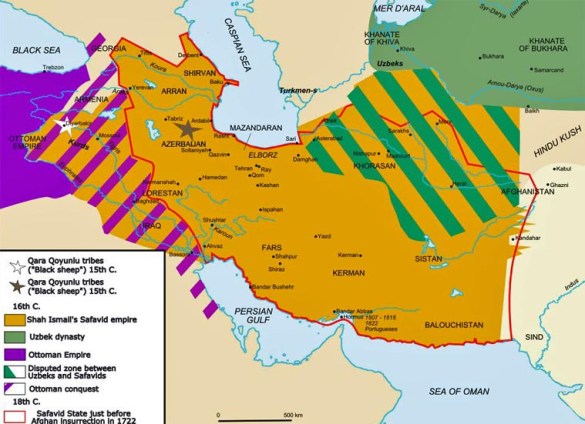
But that’s not really the case, as everyone now knows. They are inextricably linked to the bitter and violent history of the sub-Continent and the legacy of colonialism. Take a look at this map.
Look at the way India pushes through the top of Bangladesh, encircling it save for the tiniest border with Myanmar. And think how irrelevant these borders really are to the historic lived experience of these people. You don’t have “Indians” on the east of Bangladesh as something ethnically dissimilar. There is mixing and blending, right through to Myanmar.
This is where the ridiculousness of the state system makes itself known. This is where the bitter fruits of “partition and parturition”, in Christopher Hitchen’s memorable phrase, fall to the ground, overripe and rotting. And this is what groups like al-Qaeda (and especially al-Qaeda) are so skilled at manipulating.
Al-Qaeda is both pre-and-post state. They reject borders and want to move the world to how they felt it was before: huge rolling Eurasian landscapes united by Islam. It was never that neat, of course, but the vision is nearer to the truth. These borders, which divide groups, and render the same people stateless or stated depending on the accident of migration and the whims of Westminster, are ridiculous, and al-Qaeda knows that.
They exist to exploit the crumbling and ahistorical state system that exists on the Eurasian heartland (and that isn’t doing too terribly well in Europe, either). They are wrong to think that a continental centralized caliphate is in line with history; things were always more subtle and local and free-wheeling and interesting than that.
But they know that the modern system, a legacy of the West trying to impose itself over the long-held order of the East, a paternalism imposed upon highly-developed cultures, couldn’t last. The contradictions and conquests of the 20th century are breaking up the order of the world, and groups like al-Qaeda know how to exploit that. Until we understand what is actually happening here, we’re powerless against groups that actually do.
Lots of countries think they have zones of influence.
It was washed away by storms last week, but Nikki Haley gave a speech to the AEI about the Iran deal, and the need to revoke or renegotiate it. It was a masterpiece of alternate realities, falsehoods, and outright lies. It was, in short, everything the right has been saying about the Iran deal for years.
That is was Nikki Haley is significant. She hasn’t come up much on this blog, mostly because, unlike nearly everyone else in Trump’s orbit, she isn’t trying to actively destroy her department (Pruitt, Sessions, Devos) or use it to further enrich their own class (Mnuchin, Cohn, the First Family). She seems to take her job seriously.
But at the end of the day, she’s still a Republican in 2017, and beholden to the idea–really, the totemic belief–that everything Barack Obama did was wrong, and evil. They’ve based an entire philosophy, nearly an eschatology, around that, and so it must be pursued. In very few places was that more clear than the Iran deal.
By literally every measure, the Iran deal was a sweeping success. As Stephen Walt points out in his dissection of Haley’s speech, in the deal “Iran gave up enriched uranium, destroyed 13,000 centrifuges, dismantled the Arak reactor, let the U.N. install monitoring devices, implemented the NPT Additional Protocol, and a host of other measures — all before the United States or anyone else began lifting sanctions.”
Iran went from zero centrifuges to 12000 between 2002 and 2012, when we were acting unilaterally. Then in a triumph of diplomacy for Obama, Kerry, and co, we roped in not just European allies but Russia and China to increase sanctions on Iran, which hurt them enough to get to the negotiating table. It not only got them there, but they gave up a lot.
The problem, from the right, is that Iran didn’t give up everything. They still have an army. They are still able to project influence across the region and interfere with US goals and interest, whatever they are now. They got some stuff out of the negotiations, which, as advanced, high-level students of diplomatic history will tell you, is the whole point of negotiations.
Look at how Haley spins this.
Iran was feeling the pinch of international sanctions in a big, big way. In the two years before the deal was signed, Iran’s GDP actually shrunk by more than four percent. In the two years since the deal, and the lifting of sanctions, Iran’s GDP has grown by nearly five percent. That’s a great deal for them. What we get from the deal is much less clear.
Sounds compelling! The only issue is that the GDP-pinching sanctions were levied explicitly as a way to get Iran to the negotiating table so it would stall and open up its nuclear program. Russia and China weren’t going to impose sanctions forever, and neither was Europe.
We didn’t give Iran an out from a crippled economy; we crippled it so that they would give up their nuclear program to heal. Haley’s argument is entirely mendacious, misleading nonsense that demonstrates embittered opposition to reality.
Musical interlude!
Walt, in his vivisection (which you should read: he offers a point-by-point rebuttal, even as he acknowledges that it is way easier to them to lie than for us to point out the truth), gets to the heart of the issues.
When facts and logic fail them, opponents of the JCPOA resurrect the myth of a “better deal.” Having failed to stop Obama’s original negotiation, they now claim decertifying the deal is the first step to persuading Iran and the other members of JCPOA to agree to major revisions or new restrictions. As I’ve written before, this is a vain, even laughable, hope. Contrary to unreliable sources like Bloomberg reporter Eli Lake, the other signatories remain strongly committed to the agreement and want it to remain intact, even if they would also like Iran to modify some of its other behavior in other ways. More importantly, this view incorrectly assumes the United States has unlimited leverage over Iran, and that getting tough now will magically produce a better deal.
This is it exactly. For one thing, it is crazy to think that after years of holding together a multinational sanctions regime to get a deal that gave the world what they most wanted, i.e. an Iran that can’t restart its nuclear program for 15 years, the rest of the world will be thrilled that we ripped up the deal. It’s crazy to think they’d want to start over, and wildly delusional to think they’d trust the United States at all. They wouldn’t if a normal GOPer like Rubio or Cruz tore it up; they certainly won’t trust Trump.
And more than that, do you really think Iran would actually respond to that? That they’d say “OK, now that you’ve made it clear we get nothing at all for giving up our weapons program, we’ll be sure to come to the table. What’s that? You actually want us to give up more? To stop trying to influence our region? To stop acting like the historic power we are, and let America do whatever it wants in the Middle East? Great! Where do wanna do this? We’ll bring orange slices!”
It’s madness and fallacy to think that the Iranian regime, or really, any post-Shah Iranian government, would enter into any agreement that lessens their regional power and increases that of the West. To believe that is to have zero historical understanding, of the near or the distant past.
The Iranian revolution wasn’t about Islam, or not entirely. There was a mix of anti-imperialist leftists, communists, other various secularists, religious types who didn’t want clerical rule (which remember, is what Khomeini first promised) and non-ideological nationalists who were just tired of western interference.
Western Europe and Russia had eclipsed Persian power in the region in the late 1800s, but it wasn’t until oil that the West really started controlling what was happening in Iran. Lopsided deals with venal flunkies gave England and then America a dominant role in the expropriation of Iranian resources. Shahs got rich, the west got rich, and most Iranians stayed poor. The same thing happened in Iraq, Saudi Arabia, etc.
Western colonialism in the Middle East was a 20th-century phenomenon, which in our lifetime seems like all of eternity, but was really a blip. It was a terrible one, from the perspective of the inhabitants, of course. It was dirty and condescending and venal and greedy and grubbing. It was literally crude. Khomeini wasn’t just deposing a shah for the sake of Islam: he was kicking out the west for the sake of Iran.
That’s the heart of this. Iran, after a low and brutal, but historically brief, interregnum, is trying to reassert itself in a changing and fluid Middle East, still reeling from the collapse of the Ottoman empire and the perversions of 20th-century colonialism and nationalism.
To think that it won’t continue this process is madness. To think that we still have unlimited influence is absurd. The US hasn’t had any real influence in Iran since 1979, and even before that it was limited, as the Shah clumsily played the US and the USSR against each other. Even where we had influence in the region, it clashed with the waves of current politics and with history, and the way those two smashed and foamed into each other.
It isn’t a unique American delusion to think that we can control everything everywhere. Iran believes that too! They are trying to influence Syria, Palestine, Lebanon, Yemen, Bahrain, and more. And that’s the point. Iran sees itself as a major player in an important part of the world, a hinge part of the world. It is right to see itself that way. Historically that has been the case, and now that it once again has control of its resources, it wants to reassert itself.
Our goal shouldn’t be unlimited influence. The history of Asia has been major and minot powers balancing themselves with others, dominating when they can and cooperating when they can’t. Our influence in the region is extremely limited. That Barack Obama was able to get Iran to give up its single-biggest asset was a miraculous display of geopolitical reality.
The attempt to destroy that comes from Obama blindness. It comes from ignorance of the 20th century and a misperception of how powerful we actually were. It comes from a complete denial of the way history actually works, and Iranian self-perception. Combined, it is a potential disaster. But then, what else is new?
I know that it is insensitive to talk about our ability to impact the environment when any outcome of that impact is ongoing, or recently past, or approaching, or like, maybe happening somewhere possibly, but the problem is: that’s always. It happens in enormous ways, like Harvey and Irma and the wildfires consuming the west, but also in unexpected ways.
Using twelve years of high resolution global lightning stroke data from the World Wide Lightning Location Network (WWLLN), we show that lightning density is enhanced by up to a factor of two directly over shipping lanes in the northeastern Indian Ocean and the South China Sea as compared to adjacent areas with similar climatological characteristics. The lightning enhancement is most prominent during the convectively active season, November-April for the Indian Ocean and April-December in the South China Sea, and has been detectable from at least 2005 to the present. We hypothesize that emissions of aerosol particles and precursors by maritime vessel traffic lead to a microphysical enhancement of convection and storm electrification in the region of the shipping lanes. These persistent localized anthropogenic perturbations to otherwise clean regions are a unique opportunity to more thoroughly understand the sensitivity of maritime deep convection and lightning to aerosol particles.
This isn’t a coincidence. The shipping lanes are surprisingly narrow parts of the ocean, which is why we’ve had some collisions with navy vessels the last few months. It is beyond coincidence that these narrow bands just happen to have thunderstorms with twice as much lightning as the areas directly around them.
I don’t know the ramifications of this, really. It hasn’t slowed global shipping, and maybe we should be happy that it is just these lanes that are getting more electric. But I don’t take much comfort in knowing that the primary driver of our economy can amplify the horrible power of storms just by transversing part of the immense ocean. It doesn’t bode well for the idea that we can’t make weather worse, that we can’t bring these punishments to our shores.
The last two weeks have taught us pretty damn clearly that we can. But in a weird way, this narrow anomaly makes it even more clear. We are the doomed, and the creators of our own doom.
But I guess it is kind of cool we can create more lightning? At least the end will look badass, right?
In the Aftertime, when our descendants are fighting over the last scraps of arable land, this fucking Okie hump is going to be one of history’s primary villains.
Scott Pruitt is not an honest man. He has one core belief–that extraction industries (and really any industry) should be able to do whatever they want to maximize profits. His ancillary beliefs–that there should be no regulations, that labor or environmental protections are evil, that climate change is a hoax, that we the poor and undeserving should choke on the ashes of capitalism–all flow from that.
He’s one of the primary disasters of the Trump regime, coming in close behind or ahead of Sessions, depending on where you stand on things. I’ll consider them tied. It flows from the top, of course. Just like in Pruitt’s EPA, dishonesty has begun to affect the noble institution with every one of his idiotic appointments.
We can see that inherent dishonesty in a recent review of the Clean Water Rule of 2015 (this is also known as Waters of the United States Act, or just WOTUS). The administration has been trying to overturn these regulations, which changed what water could be regulated by the federal government. The definition was expanded to include many irrigation channels and small streams.
To many, this was big government intrusion at its worst. And to be fair, I find that argument sympathetic. Irrigation channels often run on private land. The problem, of course, is that they don’t end there. Water seeps into aquifers or it runs rivulets of phosphate into lakes, creating murderous algae blooms, or it is just wasted. But, more regulations could be onerous to farmers, who already eke out a meager existence.
Who was on their side? Well, nearly everyone.
President Donald Trump made repeated campaign promises to repeal WOTUS, which is opposed by a variety of industrial sectors, including agriculture, iron and steel manufacturing, home builders, and mining groups. Industry associations representing those sectors argue it would trigger requirements to obtain costly federal permits to dredge wetlands and streams that they say fall under state and local laws already.
Now, some argue, maybe we should protect wetlands more. It’s a compelling argument these days. So who knows what to do? But no fear! That’s why the EPA commissioned a study. And they found that the economic burden would be super expensive. There’s just, well, one problem. From the Commies at Bloomberg.
The Trump administration was sloppy in how it estimated the economic impact of a proposal to repeal an Obama-era water pollution regulation, relying on data and assumptions that industry previously criticized, according to economists and regulatory analysts interviewed by Bloomberg BNA.
Chief among their complaints was that the Environmental Protection Agency and the U.S. Army Corps of Engineers used recession-era economic data and failed to account for some of the benefits of leaving the 2015 Clean Water Rule in place. Their economic analysis even drew criticism from David Sunding, a University of California-Berkeley agricultural economist who was hired by industry groups to counter theanalysis the Obama administration used to back its regulation.
“I am not normally this dismissive, but this is the worst regulatory analysis I have ever seen,” Sunding told Bloomberg BNA in telephone interview.
It’s worth repeating that Sunding had been hired by industry groups, in large part because he criticized the conclusions of the Obama administration, saying they had used faulty data to overstate the benefits. But then the Trump admin under Pruitt used the same numbers to come up with even worse results.
When the program was first proposed, it was under one set of economic conditions (coming out of the recession). That skewed the benefits, because it started from an artificially low baseline. But Pruitt’s EPA used that same baseline, and ignored any benefits. Bloomberg can explain.
The Trump administration used the 2013 estimates as a starting point, assuming that the costs of that regulation would be avoided by a repeal and the benefits of the regulation would be foregone. The proposed repeal was estimated to result in $162 million to $476 million in avoided costs, while the estimated foregone benefits range from $34 million to $73 million per year.
In the 2013 analysis, the EPA estimated the annual costs of implementing the water jurisdiction rule to range from $133.7 million to $277 million, but those costs were outweighed by annual projected benefits of between $300.7 million and $397.6 million.
The EPA’s 2017 approach drew the ire of economists because no recent permitting data was used to estimate the economic impact of the proposed repeal. Instead, the analysis used data from fiscal years 2009 and 2010, a time when U.S. economic activity was at its lowest since World War II, particularly in the manufacturing, residential, and commercial development sectors.
Basically, the Obama estimates might have been wrong, but the Trump ones were almost deliberately misleading. Or, knowing them, not almost.
I err on the side of WOTUS, clearly. But it is worth looking into. We do need to know the impact of everything we do. Scott Pruitt sort of agrees. He thinks we should know the negative impact of any regulation. He doesn’t really care to know any of the benefits, or care about the long-and-short term destruction of our environment. That sort of impact doesn’t matter.
The only impact that matters is if business is happy. For some reason they don’t, or won’t, see the ground crumbling beneath their feet. They don’t see the flames licking up the sides of the house. They feel the lash of the storm, but assume it is passing, or pretend their boat can get out of the way. Theya re depserate and greedy murderers, and Scott Pruitt is their chief enabler.
If we’re lucky enough to have history in 100 years, his name will be cursed.
“Poverty and Misfortune Only Happen to Those That Deserve It”- Equifax Slogan
You ever fall behind on your credit card? Miss a car payment? Juggle some bills and end up paying your cable late, since their late fee was more affordable? Ever send in a rent check that ended up getting there a day or two after the 5th? If not, that’s legitimately great. You’ve done well. But for most people in America, the answer is “yes”.
And if that answer is yes, chances are that Equifax knows about it. They have that information. And now, thanks to a breach, hackers have the private information of 143 million Americans.
Equifax, one of the three major consumer credit reporting agencies, said on Thursday that hackers had gained access to company data that potentially compromised sensitive information for 143 million American consumers, including Social Security numbers and driver’s license numbers.
The attack on the company represents one of the largest risks to personally sensitive information in recent years, and is the third major cybersecurity threat for the agency since 2015.
One question you might ask yourself is: why does Equifax even have Social Security numbers, man? After all, eligibility for Social Security is about the only thing in American life that isn’t based upon your credit score. That’s a good question, and the answer is because they want it, and we’ve become conditioned to giving away our Social Security number to any corporation that asks.
We put it on job applications for background checks, and one of the places that they check is with these credit reporting companies. I spent a few years working at a large background check company, checking criminal records, but we also did credit checks. It was a horrible, soul-crushing job, where you could check a box and deny someone employment because they boosted a candy bar once, or because they fell behind on their bills.
Think about the power that these companies have over you. Your whole life is wrapped up in credit scores, a history of your solvency, which impacts every opportunity moving forward. Companies like Equifax exist to make sure that you can never outrace your past.
Yes, it is good that people who didn’t make mistakes, who saved and were thrifty, are rewarded. It is also true that everything you do has consequences, and we shouldn’t set up society to reward grasshoppers who fail to prepare for the winter. Life has consequences, right? Equifax just tallies them up.
Except we all know that isn’t true. If you have money, then dumb decisions don’t have any consequences. If you don’t, making the same mistakes reverberates throughout your entire life. If you have money, you don’t have to make a decision on which bill to pay. If you work full-time and are still below the poverty level (as is the case with ten million workers) then you are going to end up with a bad score from Equifax.
That’s the life we have set up. Even if you work full time, have multiple jobs, you can be poor and struggling to get by. You’ll juggle bills, and your score will be bad. That can hurt future employment. It can make getting a house impossible. If you made mistakes when you were younger, and didn’t have the grace of wealth to bury those errors, you could be screwed for decades. The bosses have the power, and their spies are the credit reporting agencies, to whom we give over our lives. It’s no wonder so many people are on anti-depressants.
Want more proof that this is the perfect American scandal? The company knew about the breach for months before reporting it, obviously, because who cares about the affected consumers when stock prices might be affected. And that’s right: stock in Equifax has dropped. But don’t worry!
Three Equifax Inc. senior executives sold shares worth almost $1.8 million in the days after the company discovered a security breach that may have compromised information on about 143 million U.S. consumers.
Now, the company says the executives weren’t aware of the breach when they sold, but come on. These aren’t exactly credible sources.
This is it in a nutshell. Consequences for thee, but not for me. Our screwups end in golden parachutes and stock selloffs, yours end in zeroed-out opportunities. The grasshoppers are the winners here. We’ve sold our soul to the boss class, and to them its pocket change.
I’m going to say something controversial: I don’t think President Donald Trump actually wants to ruin people’s lives. As much as he thrives on petty humiliations and breaking his self-made enemies (note: he’s not actually good at the latter), he doesn’t actually enjoy destroying the lives of hundreds of thousands of people.
This isn’t to say he has good ideas, or that he can’t convince himself its ok to do so, as in the case with Syrian refugees and most illegal immigrants. I think he likes the power, and is excellent and avoiding the ramifications of using it, especially if it reflects negatively upon him. But when faced with the idea of destroying DACA, he’s reluctant, which is why he’s punting.
This actually makes sense. In theory, the legislative solution is the correct one. Most people in the country find it monstrous to kick these people out. Having permanent laws for them, protected by the Constitution, makes sense. That’s why President Obama spent years working with Congress to get something done, and they almost did, before the right wing revolted and Marco Rubio remembered he had absolutely zero courage.
It was only then that Dictator-for-Life Obamafuhrer established protections for a certain class of immigrants via executive order. This wasn’t a solution anyone liked, but since the alternative was to maintain a status quo that nobody liked until such a day came that the GOP wasn’t in thrall to the worst, it seemed reasonable.
And now? Now we have to hope that Paul Ryan and Mitch McConnell find the courage and skill to no longer be in thrall to the worst. Sessions and the odious Stephen Miller are I think they gambling on Congress to not be able to square the circle between the hard racist right and those who want cheap labor. And I think Ryan and Mitch are hoping that, with everything else they have to do, they can just sort of ignore this and let DACA die.
It isn’t ideal for them, but the hard right has made killing DACA a primary goal. Politico reports today that Bannon is gearing up for war, as he puts it, because he’s a baby-soft coward who thinks that blogging is akin to physical courage. They are ready to go after anyone who supports DACA or any version of it.
To me, that’s incredibly telling. Everyone eligible for DACA has been lawful, good members of their community, and ready to contribute to the United States (many have already literally served their country). While illegal immigration is a problem, almost no one thinks that deporting these children, many of whom don’t even speak the language of what Bannon would consider their “native” country, is a good idea. Their home is the United States.
And that’s the point. Cruelty, here, is the point–cruelty in the name of white nationalism. It is what animates Bannon, Miller, Sessions, and many of their voters. It is important enough to spook Ryan and Mitch, an even enough to give Trump pause. That Politico article contains the quintessence of Trumpism.
The president is buying himself time on a difficult matter and has complained privately to friends and associates that he has few good options. He doesn’t like ending the program for the “kids” but also chafes at hearing that “New York Democrats” are powering his administration, according to several people who have spoken to the president in recent days.
“Well, I don’t like ruining the lives of 800,000 kids, but on the other hand, some people are saying things about me I don’t like. What choice do I have?”
That he didn’t end it outright, and instead passed it to Congress to do so, is what passes for courage with Trump. We’ll see if the GOP can muster any of their own.
Wetlands are pretty, but they wouldn’t have saved Houston. (They’re still good though!)
In the post below, I wrote “There might be some doubt if this particular tropical storm was a direct result of climate change, but there is no doubt that it was made worse by the simple fact that we have completely altered the way water drains itself, which is to say: it no longer does. It relies on our pavement floodplains, our sewers, our channels. And when those aren’t enough, as we know, water never slinks off.”
OK, they don’t think I’m being unfair. Neither of them have read my piece, and indeed wrote their articles before mine. I probably shouldn’t take it personally. But they both think that narrative- Houston overdeveloped, paved over wetlands, and is paying the price- is unfair. And that’s worth listening to.
They have a very good point. In their articles, they go into how Houston isn’t particularly less-regulated than other cities (though in a way it is) and how it is weird to say that “they shouldn’t keep developing”, as if development wasn’t a reaction to the desire of people to live there. (Essentially, if you took that to its logical conclusion, cities should shut people out once they reached a point, and the people shut out would most likely be poor).
But, more broadly, they point out that Harvey would have obviously overwhelmed the most porous city in the world.
As Mahron says:
he Texas A&M research I highlighted above suggests reckless wetland filling robbed Houston of 4 billion gallons of stormwater storage capacity. For context, the Washington Post is reporting now that Harvey dumped 19 trillion gallons on the Houston area. That means that, had those wetlands never been filled, they could have accommodated 0.02% of the water that fell in Harvey. I tried to plot this up in some type of graphic representation, but at no scale could I get the wetland capacity to even show up, it’s so insignificant.
That’s very true. It isn’t Houston’s “fault” that they got flooded. Harvey would have destroyed anywhere, and if my article implied that better city planning would have saved Houston, I take it back.
But the broader point is still true: our choices, all of them, helped create catastrophe, both isolated ones like Harvey and civilizational ones like climate change. And all the little disasters in Harvey, each individual explosion and each chemical leak, is the result of decisions made as to how we arrange our society and technology.
(And the point isn’t that wetlands are bad. You should still have them. Not every storm is Harvey (for now!), and a lot of flooding can be prevented.)
Both articles are very learned, well-reasoned, and worth reading, providing nuance to the story. I worry that there is a little too much “now is no time to be talking about this”. It’s the same argument about “politicizing” tragedy that lets us avoid making hard choices about how we’ve set up our lives. I don’t think either writer is saying that. Strong Towns, which I love and support, is based around the idea of asking hard questions about that very topic. But I always worry about a counter-narrative that “everything was fine and you are being hysterical” can easily take hold.
And, though both articles imply it, I think the idea that people are saying Houstonians “deserve it” is overblown. I haven’t heard any of that. And what is there shouldn’t be countered with overwhelming cries for “decency”. We can help the people of Houston and ask how we can do better at the same time. Irma might already be bearing down. The opposite of knee-jerk snark isn’t piled smarm. It’s intelligence.








 Shooting Irrelevance