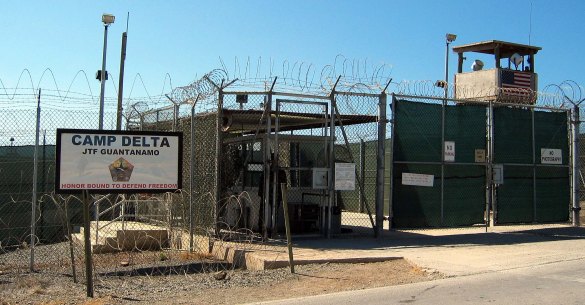
There are many, many reasons why jihad appeals to so many young Muslims, but the continued cruel indifference of Gitmo is up there.
There are many, many reasons why jihad appeals to so many young Muslims, but the continued cruel indifference of Gitmo is up there.

Find your favorite spot, kick back a chair, and go reading
If time hangs lightly on your shoulders this weekend, here are a few of the week’s best reads.

I’m not saying that to be a successful President you have to understand what this map means. But you actually kind of do… (Image from Vox.com)
In which the ludicrous complexity of a region in historic transformation is nearly impossible to understand.
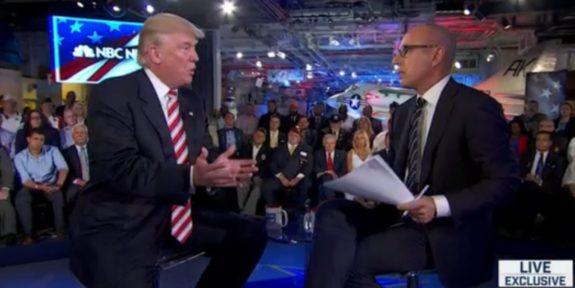
So, who is worse, the sociopath or the enabler?
There are some things– like, for example, what is happening literally anywhere in the world– you should “brush up on” before deciding to run for President.

Pictured: possibly a slight exaggeration.
The Times provides a comprehensive reminder that when people say “global warming will have us at ‘X’ by 2100,” the problems start today.

“It’s physical, sure, but not exactly beautiful, you know?”
I promise no more Trump for the rest of the week.* I’m as sick of this as you are. And without even getting into the substance of his immigration speech, I just want to point out two quick parts (from the transcript on Vox).
Number one. Are you ready? Are you ready? We will build a great wall along the southern border. And Mexico will pay for the wall. 100%. They don’t know it yet, but they’re going to pay for the wall. And they’re great people. And great leaders. But they’re going to pay for the wall.
On day one we will begin working on an impenetrable physical tall powerful beautiful southern border wall.
This is a little more substantive.
Countless Americans, who have died in recent years, would be alive today if not for the open-border policies of this administration, and the administration that causes this horrible, horrible thought process. It’s called Hillary Clinton. This includes incredibly Americans like 21-year-old Sarah Root.
I honestly don’t know if I’ve ever seen such a combination of genuine stupidity and genuine danger in a single person.
Anyway, I promise* that the rest of the week will be more fun stuff like ISIS.
*promise not binding

Image from The New Yorker.
In her New Yorker story on the purported death of ISIS spokesman and strategist Abu Muhammed al-Adnani, Robin Wright gets an interesting quote from an ISIS expert.
Hassan Hassan, the author of the Times best-seller “ISIS: Inside the Army of Terror,” described Adnani as one of a small handful of leaders left from among the organization’s founding fathers. “This means that the transition to the second and third tiers of the group is already well under way. And this could affect the direction of the organization and how it operates,” Hassan told me. “Those leaders who grew up within this organization are more attuned to the local dynamics, so the decapitation of such leaders could, in fact, inject a new life into the group. That said, the Islamic State is already shaped and well defined by those founding fathers, strategically and ideologically, so these new leaders have little wiggle room to make a change, but this is more possible than before.”
This is the central dilemma for ISIS, and the ISIS-inspired and affiliated groups, as it moves forward and struggles with AQ for the mantle of jihad. After all, they became so powerful because of their unrelenting dedication to violence, which is incredibly attractive to people, and always has been. It offers a sort of purity, and an elevation above petty morality, etc. It’s Fight Club with a glossy religious patina and a sort of medieval escape fantasy. But that’s not always successful, which is something that Adnani should have learned. As the Soufan group points out, he had an example in his mentor.
Al-Adnani was one of the few surviving members of the original group founded by Abu Musab al-Zarqawi. Long before the declaration of a caliphate, the Islamic State’s previous iterations—such as al-Qaeda in Iraq—were among the most violent and effective terror groups in Iraq after the 2003 U.S. invasion. Al-Adnani was a trusted associate of Zarqawi, whose manipulation of media and spectacle of public savagery would be imitated by al-Adnani as the Islamic State exploded onto the global scene in 2014. Over the last 14 years, al-Adnani has been front and center as Iraq, and then Syria, became the stage of unrelenting and escalating terror. He had been imprisoned both by the U.S. in Iraq and the Assad regime in Syria. As with other infamous terrorists, the arc of al-Adnani’s terror history was long, and bent towards massive suffering and destruction. His death will not bring about the end of the Islamic State. Nonetheless, it marks a significant loss for the group and removes a leading actor from the terror stage.
Zarqawi, of course, was brought down by the revolt against his methods. It’s the difference between him and the leaders of AQAP, which made sure to not alienate the locals, and tried to make grievances dovetail. ISIS is more powerful, with more foreign fighters, and were able to subjugate the territory under their control much more rapidly than AQI. That’s made a difference, but as they start to lose ground, it obviously won’t be permanent.
This is the crossroads for ISIS, as they move toward what Hassan calls “second and third-tier leaders”. If these leaders, especially ones around the world, move toward an “think global, act local” sort of jihad, they will be largely indistinguishable from AQ affiliates. If they continue to act as the caliphate, and ignore local concerns– the biggest one being “we’re concerned that you’re burning alive anyone who looks cross-eyed”– then they’ll never gain the local support they need.
That’s why I think the ISIS model is ultimately unsustainable. If it moderates, it loses adherents, the wild-eyed passion-filled radicals who seek a glorifying fire. But if it stays like this, it will never be able to gain actual local footholds other than through domination, which won’t last. That isn’t to say this isn’t a dangerous model; there will always be people emulating it in smaller and smaller cells, trying to pick up the mantle of “the real ISIS”. That is a global danger that could hit literally any community. I think that’s what is next for ISIS: a gradual splintering, and a new phase of terrorism.
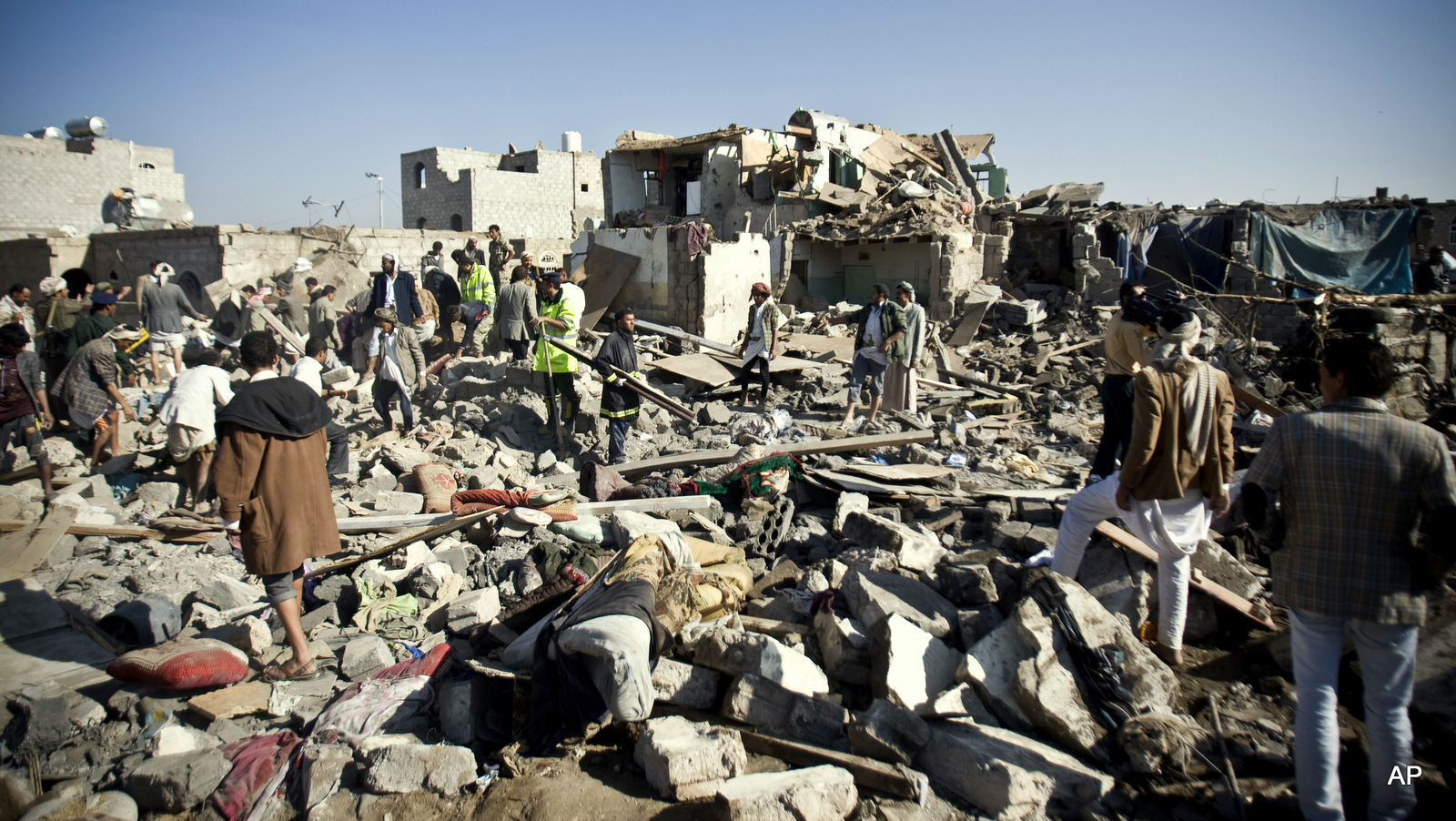
A Saudi airstrike in Yemen. Image from mintpressnews.com
Far from the ISIS-inspired headlines of Syria, Saudi Arabia has pretty calmly and easily been engaged in an endless series of war crimes in Yemen. Its policy had always been to keep Yemen weak, but not in total chaos. A kind of war madness has led them to abandon the second part of that. They are far from the only antagonists in the horrific dissolve of the nation, but they are the most powerful, and they are flexing that power in terrible ways.
And they are doing it with arms and support from the US. It is US-made planes dropping US-made bombs on hospitals and schools, with a ferocity that has led a normally-placid UN to try to stop them. From raw self-interest, this is a terrible policy for the US. From a human level, it is a nightmare.
Finally, nearly 60 congresspeople are trying to at least slow down the arms funnel, as Foreign Policy reports.
In a sign that frustration is growing in Congress over Saudi Arabia, a bipartisan group of 60 lawmakers have signed a letter seeking to delay the Obama administration’s planned sale of $1.15 billion in arms and military equipment to Riyadh.
…
The proposed sale, approved by the State Department on Aug. 9, includes up to 153 tanks, ammunition, hundreds of machine guns, and sundry other military equipment. Congress has 30 days to block the sale, but the lawmakers appear irritated that the notification of the sale came in the middle of Congress’s summer recess.
“Any decision to sell more arms to Saudi Arabia should be given adequate time for full deliberation by Congress,” wrote the lawmakers. “We are concerned, however, that the timing of this notification during the August congressional recess could be interpreted to mean that Congress has little time to consider the arms deal when it returns from recess within the 30 day window established by law.”
Part of this is territorial and bureaucratic, of course: Congress is angry about being bypassed. But they absolutely should be. The loss of Congressional prerogative in foreign policy has been a slow-rolling disaster for the US, as it allows enormously important decisions to be shaped, essentially, by the will of one branch, which in turn is shaped by the will of one person. Even when I trust the POTUS, and respect their judgment, having the lives of millions come down to one “decided” is monstrous. Leaving everyone else to deal with the ramifications of those decisions is essentially undemocratic.
So there should be more letters like this, both for the sake of our democracy, and to help the people who are being brutalized and pummeled into dust with our munitions. Slowing down the flow of arms into the Middle East, and particularly to the combatants in Yemen, is never a bad policy.
Politico: Americans for Responsible Solutions, the anti-gun violence PAC founded by former congresswoman Gabby Giffords and her husband, Mark Kelly, on Monday endorsed two Republican senators for their 2013 vote following the Sandy Hook Elementary massacre.
“In the wake of the tragedy at Sandy Hook, Republican Sens. Pat Toomey and Mark Kirk broke from the gun lobby and supported a bill to help prevent felons, domestic abusers and the dangerously mentally ill from obtaining firearms at gun shows and online,” Giffords and Kelly wrote in aCNN op-ed. “This week, they are earning our organization’s endorsement.”
We just talked about Kirk, and his attempt to keep Republican votes while not losing everyone in Illinois who hates Trump, which is most people. Part of his (deserved) political reputation comes from things like bucking the NRA, even briefly, which is how he gets endorsements from groups like Giffords. But while, like anyone with a heart, I love Gabby Giffords, this endorsement is nonsense.
I get the instinct. If you “reward” Republicans with your endorsement in exchange for behaving like reasonable human beings on guns, you’ll get more support. That’s the theory. The other calculation is that Americans for Responsible Solutions can’t only endorse Democrats, because then they are seen as partisan actors. It’s a tough situation, to be sure.

Never quite as strategic as people think.
So, Russia is now using Iranian air bases to launch pro-Asad strikes in Syria, creating a triangle within which I can’t imagine Turkey is particularly pleased to be. This seems to be a solidification of an ad hoc alliance that has been growing tighter, even as Russia agreed to be part of the Obama-led sanctions which crumpled Iranian nuclear resistance. Russia is now firmly part of the Iran/Syria axis, which could be extended to include the Houthis in Yemen and of course Hezbollah in Iraq. This is like every nightmare enemy of the last 50 years, even if they are opposed to our other nightmare enemies of al-Qaeda and ISIS.
There is a lot to discuss about the Middle East, and the ramifications in that, but I think there is an important question to ask. The Soufan Group’s IntelBrief hints at it: “While there is clear military value in the use of an Iranian airbase to launch strikes in Syria, the real gain for Russia is further solidifying its increasing role in the region.”
This is cause, in some circles, for palpitations and hyperventilations. Russia is playing maybe the leading role in the region now, certainly in Syria, and is forcing the action in favor of Asad. So are they winning? And what does winning mean?
I think this is lunacy, honestly. This is madness for Russia. What is going to happen if they “win”? What does that even look like? Asad in power, and what, all the rebel groups agreeing to lay down arms? A stable and secure Syria where both ISIS and Jabhat Fateh al-Sham are gone? Is that even possible?
There can be no long-term good for Russia to get deeper and deeper into Syria, and into its endless war, and into the collapse of the modern Middle East. This transformation is just starting. Russia, which wanted to show strength to cover up fundamental weaknesses, has had success, but it is of the short-term variety. It is expanding its war involvement against any and all of the enemies of its new allies, which are literally everyone else in the region, in some combination or another. This is not going to play well within its own Muslim population. The borders of Russia are not settled and secure either. It could have dozens of its own little Syrias.
The idea that Russia is somehow winning in the Middle East is absurd. It’s flying right into turbulence, possibly of the historic, country-reshaping kind. The “great power” conflict between the US and Russia in the Middle East should be between who can do the most good without tying themselves in too much. You can argue that Obama has steered too close to the latter benchmark while largely avoiding the first one. I think it is silly to say that is weakness, or that it has cost us esteem, especially when there is just loss of esteem within the very same region from which he is trying to extricate us from. (It’s like being kicked out of a bar toward whose exit you’re strolling.) Russia isn’t playing that game at all: neither doing good, nor staying out of getting involved. It’s a series of moves, not a coherent strategy to make the country stronger in the long term. It’ll catch up. Russia, a country whose internal contradictions have never been resolved, is tying itself up in a century-long process of dissolution, one that could easily spread to that most impossible of nations.
 Shooting Irrelevance