Obama’s Drone Legacy

b8af10a3-5c51-4aa1-94da-68f32499eac2

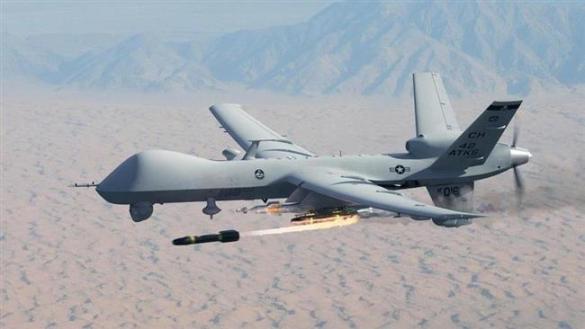
An outstanding editorial in the New York Times today about President Obama’s drone legacy by the ACLU’s Jameel Jaffer and Brett Max Kaufman. The gist of the editorial is that Obama has greatly expanded the use of drones while creating a sketchy and mostly-hidden legal regime that justifies their use. Jaffer and Kaufman argue that the President should publish the Presidential Policy Guidance, release the justifying legal memos, acknowledge the all drone strikes “not just those carried out on conventional battlefields”, and “establish a policy of investigating and publicly explaining strikes that kill innocent civilians, and of compensating those victims’ families.”  All of these seem to me to be reasonable, and entirely compatible with living in a democracy.

(Disclosure? Brett is one of my best friends, the kind of stand-up fellow that everyone should know. That’s not why I like this article of course, but it’s goddamn exciting to see your friend’s name in the Times.)

The heart of the article is a stark reminder of what Presidential power does, and how it is nearly impossible to restrain once unleashed. Even if you think that Obama is justified to use drones (in which a case can be strongly made) or he has used them judiciously and wisely (a much harder case to make overall), anyone should be scared of what happens when someone neither as wise nor judicious takes over.

Continue reading

Traitor Says Other Traitor is Bigger Traitor

Ellsberg tries to clear his name

I’m joking of course- Ellsberg is a hero, and Snowden…well, he isn’t helping his case by “revealing” that sometimes one country gathers information from another even if they aren’t engaged in war.

It is an interesting question, though.  Ellsberg revealed the lies that were told to enmesh us in a dirty and pointless war.  Snowden revealed, or at least confirmed, what was being done to us, with our assumed consent.   Ellsberg uncovered and brought to sunshine a pack of viscous lies.  Snowden’s leaks make it impossible to lie to ourselves.

Both force us to decide what we want to do, but I think Snowden’s is more important because we have to decide what we want to be: are we OK with the possibility of overwhelming intrusion in the name of security?   Does that change us from a people who practices self-governance to one that is governed?   Are we far past the point where that question even matters?   Or does tacit, even electoral consent to the NSA collecting metadata mean that we have taken back the burden of control?

I think in the long run the Snowden leaks will end up being more interesting, politically.  Most people reading this blog might scoff at that, because they at the very least assumed all of this, or knew it based on other earlier leaks and stories.  But I don’t think most people really thought much about it.  Snowden is forcing us to do so- and if we don’t, that is also a choice.   These leaks, whether they come from Snowden the brave hero who risked it all or Snowden the ChiComSymp, are a chance for us to decide what we want our relationship to be with the security forces who protect us.   I don’t know what we’ll choose, or even what is right- but I think this confirms this era, the mix of technology and the counter-terrorism mindset, will be looked back on as a watershed for who we are as a country.


(caveat: it is a mark of narcissism to think that you live in the most important times- every generation thinks it’s the last.  I don’t think this is the most important era in American history, but it is a pretty damn interesting one, anyway.  It beats the hell out of the 90s)

Our sliding expectations

So, in a private forum, some friends of mine and I were having a discussion about Snowden, Greenwald, and privacy.  The discussion turned to whether or not court-driven limitations on the spying programs made things fine, and a very smart friend of mine, the redoubtable Itzik Basman, replied thusly.

…”fine”can’t be as narrow, I’d argue, as what’s admissible in court. That’s epiphenomenal in relation to the whole issue of privacy, the idea of which is, in significant part, space between citizen and state and lies as as a big unstated idea grounding the U.S, Constitution.

I think that is a very interesting point, and one crucial to the discussion today, especially in light of polls that show large majorities of Americans are ok with the government spying programs.   Itzik is arguing, at least as far as I can tell, that there is an expectation and a right of privacy that goes beyond what is strictly given, and indeed it is (part of) what makes us citizens rather than subjects.

But how much of it have we given up?   How many of us are on Facebook, Twitter, Pintrest, have blogs, etc?    There is a slight selection bias here, as most people reading this were steered here by Twitter or Facebook or something, so we’re all pretty connected. (“No one I talk to on Twitter isn’t on Twitter” is a sentimental update on the apocryphal  “I don’t know anyone who voted for Nixon”).   But I think there is a reasonable expectation that the majority of people share things with others in, at the very least, a semi-public forum.   Everyone has a cousin that “never uses any of that”, but let’s be honest: your cousin is an outlier, and frankly, he drinks too much.   Look, someone had to say it.

So my question is: does this willingness to give up privacy in on sphere weaken that bond, that divide between citizen and state?  In an interview with Jameel Jaffar and Brett Max Kaufman of the ACLU in today’s Atlantic,  Andrew Cohen states that he doesn’t “know which America Jaffer and Kaufman are referring to when they declare that ‘no one chooses to live in a surveillance state.’ I think the American people, sadly, have chosen in countless ways to live in such a state. And I think the fact that we have done so is likely to animate the legal and political debate as this important lawsuit proceeds toward its resolution.”

I personally think that is a little unfair.  There is a difference between falling in love with new technologies and methods of communications and actively choosing to give up rights that we previously took for granted.   But if Cohen is right, and American expectations of privacy have been willingly, if not actively, diminished, does that weaken the cloak of privacy that we expect from the government?   The one that Itzik has said is beyond what courts decide?

Now, there is no way to measure this.  It is all feeling.  You could say that there was never a time when everyone wanted privacy, that there were panopticon fetishists  (yes, I know: your cousin again).    And, most importantly, I don’t think anyone ever assumes that their phone conversations should be public.  OK, everyone on the train believe that their phone conversations are a matter of public interest, but that is different than assuming that the government is listening in.

I don’t know the answer.  I know what I think, but am curious to hear other voices.   Does the rise, and easy acceptance, of social media, over-sharing, cameras everywhere, both public and private, and all that goes along with this particularly narcissistic time constitute a collective choice that our privacy doesn’t matter as much?  If so,  does that change the expectation of a barrier between government and private citizens?   And, I think most importantly, would you feel the same if al-Qaeda never existed?

Snowden Spills His Secret

Edward Snowden, the 29-yr-old responsible for one of the largest national security leaks in US history, has an auspicious name.   In Catch-22, Joseph Heller’s biting, terrifying, wildly-funny and scathing satire on the the whole nature of war, the corruptibility of man, and, most importantly, the self-defeating loops of logic man twists himself into to justify inherent barbarism in a civilized age (of which the eponymous catch is just the most famous example), the main character, Yossarian, is haunted by an unknown character named Snowden spilling his secret.

The chronology of the book jumps back and forth, but the driving action is that something snapped in Yossarian when Snowden told him his secret.  The madness of the enterprise revealed itself in full for Yossarian.   It isn’t until late in the book that we see what caused the driving action, what really was Snowden’s secret.  (and spoiler alert here, I guess, though it was published almost 50 years ago, so come on).  While on a bombing mission, Yossarian’s plane took flack, and Snowden was injured.  Yossarian went to help the moaning man, complaining of the cold, and at first saw a good-sized wound on the man’s leg, but nothing absolutely fatal.  But then Snowden’s secret was revealed.  Yossarian removed the man’s jacket, and saw that a huge piece of flack had torn through his stomach.  The jacket had been weakly holding everything in, but then it all came out: all that made Snowden, blood and organs and flesh, poured out onto the floor and onto Yossarian.   The whole inner-workings were brought to light.  Man is just flesh, and war is designed to destroy that flesh.   The whole sick nature of everything was revealed.

It isn’t really stretching the point to say that Edward Snowden did much the same thing, only a bit neater (and honestly, it makes me think the name is fake.  It is almost too perfect).   The apparatus that this amorphous war has created has been brought to light.  I think most people suspected it, but the depth is stunning.  And perhaps the most surprising part is that everything that is done is legal.  Laws were passed by elected officials that allow for the government, which has also arrogated unto itself the right to assassinate American citizens and throw people in jail for indefinite periods without a trial, can mine nearly everything you do online and on the phone.

This is raw power, and it is scary.  The thing is, there can be arguments for why the government needs this, or why it is absolutely necessary for national security.   The problem is that we never had them (and I am a little worried that now the argument is going to be more about whether Snowden is a traitor or a hero than what he helped expose).   This is poison to a country that fashions itself as a democracy and an experiment in self-governance, as Charlie Pierce would put it.

So these are the things we can now discuss, now that they have been brought kicking and screaming into the sunlight.  Should the government be able to monitor your online and telephonic presence to any extent?  If yes, how much?  Does merely drawing connections between who is calling whom without actually listening in really invade your privacy?  Who gets to decide this?  The President? (not just this one, but any.  For Dems- of whom I am one- who think it is OK because of Obama, imagine that Scotty Walker somehow becomes the next President.)

More than that, at least in my opinion, is the question of worth.  The biggest elephant in the room, that no one would touch with a ten-foot pole, and other cliches of the type that we’ve been using for 12 years to avoid the real issue, is that guaranteed safety is at best illusory and at worst an invitation to live in North Korea, only without the dumpy charisma of Dear Leader Jr.   What we have done is upended our country, and our idea of privacy, due to a major and horrifying terrorist attack.  This was completely understandable, but terrorism is also a rare thing, and something that happens, and is, at the end, not 100% avoidable.  People will always want to hurt others, and unless we want to live in a police state, one who is constantly sending troops and robots around the world to do our bidding, it won’t ever be completely solved.

The problem is we weren’t really asked.  We were taken advantage of due to our fright, and our apathy.  This was partly the product of a strange confluence: this scarring, shattering, atavistic attack was roughly coincidental with the rise of social media and the death of public reticence.   We all have given up a lot of privacy.   Hell, right now, I am imagining there are people who want to know what I am thinking about this, and hoping that my picture reveals a “mysterious charm, like Batman”.   The government in a large way is merely taking what we have given.

But now they have to ask.  Now, thanks to Snowden, every elected official will have to take a stand on what they think of this (assuming the media does their job, and that is a big assumption).   We can finally talk about what has been done in our name, for us, to us.   A country of the people and by the people can’t have it any other way.  So it is messy and horrible and a stinking bloody peak into the world right under our fragile skin, but this was a secret that needed spilling.   America’s great sin over the past decade has been to not talk about this new kind of war.   If we don’t, one day the satire of Catch-22 is going to seem like a gentle look at a softer past.

Live blogging Obama speech

1:59 There is a lot I fault this Admin with regarding terrorism, but I also find the other side completely irrational and self-defeating and willing to do anything to destroy the POTUS.   But these stirring words, even though I agree with them, just ring so hollow after 12 years of this increasingly desperate nonsense.   If something can change now, it will be positive, but so late.  So many wasted lives around the world.  There was a chance after 9/11 to remake the world into something better.  But it was trashed, burnt away by gleeful pyromaniacs and sneering playground bullies.   Its cold and stupid logic persisted, and in some ways was heightened.  I think this Admin is doing a better job, but it is relatively worse, given expectations.  The idea that now, 12 years on, we’re trying to formulate a strategy to met the challenge, and, even worse, that no one really thinks we’ll be able to, is the whole rot of our political and moral culture in one depressing run-on sentence.

More thoughts later, perhaps.  Comments are always open.

1:53 “I’m willing to cut the young lady who interrupted me some slack, because this is worth being passionate about.”  That is excessively well-done.

1:52 I was worried he was going to quote Daniel Tosh.  Phew!

1:50  I love seeing the President be heckled.  It reminds me that we’re all right.  He handled it well.  I also did not expect all the applause.  I couldn’t really understand her, so I don’t know who they were applauding, but it is clear that everyone is on the same page.

1:50 People are going to say this is really partisan, and it is, but absolutely right.  It is crazy that it is suddenly dangerous to try people in courts.

1:47 I like when they point out that we actually have been able to try terrorists with relative ease over the years.

1:45 “I look forward to working with a collection of kill-crazy destructive vandals to help them paint me as a secret Muslim who wants to institute Sharia law”

1:44 It is true that they want to shield for journalism, but just because the law doesn’t exist isn’t a reason not to obey its spirit.   That was just a huge bit of cognitive dissonance, on a level we don’t usually see from this Admin.

1:41 Despite my carping, I’ve liked about 65% of the speech.  Maybe 75%.  But much of this is what I liked in 2007 and hasn’t translated into smarter action.   He came really close to the John Kerry line about how terrorism can be a law enforcement issue.   But not close enough.

1:40 Greg sums it up over on the twitter, which is where the cool kids hang out.

On diplomacy – yes, US has to be active. But US practices risk avoidance not risk management.

1:36 OK, so he got the people who hate the drone strikes and think they are a huge immoral and illegal over-reach angry in the first half-hour.  Now he is talking about foreign aid as a much better investment than military strikes.  Feeding people in Yemen and building wells.   So now everyone else will be angry.

1:35 “We cannot take action everywhere these radical ideologies take root”.   Yes, and yes again!  Too bad that is seen as wimpy.  Hell, we had people want to storm into Chechnya and Dagestan a few weeks ago (and frankly, I would have bought their plane tickets).

1:31 OK, I agree with the idea that in extreme cases citizenship doesn’t really matter.  That has been true in other wars.   I don’t even disagree that al-Awlaki was plotting against the US.  But the huge issue for me, at least, is that we crossed this incredible pass for someone who really wasn’t a major threat.  He was a little more dangerous than John Walker Lindh, perhaps (and doesn’t that seem like such a distant name from a far-off time), but he was not the impossible danger that made it worth taking these steps.

1:30 Nixes any drone strikes on US soil, brings up legal twister of due process.   Not judicial process.

1:28 Congress is briefed on every strike.  Might be over-estimating the popularity of Congress, here.  “Oh, Congress says it is ok?  Well, then I’m on board!”

1:26 As many people have pointed out, the idea that these drone strikes result in less civilian deaths (despite the Franciscan flagellation, which seemed honest, about these deaths) is partly a result of a morally obtuse concept that military-aged males near drone strikes are by definition non-civilian.

1:22 State sovereignty is great, but the question has always been: who is the state?  We deal with governments like Salih’s, whose “the state is me” ideas didn’t really pan out beyond the Yemen version of the Beltway.  (The Jambiya?)

1:20 This is true- America is at war with AQ and others.  It is “affiliated” that is the tricky thing.  We still don’t know who everyone is.  Oh wow- that was the heart of this speech.  “Legal doesn’t make it moral”.   This is what many of us who voted for Obama want to hear- be strong, but don’t over-reach.  We haven’t seen much evidence of this, and that is a disappointment, but maybe this is a turning point.

1:17 That’s great we aren’t triggering firefights with tribesmen with whom we have no beef.   But we sometimes drone the living death out of these self-same tribesmen.   This is saying all the things that I want to hear, but there is a certain dissonance with action.

1:13 Define it not as a boundless war on terror, but specific actors.  This, right here, is what people have been saying for 12 years.   But while this sounds great, working with Pakistanis, Yemenis, the AU to get rid of al-Shabab, it elides the fact that many of these actions are wildly unpopular in the countries that we are acting in.  I believe in partnerships, of course, but working with the wrong actors is almost as bad as going solo, and sometimes worse.

1:12 Bringing up all the other terrorist attacks before him.   Two things here: one, saying that we don’t have to have a national freakout every time something bad happens, and two, saying: really?  You want to impeach me over Benghazi?   Come on!

1:10  McVeigh wasn’t a Muslim!

1:09 I like this analysis of the difference between local operatives, regional affiliates, etc.  Some groups are just collections of names and guns.  We can’t use a blanket approach, and lump everything under the “islamist” umbrella.   But while the rhetoric is there, it still needs to translate to action.

1:07  Brings up James Madison.  Charlie Pierce just sat up straight.   It is also amazing that, in 2013, saying that we need to define the scope of this battle against extremism makes for a big speech.   12 years on.

1:06  I never really liked the “we spent abroad and not here” tactic, but it is undeniable.   It just smacks of isolationism.

1:04 Osama is dead.  If you had that on Speech Bingo, you aren’t terribly creative, are you?   There was nice talk about stopping torture, but that just serves to remind that we did torture people, and no one has been punished.  Just more rhetorical rug-sweeping.

1:03 Brings up Iraq.  Saying that it shifted focus shouldn’t be controversial, but somehow always is.

1:01 Doing the Obama thing where he links our history into the issues of the day- our character, our shared experiences, our “commitment to constitutional principles”.    This is a common trope for him, and for others, of course, but he seems to do it with a special intensity, perhaps because he has always had to try to prove he is “American”.   It sets a tone for a “this isn’t radical what I am about to say”.

OK, so we’re going to be live-blogging the Obama speech.  Haven’t done this in a while.  I know it is more of a twitter thing, but I’m old-fashioned.   The important things to look at in terms of Guantanamo are if they are planning to release anyone, or just shift detainees to federal supermax prisons stateside.
What comes next

So, obviously the big magilla of the week is over the scandals folding over the Obama administration, with Benghazi, the IRS show, and the AP phone-record-gathering allowing partisans to slaver over the idea that the administration is at the very least done politically, if not on that slow boat toward impeachment.     It is my opinion that by the end of the summer impeachment is a distinct possibility.  Not because any of these issues merit it- they certainly don’t- but because the perversion of language, media, and the insular nature of our politics describes a set path, even if few want to go down the road.

Take the IRS scandal.   The obvious comparison, made in many places, is with Nixon using the IRS to attack political enemies.   This comparison is getting made so much, it is hardening into fact.   And it is absolutely ridiculous, a series of historical non-sequitors slathered over with a a slimy coat of hysterical frothing.   No one was audited; none of these groups were denied their status.  At most, they endured delays and had to answer arduous questions.   Now, one can say that their activities were curtailed as they hovered in a bureaucratic limbo, but they also were not required to become tax-exempt.   No one forced them to reach for this status.   There is no doubt that the IRS employees acted in a dumb and unfair manner, but to compare this even to Nixon is to not just stretch the truth, but tie it to the rack and quarter it.   And yet, that doesn’t stop a major news station from having guests compare it to Nazi Germany, because of course.

Or take Benghazi: the whole uproar is over the who said what and when, on the Sunday talk shows.  This is nonsense boiled down to its purest essence.   This is an impossible distraction from what could be real security issues, or, as Joshua Foust points out, from the very real questions about the mission creep of the CIA  and its role in national security.

But this post isn’t really about the meat of these issues (the AP one being the most legitimately troubling), but about how, in a very real way, the meat no longer matters.   Does anyone really believe that pointing out how not one of those groups were denied status is actually going to change anything?   Does anyone think that because the Republicans were the ones pushing for an investigation into the Yemen leaks, the investigation of which is what led to the AP phone-gathering, that they’re going to say to Obama, “well done”?  Or that the majority of Dems won’t find a way to justify it?

(note: that wasn’t an attempt at  Broderian equivalence-harvesting.   I firmly believe that there is one side who has completely gone of the rails, but, as a friend of mine said, selective memory is a trait of anyone political.)

Because it doesn’t matter.  The is an inexorable logic to impeachment, or at least to getting as near to it as possible before it explodes in the faces of those pushing for it.   Because there is no longer any need for facts.  Blogs will argue, pundits will go back and forth, there will be a rough general consensus that certain things are overblown, and other things are complete nonsense, but that won’t matter.  There is no real consequence in going against what the majority of people believe.  Huge majorities were in favor of expanded background checks, but that died a public and blood-choked death, and there wasn’t a single thing anyone could do about it.

We’re calcified and lumbering and in thrall to the worst.   As long as you can scream loudly and get your talking points out over the madding dim, you’ve won.  And so I think that there will be enough enthusiasm in the base, a not-insubstantial-number of whom believe that Obama orchestrated the attack so that Amb. Stevens would be captured, leading to Obama exchanging him for the Blind Shiek and therefore guaranteeing election, despite that being absolute gibbering insanity in all its forms,  that the drums will keep beating until people have been lured dumb and blind and enraged and crazy into the waiting nets.   Because even though the logic underneath the scandal has been exposed, the cruel logic of politics and the odd weightlessness of language is going to lead us into strange places this sweating summer.